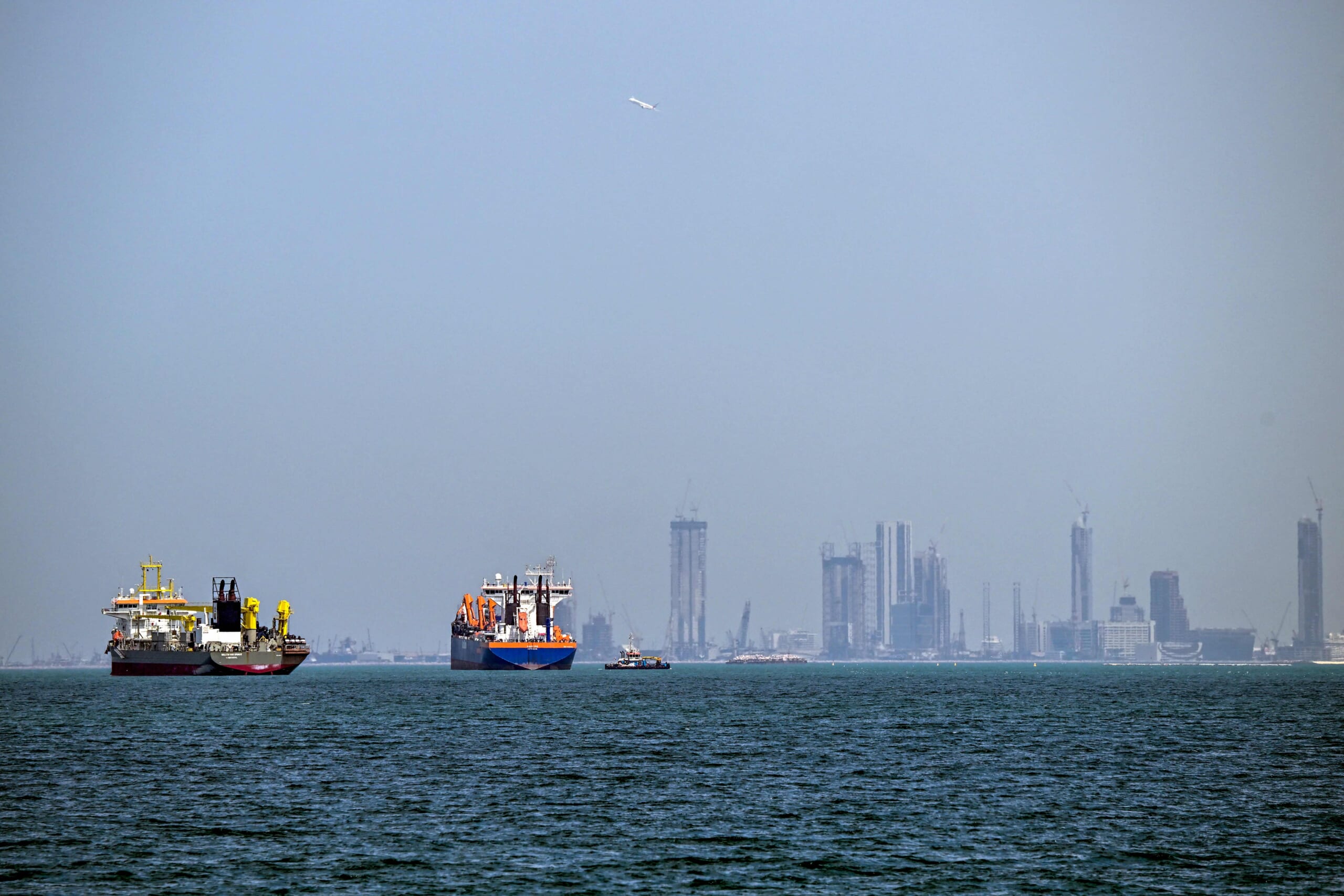
There are approximately 20,000 sailors stranded near the Strait of Hormuz — one of the world’s most strategic maritime routes — according to data compiled by the International Maritime Organization (IMO).
However, beyond the economic and geopolitical impact, the war is “breaking down the mental health of these workers,” said Bishop Emeritus Luis Quinteiro Fiuza of Tui-Vigo in Spain, the head of the Apostleship of the Sea, in a statement to ACI Prensa, the Spanish-language sister service of EWTN News.
“Those stranded on those ships, unable to cross through the strait for weeks, live in constant anguish,” he said, indicating that these sailors are living “with the very real fear that everything could end at any moment by being bombed.”
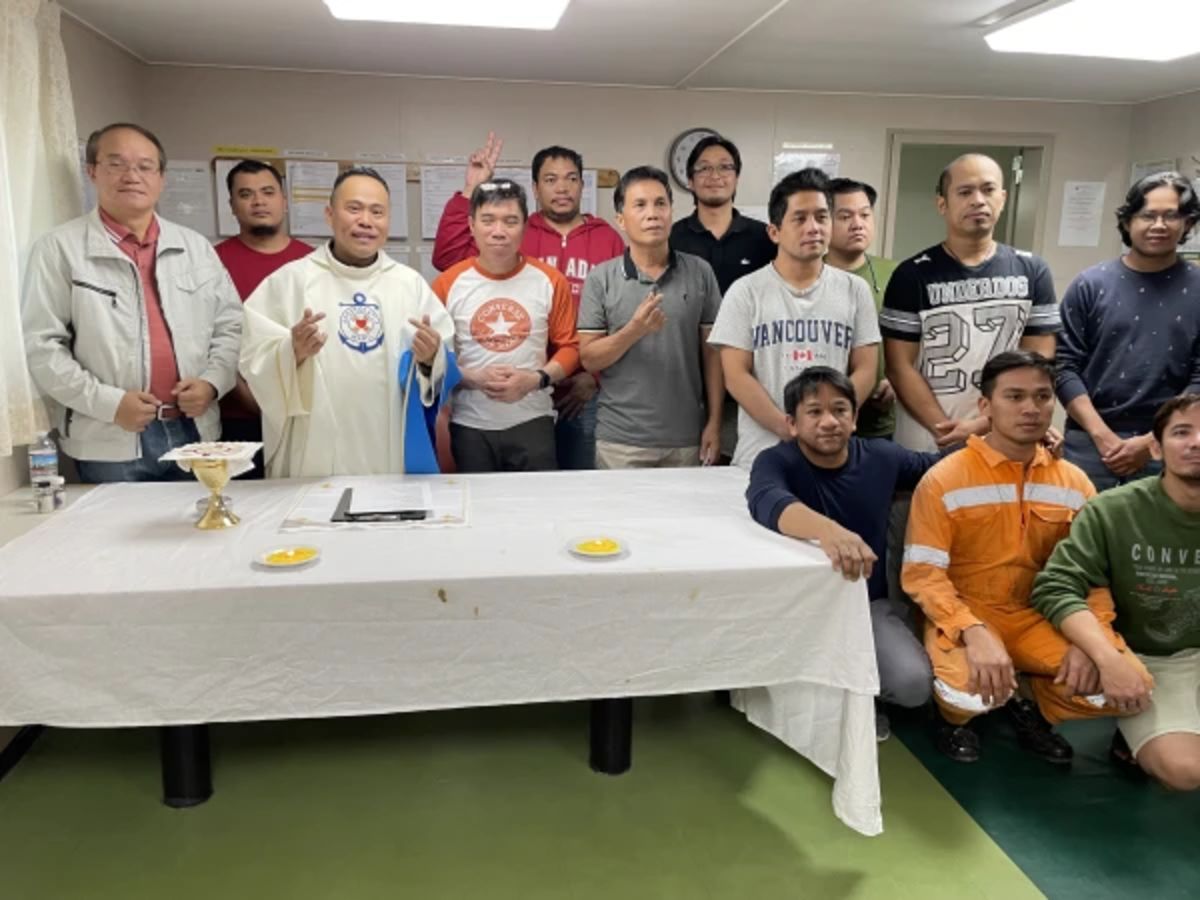
One of the priests of the Apostleship of the Sea celebrates Mass with sailors at the Stella Maris Mission in Hamburg Harbor. | Credit: Dicastery for Promoting Integral Human Development
In the week following the Paschal Triduum, Quinteiro is scheduled to travel to London to hold high-level meetings at the IMO — the United Nations agency responsible for the safety and security of maritime trade — which has proposed the creation of a “safe maritime corridor” to allow vessels to leave the Persian Gulf region and pass through the Strait of Hormuz without risk.
“We are facing a truly dramatic situation for everyone, but especially for seafarers and their families,” Quinteiro emphasized. Despite the logistical constraints in the region where there is virtually no Christian presence, the Apostleship of the Sea maintains contact with some of the families of those currently stranded aboard the ships.
“Families are experiencing this with immense anguish. They are horrified, monitoring events minute by minute, and many tell us they are completely overwhelmed,” he shared.
Moreover, in many cases, the isolation of the vessels that have been unable to go through the Strait of Hormuz since the war began is almost total: “Right now, there are ships with their internet down. It is a situation of utter abandonment.”
“Imagine being on a ship, watching missiles or instruments of destruction fly past. How must a person feel in the midst of that?” Quinteiro said, explaining that the Church’s mission in this context is to offer emotional and spiritual support to both the sailors and their families.
This constant pressure, coupled with the inability to leave the area, further aggravates the situation: “They can’t get back to their home country. They’re stranded. That is the word: completely stranded.”
“Ninety percent of global trade is conducted by sea, yet, unfortunately, we forget about the seafarers. Moreover, it is an increasingly unattractive occupation, staffed largely by people from poorer countries, which exacerbates the injustices,” the prelate noted.
Pope Leo XIV made reference — albeit indirectly — to those stranded in the Strait of Hormuz during the Angelus on Palm Sunday by asking for prayers for sailors suffering the consequences of conflicts.
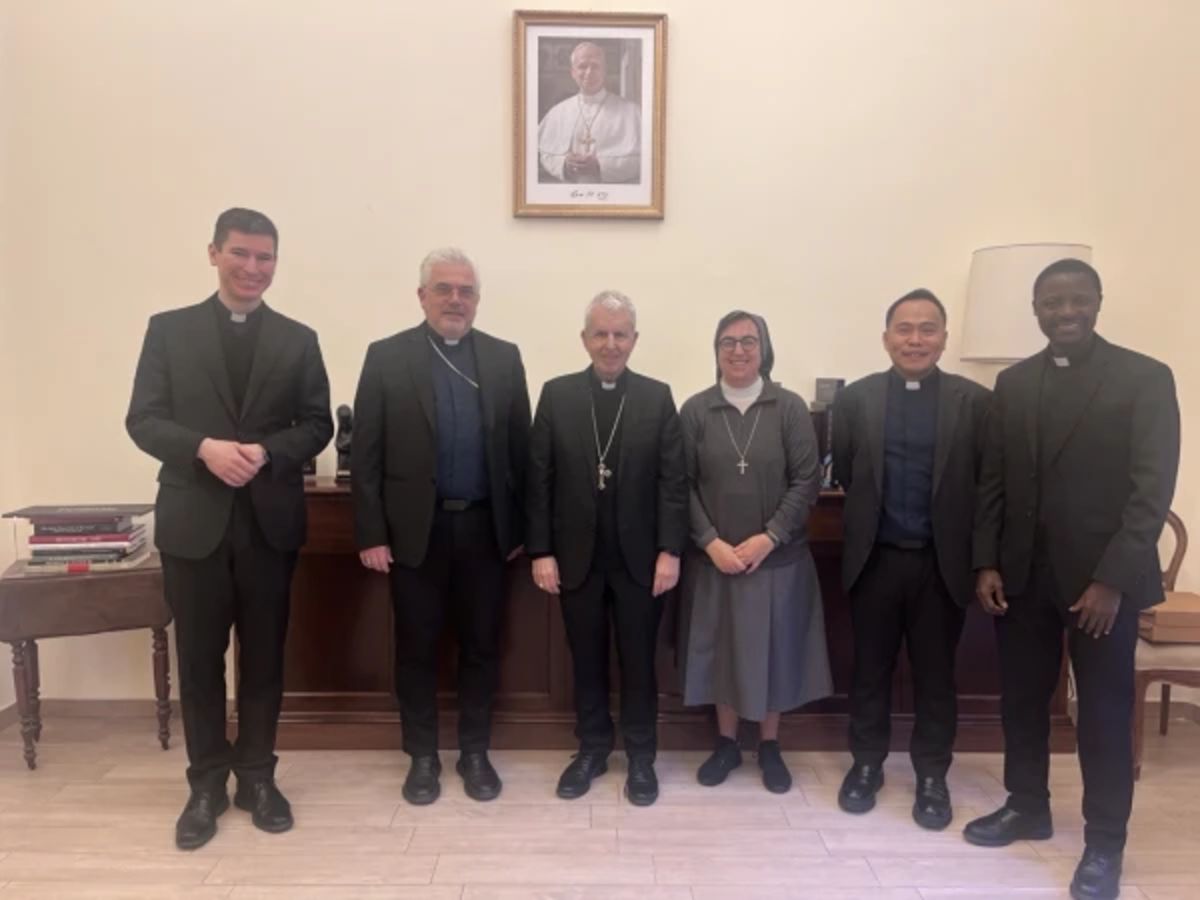
Bishop Emeritus Luis Quinteiro Fiuza of Tui-Vigo in Spain, the head of the Apostleship of the Sea (second from right) at the Dicastery for Promoting Integral Human Development. | Credit: Dicastery for Promoting Integral Human Development
Last November, Pope Leo recognized the legal standing of the Apostleship of the Sea, a decision that reinforced the organization’s role as an instrument of spiritual and human accompaniment for a group that is frequently overlooked, despite being essential to the functioning of global trade.
In 1977, the then-Pontifical Commission for Migrants published the decree Apostolatus Maris, updating the regulations following the Second Vatican Council. Two decades later, St. John Paul II renewed this commitment with the motu proprio Stella Maris, consolidating the Church’s mission in the maritime sphere. More recently, Pope Francis entrusted the direction of this work to the Dicastery for Promoting Integral Human Development, underscoring the importance of comprehensive care for people of the sea.
“In the maritime world, there is a great need for justice. To evangelize today means being alongside these people, accompanying them, and making them feel that they are not alone: it means not only defending justice and workers’ rights but also offering closeness, comfort, and hope amid extreme situations,” Quinteiro explained.
This story was first published by ACI Prensa, the Spanish-language sister service of EWTN News. It has been translated and adapted by EWTN News English.