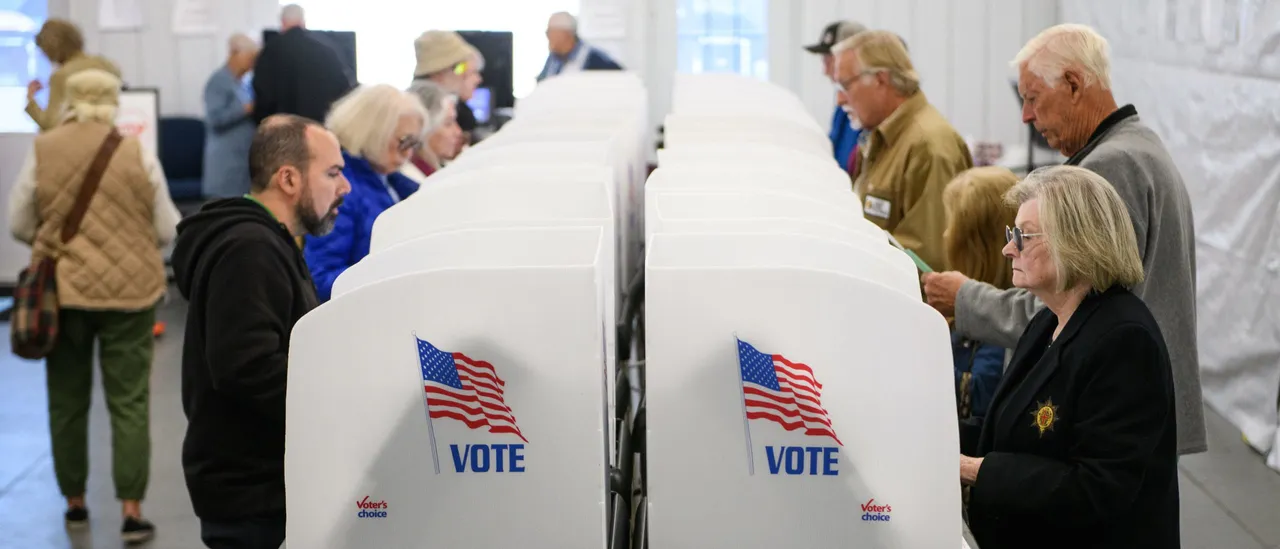
Election crimes undermine our republic and demand swift justice. But investigations stall over everything from scarce resources to political agendas. Without meaningful enforcement, even the best election laws are meaningless. Across the country, states are stepping up to fix this by creating specialized election crime investigation units.
Currently, Ohio lawmakers are considering a bill to get viable election fraud cases to court without unnecessary delay.
This is Ohio’s second try at this commonsense fix. In 2022, Secretary of State Frank LaRose created Ohio’s first-ever Public Integrity Division with a mission to investigate election crimes and enhance coordination with local prosecutors and the attorney general.
Last year, legislators passed a law making a specialized investigative unit permanent. The law also set deadlines for local prosecutors to act on election fraud cases referred from the unit or pass the cases to the attorney general. (RELATED: RNC Responds To 28 Bomb Threats, Nearly 500 Tips Of Suspicious Election Activity)
The governor vetoed those deadlines and the referral process. Fortunately, lawmakers aren’t backing down—and they shouldn’t.
Some criminal cases do not get filed for legitimate reasons like missing witnesses or weak evidence, but, all too often, election fraud cases get stuck for completely unacceptable reasons like partisan politics.
For example in 2022, Pennsylvania’s then-Attorney General Josh Shapiro downplayed voter fraud while running for governor but then charged one of his consultants with “wide scale” fraud after winning. That’s just one example of many viable cases that get ignored or buried.
Political games should never determine whether a case is filed or how it is handled. Right now, a single bad decision by a prosecutor can kill a case and leave election laws unenforced. That’s why lawmakers push for measures like those in Ohio’s Senate Bill 4.
Local officials may cite overload, prioritizing violent crime cases, staff shortages, or inexperience as excuses for inaction, but that only magnifies the need for a solution like SB4. The secretary’s investigative unit and the attorney general stand ready and willing to handle these cases.
The pushback against SB4 reflects a familiar pattern: resistance whenever states prioritize enforcing election laws. Opponents call SB4’s deadlines too tight, but the bill gives prosecutors nearly two years to review a case and work with investigators.
Opponents also claim SB4 promotes “forum shopping.” That’s patently false. Venue laws, not prosecutors, decide where a case gets prosecuted.
Nor does SB4 hand the attorney general too much power. The bill simply creates a clear process for the attorney general to engage in certain circumstances when a local prosecutor drops the ball.
In those circumstances, a second set of eyes makes sense. A fresh perspective can turn a case around and result in a successful prosecution. And for Ohio, it’s proving true. Last year, the attorney general indicted six people in cases that local prosecutors failed to pursue. The bottom line is opponents don’t want the attorney general touching these cases.
Ohio isn’t alone in tackling election crimes. Florida led the nation when it created its Office of Election Crimes and Security in 2022. Their yearly report cites 25+ felony election crime convictions and that all known jury trials ended in convictions. The unit also investigated and highlighted major issues with petition fraud in the 2024 election, prompting swift legislative action to curb abuse of the petition process.
In 2023, Arkansas set up an election integrity unit in the attorney general’s office to work hand in hand with election officials. Just last month, Arkansas’ Secretary of State announced 240 cases of possible voter fraud and the referral of documented instances of illegal voting to their election integrity unit.
Texas just passed a bill expanding the attorney general’s authority to handle these cases. And states like Idaho and Missouri are trying to establish their own election integrity units.
Successful prosecutions depend on thorough investigations, timely case reviews, and clear collaboration between prosecutors and investigators. Viable cases can only reach court if handled promptly and properly. SB4 is a smart safeguard to keep these cases from getting sidelined or going cold.
Election crimes strike at the heart of our republic, undermining confidence in the system voters trust to choose our leaders. The laws that protect the process from fraud and corruption must always be enforced.
As states like Ohio, Florida, and Arkansas lead the charge to tackle election crimes effectively, other states should take note and follow suit.
Jackie Doyer is the Legal Policy Director for Honest Elections Project Action.
The views and opinions expressed in this commentary are those of the author and do not reflect the official position of the Daily Caller News Foundation.
All content created by the Daily Caller News Foundation, an independent and nonpartisan newswire service, is available without charge to any legitimate news publisher that can provide a large audience. All republished articles must include our logo, our reporter’s byline and their DCNF affiliation. For any questions about our guidelines or partnering with us, please contact licensing@dailycallernewsfoundation.org.



![Florida Officer Shot Twice in the Face During Service Call; Suspect Killed [WATCH]](https://www.right2024.com/wp-content/uploads/2025/12/Inmate-Escapes-Atlanta-Hospital-After-Suicide-Attempt-Steals-SUV-Handgun-350x250.jpg)