What should we make of DOGE’s legacy?
The splashy agency, formerly led by Elon Musk, intended to take a “chainsaw” to the federal government, rip through bloated agencies, and save the taxpayer billions, if not trillions, at the start of President Donald Trump’s second term. Musk himself pledged in October 2024 that he would help the U.S. save $2 trillion, before DOGE revised that promise to the slightly less unreasonable $1 trillion. (Subscribe to MR. RIGHT, a free weekly newsletter about modern masculinity)
Eight months ahead of schedule, though, the DOGE agency has quietly faded away. Reuters reported Sunday that DOGE had disbanded, citing Office of Personnel Management (OPM) Director Scott Kupor, who told the outlet that it is no longer a “centralized entity.”
However, several former DOGE employees have now filtered into other agencies, according to Reuters. At least two are now involved with the National Design Studio, created by Trump in an August executive order with the goal of “beautifying” and improving government websites. The National Design Studio is led by Joe Gebbia, a former DOGE member and co-founder of Airbnb. Zachary Terrell now works as the chief technology officer at the Department of Health and Human Services; Rachel Riley heads the Office of Naval Research; and Jeremy Lewin, who reportedly helped Musk and Trump shutter the U.S. Agency for International Development (USAID), has joined the State Department in overseeing foreign aid. All three individuals were previously involved in DOGE, according to Reuters.
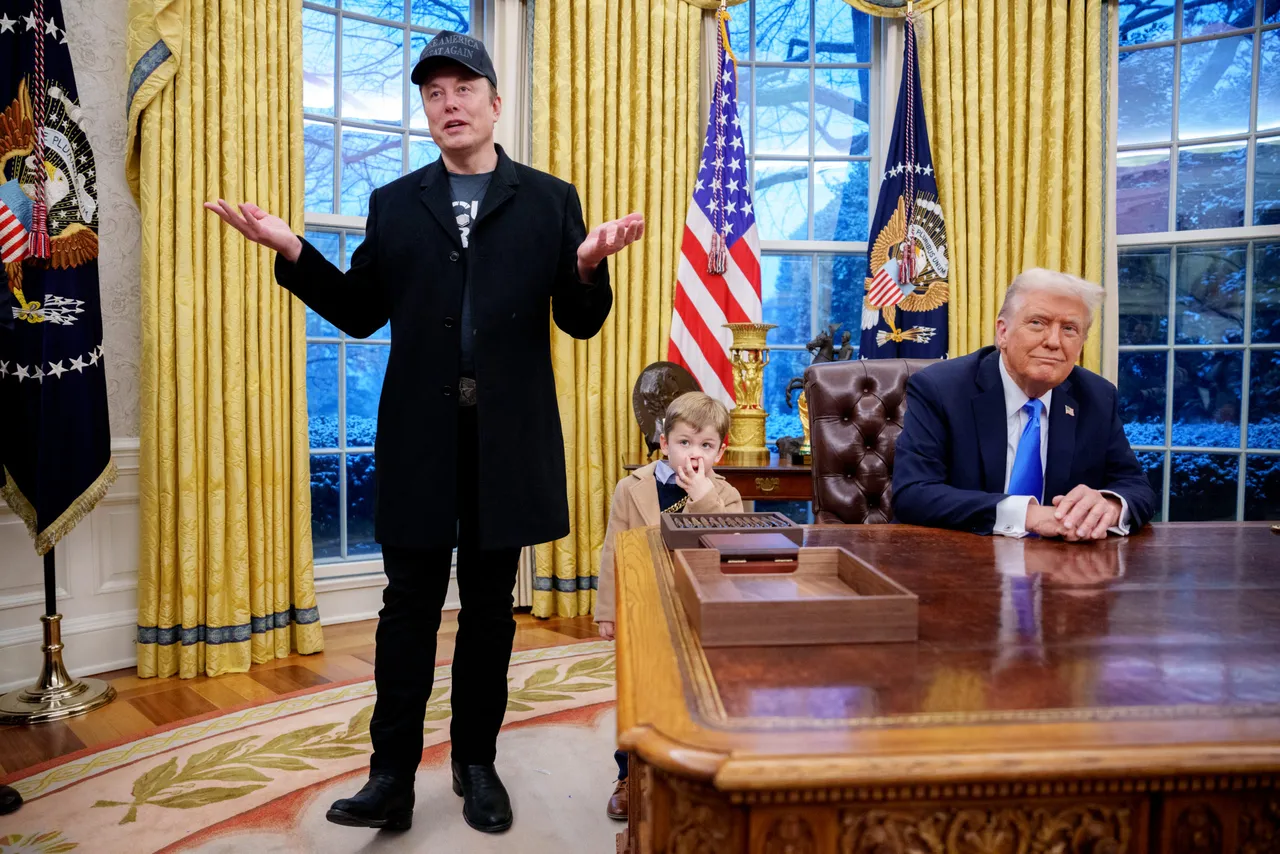
WASHINGTON, DC – FEBRUARY 11: Tesla and SpaceX CEO Elon Musk, accompanied by U.S. President Donald Trump (R), and his son X Musk, speaks during an executive order signing in the Oval Office at the White House on February 11, 2025 in Washington, DC. Trump is to sign an executive order implementing the Department of Government Efficiency’s (DOGE) “workforce optimization initiative,” which, according to Trump, will encourage agencies to limit hiring and reduce the size of the federal government. (Photo by Andrew Harnik/Getty Images)
Following publication, Kupor took a shot at Reuters and clarified his quotes. “The principles of DOGE remain alive and well: de-regulation; eliminating fraud, waste and abuse; re-shaping the federal workforce; making efficiency a first-class citizen; etc. DOGE catalyzed these changes,” he said Sunday.
Good editing by @reuters – spliced my full comments across paragraphs 2/3 to create a grabbing headline 🙂 The truth is: DOGE may not have centralized leadership under @USDS. But, the principles of DOGE remain alive and well: de-regulation; eliminating fraud, waste and abuse;…
— Scott Kupor (@skupor) November 23, 2025
A White House official told The Hill that “DOGE has ALWAYS been integrated throughout agencies, and that will continue. Agencies are still reducing waste, fraud, and abuse.”
DOGE pledged to save the American taxpayers $1 trillion, but they have fallen well short of that goal, even according to their own accounting. As of Monday, DOGE’s website claims the department had secured $214 billion in savings, equivalent to $1,329.19 per taxpayer, through a combination of “asset sales, contract/lease cancellations and renegotiations, fraud and improper payment deletion, grant cancellations, interest savings, programmatic changes, regulatory savings, and workforce reductions.”
The agency had also been criticized for inflating the values of canceled contracts, such as claiming a canceled Immigration and Customs Enforcement (ICE) contract was worth $8 billion when its actual value was just $8 million. In February, DOGE claimed to have saved $55 billion. However, former Labor Department Chief Economist Betsy Stevenson estimated the real figure was likely between $1 billion and $7 billion. Politico examined DOGE’s assertion of having saved taxpayers $52.8 billion through these cuts in August. From the $32.7 billion Politico could verify, the outlet determined that actual savings were closer to $1.4 billion.
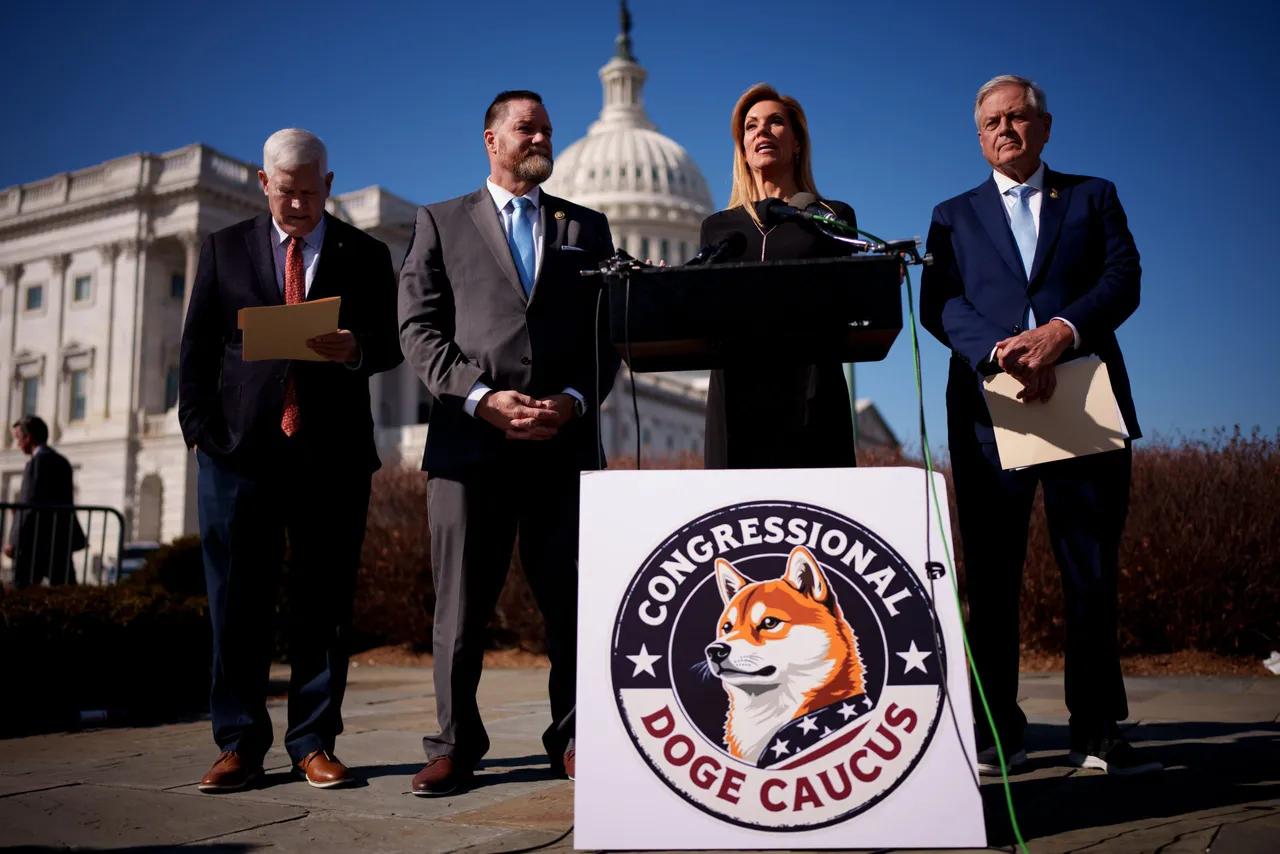
WASHINGTON, DC – FEBRUARY 25: The Dome of the U.S. Capitol Building is visible as Rep. Beth Van Duyne (R-TX), accompanied by (L-R), Rep. Pete Sessions (R-TX), Congressional DOGE Caucus co-chair Rep. Aaron Bean (R-FL), and Rep. Ralph Norman (R-SC), speak at a Department of Government Efficiency (DOGE) Caucus news conference on Capitol Hill on February 25, 2025 in Washington, DC. The newly formed caucus held a news conference on “DOGE Day” to unveil member initiatives “aimed at cutting waste and improving government efficiency.” (Photo by Andrew Harnik/Getty Images)
All of these discrepancies suggest that DOGE has, in some cases, overstated the savings it achieved. A CBS News analysis published in August found that some cuts were overstated by as much as 97 percent.
DOGE secured minor victories, saved taxpayers a tiny chunk of change, and brought government waste, usually a dry topic, into the spotlight for several news cycles over the course of the year. But the fact remains that the Pentagon budget is still grossly high, with the Trump administration proposing a $1 trillion budget for the fiscal year 2026. Trump’s One Big Beautiful Bill is estimated to increase deficits by $3.4 trillion over the next 10 years. The United States is $38 trillion in debt and counting. And DOGE’s $214 billion in savings, whether that figure is even accurate or not, amounts to a drop of water in an ocean. (RELATED: Remember When Republicans Said ‘Drain The Swamp’? So Do We)
In a sense, DOGE was successful insofar as it was a marketing tool to placate fiscal conservatives. It made for good headlines, and it made it seem like the administration was draining the Swamp for real this time. But it is still business as usual in the morass of D.C., which means more deficit spending, an unaccountable military-industrial complex and a Pentagon that has failed seven straight audits.
Sign up for John Loftus’s weekly newsletter here! Follow John Loftus on X: @JohnCFLoftus1



![Donald Trump Slams Chicago Leaders After Train Attack Leaves Woman Critically Burned [WATCH]](https://www.right2024.com/wp-content/uploads/2025/11/Trump-Torches-Powell-at-Investment-Forum-Presses-Scott-Bessent-to-350x250.jpg)


![Texas Trucker Busted with 23 Illegals Stuffed into the Cab of His Big Rig [WATCH]](https://www.right2024.com/wp-content/uploads/2025/12/Texas-Trucker-Busted-with-23-Illegals-Stuffed-into-the-Cab-350x250.jpg)