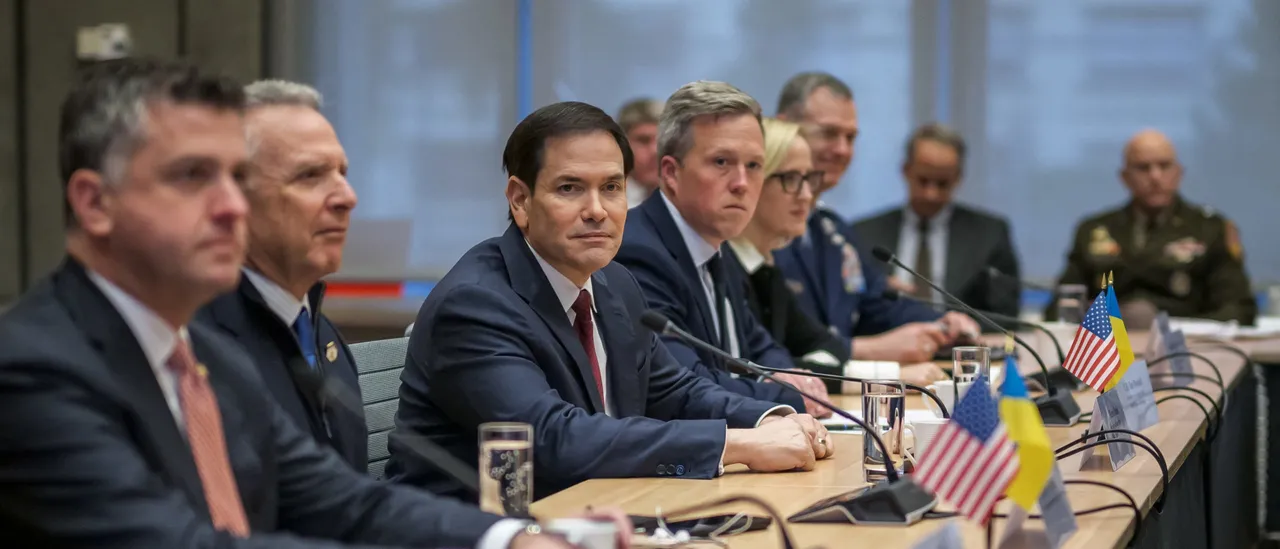
The deadline for an official response from Ukrainian President Volodymyr Zelenskyy on the U.S.-proposed peace agreement looms on Thursday after a turbulent rollout marked by confusion and turmoil.
President Donald Trump said last week that Zelenskyy has until Thanksgiving Day to accept or decline the plan, which Ukrainian and American mediators have revised substantially before delivering the proposal to Russia. Over the week since that announcement, leaks and controversies surrounding the deal and the provenance of its conditions have drawn criticism and some reticence from both Congress and U.S. allies in Europe.
Allegations that U.S. Special Envoy Steve Witkoff advised Russian President Vladimir Putin’s top foreign aide, Yuri Ushakov, on how to best approach President Donald Trump in formulating a peace deal, according to a recording of a phone conversation reviewed by Bloomberg, were chief among the troubles that rocked the plans for a deal.
“We put a 20-point Trump plan together that was 20 points for peace and I’m thinking maybe we do the same thing with you,” Witkoff allegedly told Ushakov in the conversation. (RELATED: Ukraine’s Holy War Comes To America)
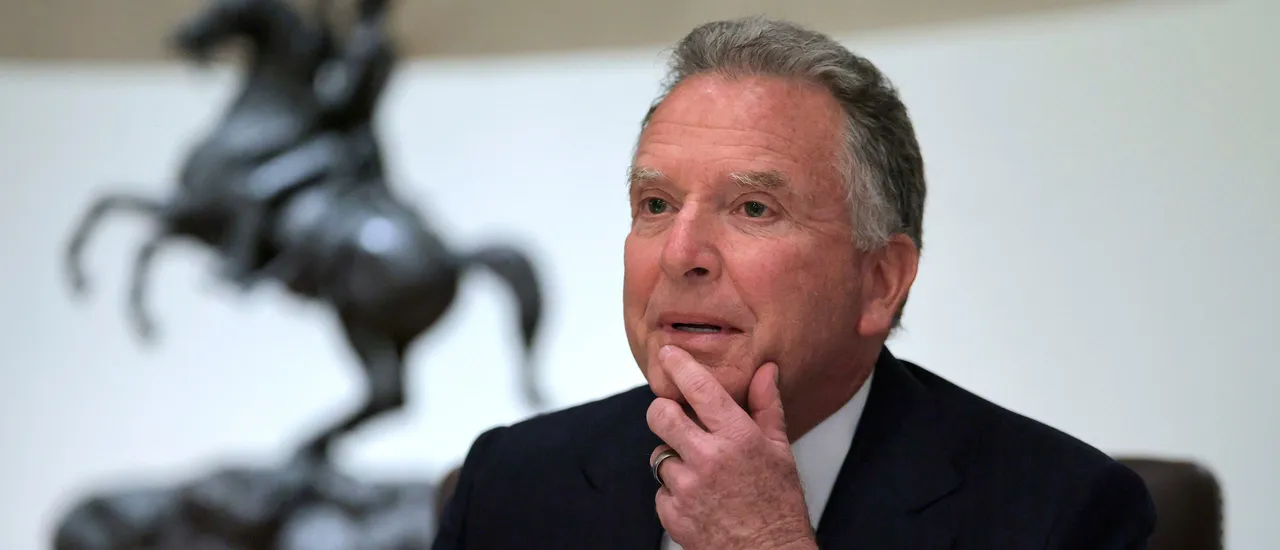
Special Envoy Steve Witkoff speaks as President Donald Trump holds a cabinet meeting with members of his administration in the Cabinet Room of the White House on August 26, 2025 in Washington, DC. This is the seventh cabinet meeting of Trump’s second term. (Photo by Chip Somodevilla/Getty Images)
Trump defended Witkoff Tuesday, telling reporters the diplomat has an obligation to “sell” the deal to Ukraine and Russia. “That’s what a dealmaker does,” he said.
Bloomberg’s report described Witkoff’s call as an “insight” into his negotiations with Russia and what “appears to be the genesis of the 28-point peace proposal that emerged earlier this month.”
Ushakov says that the call was leaked in order to disrupt the ongoing peace negotiations, calling it “unacceptable.” He also claimed some of was leaked was “fake.”
The Department of Justice (DOJ) did not respond to questions on whether or not any leakers will be prosecuted for the dissemination of the phone call.
“Nothing that was said in that conversation is at all unusual when it comes to the world of making diplomatic deals,” George Beebe, director of grand strategy at the Quincy Institute for Responsible Statecraft, told the Daily Caller News Foundation. “Their job is to talk to each other about how to get a deal done, and to do so in a way that is a mutually acceptable compromise.”
The plan, which was leaked to Axios on November 20, includes major concessions from Ukraine such as ceding territory not yet under Russian control and a reduction in the nation’s armed forces. In exchange for the concessions, the U.S. would provide NATO-style security guarantees that would treat any new Russian attack on Ukraine as an attack on the “transatlantic community” and result in termination of the deal.
The deal would also ease sanctions on Russia and prohibit the expansion of NATO or the stationing of NATO troops in Ukraine, a concession Putin has long sought.
The U.S. also threatened to cut off intelligence sharing and weapons transfers to Ukraine if Zelenskyy did not accept the deal.
The deal’s provisions created considerable controversy with European allies, who characterized it as tantamount to total capitulation by Ukraine. The misgivings persisted throughout the week despite Zelenskyy expressing his willingness to work with the U.S. on the finer details. Witkoff attempted to assure Europe that the plan is a “live document” and that their perspectives will be taken into account before it’s done.
The bumps weren’t out of the road yet, though, and rumors soon surfaced that Secretary of State Marco Rubio was voicing his won reservations about the proposal. Reports alleged Rubio told a bipartisan delegation at the Halifax International Security Forum on Saturday that the leaked provisions were not the product of U.S negotiatons but rather somethig “received” by the U.S., presumably from Russia.
Beebe also added that Russia is still making significant concessions that they wouldn’t have entertained in 2014 in the wake of the invasion of Crimea.
“They are saying, ‘We will oppose Ukraine’s membership in NATO. We will oppose any NATO military infrastructure in Ukraine, but we are not in a block EU accession.’” Beebe told the DCNF. “In other words, Ukraine will be militarily non aligned, but politically and economically integrated into the West, which is an enormous concession.”
However, the State Department and Rubio himself categorically denied the conversation, saying the plan was wholly of U.S. origin and was crafted with “input from both the Russians and Ukrainians.”
Zelenskyy released a video statement last Friday in which he said America has put Ukraine in a position of “either losing its dignity or the risk of losing a key partner.”
A U.S. official told CBS that Ukraine had largely agreed to the deal, and that only a few points of disagreement remained. Trump also echoed the sentiment in a Truth Social post Tuesday afternoon.
“The original 28-Point Peace Plan, which was drafted by the United States, has been fine-tuned, with additional input from both sides, and there are only a few remaining points of disagreement,” Trump said in his post. “In the hopes of finalizing this Peace Plan, I have directed my Special Envoy Steve Witkoff to meet with President Putin in Moscow and, at the same time, Secretary of the Army Dan Driscoll will be meeting with the Ukrainians.”
The White House did not immediately respond to the DCNF’s request for comment.
All content created by the Daily Caller News Foundation, an independent and nonpartisan newswire service, is available without charge to any legitimate news publisher that can provide a large audience. All republished articles must include our logo, our reporter’s byline and their DCNF affiliation. For any questions about our guidelines or partnering with us, please contact licensing@dailycallernewsfoundation.org.
![Donald Trump Slams Chicago Leaders After Train Attack Leaves Woman Critically Burned [WATCH]](https://www.right2024.com/wp-content/uploads/2025/11/Trump-Torches-Powell-at-Investment-Forum-Presses-Scott-Bessent-to-350x250.jpg)