Councillor Nick McLean is Conservative Group Leader for the London Borough of Merton.
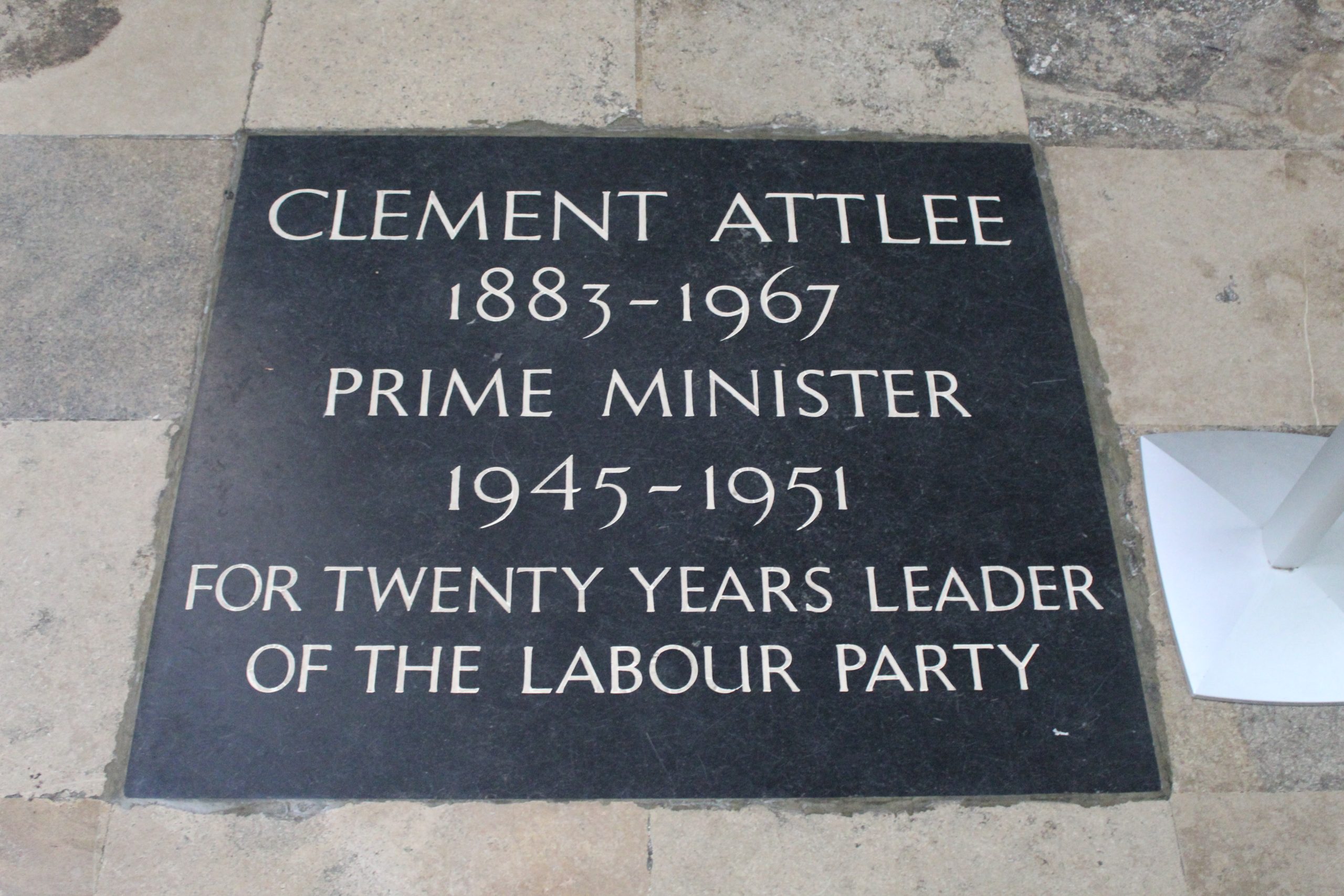
Clement Attlee after the war, and because of national trauma and wartime solidarity, sought to end want, disease, ignorance, squalor and indolence through the establishment of a cradle-to-grave welfare state. From this agenda the NHS, national insurance, social housing and state ownership of key industries developed. For a Britain wearied by war, it was reasonable: the collective sacrifice of the war demanded a collective reward in peace. However, that was 80 years ago. Britain in 2025 bears no resemblance to Britain in 1945. The terms of the context have changed — economically, demographically, socially and culturally. What hasn’t altered is the institutional structure of the welfare state. It has gone further than its initial intent, bloated in cost and elaboration. It is now less a safety net than an established way of life that too many call their own. The consequence is an economic black hole at the core of the British state, and a social model that is more and more divided and dysfunctional.
Economic Unsustainability
The expenditure on sustaining the welfare state has ballooned.
Welfare in the UK is already over a third of the government’s budget. Billions are spent every year on benefits, housing subsidies, healthcare and pensions — often with scant oversight or scrutiny. Although the recipients are most of the time in desperate need, the system also allows for layers of bureaucracy and in certain circumstances makes them in permanent dependency on the services they receive. Such expenditure is just untenable in an ageing society, with soft economic growth and increasing national debt. It is hard, when many of these measures are being imposed under a system providing diminishing returns, to rely on taxpayers to bear the burden. There is little incentive to reform because of the political sensitivity of welfare. Cutting spending will face overwhelming resistance, but fiscal reality is inevitable: without radical reform, the welfare state is going to collapse from its own weight.
Social Fragmentation
More than economics, the welfare state has hollowed out the strands of responsibility and social solidarity.
The Attlee model rested on the premise of a collective national identity and sense of duty — from state to citizen and citizen to state. Those assumptions no longer apply in today’s Britain. Welfare dependency, especially in deprived areas, has sapped the power of the family unit and self-reliance. Generations have come of age in households where work is eschewed and ambition is defunct. And instead of empowering people, the system has locked them into cycles of poverty and dysfunction. It breeds resentment — among both recipients, who feel patronised, and working people, who feel exploited. And the generous welfare provisions lure illegal immigration. Most people who come to Britain do so with hopes of a better future, but the prospect of free healthcare, housing and benefits is all too appealing. It is further exacerbating the strain on over-stretched public services, and the erosion of social cohesion and British fairness, especially in rapidly changing areas.
The Scrutonian Path: Constructing from the Ground Up
For balance to be restored, Britain needs to look to another philosophy — a philosophy based on conservative doctrine, as defined by the late, great Sir Roger Scruton. Scruton championed a politics of duty, tradition, and belonging. His conservatism wasn’t the sole preserve of market efficiency, rather, it was a politics of preserving the institutions, values and shared habits that anchor a nation.
First, we need to revive the concept of personal responsibility. Welfare should be a last resort, not a way of life. When possible, benefits must be linked to contributions. Able-bodied citizens must be expected to work or engage in meaningful activity — education, volunteering, retraining. The dignity of labour must replace the entitlement culture.
Second, we need to bolster intermediary institutions — families, churches, local charities, community groups. These institutions are better placed than the central state by which to understand and respond to the needs of local people. A conservative attitude supports localism over bureaucracy. Welfare should be localised and community-managed to determine the scope of support, with it operating within a clear and definite envelope of funding and framework of policy.
Third, we have to restore our national identity. Scruton often spoke of the meaning of shared heritage and the importance of cultural continuity. If we want to make immigration policy that is of the nation’s interest, it must be about the national interest of the country — with a clear distinction between legal and illegal entrants. Borders matter — not merely for safety but for solidarity — which entails a relentless expectation of integration. An ambitious welfare state cannot exist with open borders.
Fourth, the state has to be limited, not expansive. The state must protect the vulnerable, not own their lives. We need to eliminate the bureaucracy of welfare departments, instead investing in structures to help lift people upward — education, apprenticeships, home ownership. A smaller, smarter state is not just more efficient, it’s more moral, too — because it trusts individuals to be able to live their own lives.
A New Social Settlement
What Britain needs is a new post-welfare settlement, one shaped by the values and wisdom of the conservative camp, rather than those of the socialist. The system, which is designed for some long ago era, is no longer good enough. It bankrupts the nation financially and fractures it socially. It will be politically hard to effect change, but without change we only invite continued decay. Roger Scruton offers a paradigm: a society built of responsibility, powered by tradition and forged in common goals. It’s time to move from state-dependence to civic agency, from bureaucratic centralisation to local ownership, from abstract entitlement to substantial contributions. Only then can Britain remedy the chasm at the core of its own society and generate a future that respects its history, but isn’t fettered by it.
In summary, to save the nation it is imperative that we rethink the state — and find the conservative soul of Britain.