So, the Budget went about as you’d expect. Rachel Reeves gave a pretty good speech, considering that the Office for Budget Responsibility had leaked the contents; Kemi Badenoch really put the boot in, demonstrating again that she can use the spotlight when circumstances point it at her. The poor person responsible for the OBR’s Fuel Duty chart has another spine to add to the hedgehog of revenue foregone.
The actual contents? Bad. Higher taxes to pay for higher welfare spending; stealth raids on graduates and younger workers and carve-outs for pensioners; a few gimmicky giveaways to cover the squeeze. So it goes.
Has it saved Reeves and Sir Keir Starmer? Yes and no. Yes, inasmuch as the Prime Minister has already proven unwilling or unable to master his backbenchers and so any Budget actually oriented at fixing Britain’s problems would have resulted only in a humiliating retreat, and probably the loss of his Chancellor.
No, because the result of that is that the fundamentally unsustainable trajectory of this country’s public finances remains unaltered. It’s not the end of the world, but you can see it from here.
As the CPS describes in its latest paper, Britain’s Broken Budgets, there are lots of downsides to the bizarre way we have ended up doing fiscal events in Britain. Not least of these is the way that the OBR’s five-year forecast horizon allows politicians to skirt responsibility for their decisions, delivering goodies today whilst punting tax rises into the future – which then, when they arrive, are simply what was already planned, and get written up as such.
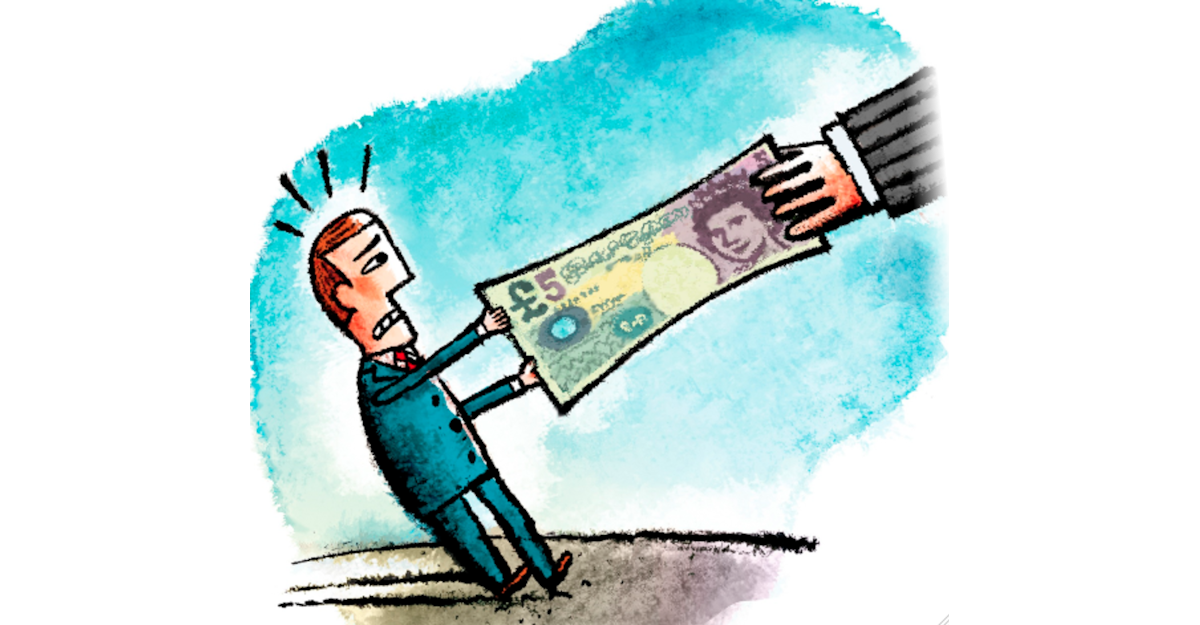
Freezing income tax thresholds, first done by Rishi Sunak as chancellor, broke one of the best guiding principles of British taxation: that politicians should have to own it when they asked for more money. Reeves’ promise to unfreeze them was always dubious, precisely because it remains a way for her to hike the taxes people pay on their incomes without formally raising Income Tax. So it proved; she has extended the freeze another three years (and hopes you won’t notice, because that’s from 2028).
Another problem is the bond markets – but not in the way you think. It’s not that the need to appease them restricts government spending – if anything, the fiscal rules facilitate state spending by offering dubious reassurance. It is strange to fixate so much on whether or not the government du jour has maintained a particular parabola on an arc which ends in a financial abyss, but that is the tone of much of the discussion.
Not unusually for politics, this attitudes conflates avoiding a short-term crisis with good government. A bond market rout would, at this point, bring down any sitting government and likely precipitate a genuine crisis of the state, so it is certainly best avoided. But the absence of such a rout is not a vote of confidence in the long-term trajectory of the British economy. It reflects merely traders’ confidence of getting their money back – and almost 40 per cent of governments bonds are ‘short-dated conventional gilts’ with maturities of five years or less.
To her limited credit, the Chancellor has at least built herself some fiscal headroom this time, rather than spending right up to the wire of what the OBR’s forecasts (which are crucially not only usually wrong, but usually wrong in being over-generous) say she’ll get. That gives her some little padding against external shocks, which is good.
But the idea that it will avoid her having to come back and repeat this performance before the next election is for the birds. There is simply no reason to think that any of the fundamentals are going to change.
The Government says it wants growth, which might unlock the easy politics of spending, but is entirely unprepared to do what is necessary to deliver it, preferring instead to gum up the job market with yet another minimum wage hike and the Employment Rights Bill. At the time time, welfare spending is forecast to rise by more than £70bn over the next five years (and has risen £10bn since March). And welfare spending, as the CPS has again noted, isn’t even one of the big three revenue accounts eating government from the inside out; those would be social care, the NHS, and pensions.
Yet coming back again isn’t going to be easy for Reeves either. We’re now almost 18 months into this Parliament; assuming she’s bought herself a year’s grace (I don’t know that she has, but just assuming), that puts any future tax raids in the latter half of it, in the run up until the next election. That is also, as Paul Johnson of the Institute for Fiscal Studies notes, when a lot of the Chancellor’s promised tax rises – i.e. the source of her fiscal headroom – are due to kick in.
One artefact of Labour’s historic majority in the Commons is that it now has a lot of MPs, with many extremely narrow majorities, sitting for constituencies which do not normally return a Labour MP. How are they going to feel about fighting the next election having just hiked their constituents’ taxes? Starmer has already demonstrated that his backbenchers call the shots. But since they also refuse to let Reeves cut spending, what sorry contortion act will she be forced to attempt in 2028?
Would that I knew. All that is certain is that you an I – assuming, dear reader, that you’re of working age and earn your living – will be paying for it.
![Donald Trump Slams Chicago Leaders After Train Attack Leaves Woman Critically Burned [WATCH]](https://www.right2024.com/wp-content/uploads/2025/11/Trump-Torches-Powell-at-Investment-Forum-Presses-Scott-Bessent-to-350x250.jpg)
![James Carville Admits Democrats Had No Shutdown Endgame, Mishandled Strategy [WATCH]](https://www.right2024.com/wp-content/uploads/2025/11/1763070634_James-Carville-Admits-Democrats-Had-No-Shutdown-Endgame-Mishandled-Strategy-350x250.jpg)