Georgia L Gilholy is a journalist.
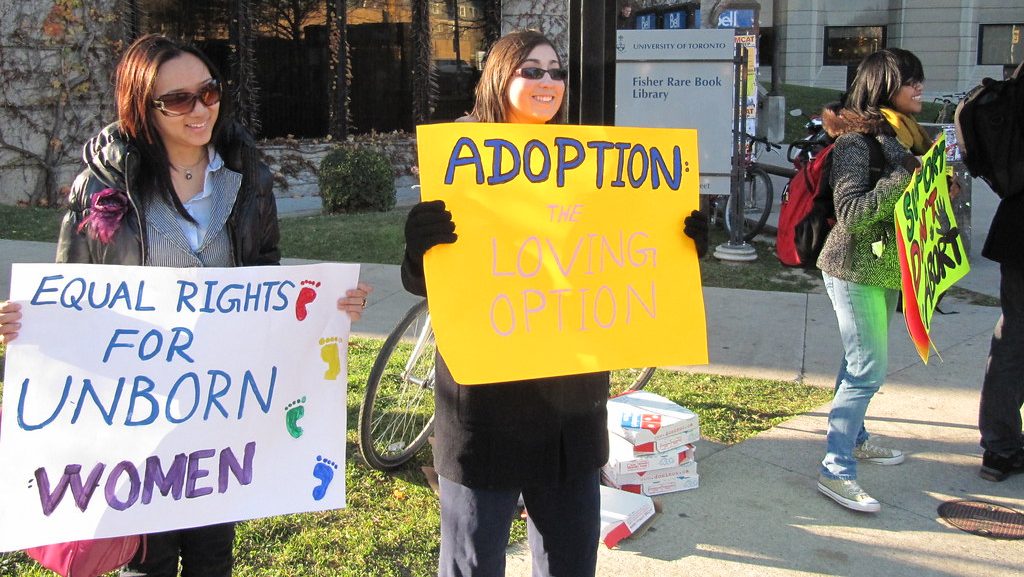
Up to 160 million women and girls are missing. They weren’t abducted by aliens. They didn’t vanish as part of some true-crime mystery. We know exactly what happened to them: they were aborted in the womb or killed shortly after birth.
Sex-selective abortion and infanticide are among the clearest examples of why the idea of inevitable, linear human progress is a fantasy. Technology has not made us more civilised; in many places, it has simply enabled societies to be ruthless in a more efficient manner. Abandoning girls, or babies with disabilities, to die was extremely common in the ancient and non-Christian worlds, and in many places it was never lost to the annals of history.
Today’s problem is thought to be most acute in India and China, two very different cultures with one bleak reality in common. China’s sex ratio stands at 114 males for every 100 females, far from the natural rate of roughly 105 to 100. This distortion is partly the legacy of Beijing’s coercive one-child policy – still routinely imposed on ethnic and religious minorities – and the infanticide and sex-selective abortion it encouraged.
Decades of this have left the country with 34 million more men than women. The consequences have been brutal. China’s shortage of women has fuelled a vast human-trafficking industry in which men purchase trafficked women and girls from poorer regions or neighbouring countries.
The cultural roots of this “gendercide” are deep. Classical Confucianism said of women and girls: “The female was inferior by nature, she was dark as the moon and changeable as water, jealous, narrow-minded and insinuating. She was indiscreet, unintelligent, and dominated by emotion. Her beauty was a snare for the unwary male, the ruination of states.” This is obviously at odds with the Biblical concept of all human beings being made in the image of God, which has historically been fundamental to Western ideas about gender and personhood – a history many of our policymakers seek to do away with.
Neighbouring India shares similar issues, and it is likely for that reason it, like China, faces the problem of an increasingly anti-social class of men who will never marry. Such an imbalance also incentivises the evil sex trafficking trade as women are on the one hand, treated like an inconvenience, and on the other like livestock to be bartered for the purposes of reproduction. It is a miserable fate that belongs on the pages of a trashy horror tale, but alas it is happening at the same time you are reading this article.
What is shocking is that, in the face of these real-life terrors, our policymakers are entertaining proposals that would move Britain in the same direction. Indeed, sex-selective abortion could be legalised in Scotland under recommendations from a review of abortion law commissioned by Holyrood. The review was anything but impartial, having been undertaken by a group chaired by a former trustee of the UK’s largest abortion provider.
Under current law, abortion on the grounds of an unborn child’s sex is illegal in England, Wales and Scotland due to it not being “one of the lawful grounds for termination of pregnancy” set out in the 1967 Abortion Act Scotland’s new report recommends that there be no specified grounds for abortion up to 24 weeks, making abortion lawful for any reason, including for sex-selection.
Rather than drifting toward this dystopia, we should be moving decisively in the opposite direction with an explicit legal ban on sex-selective abortion. Such a policy is overwhelmingly popular: a Savanta ComRes poll of more than 2,000 British adults found 91 per cent of women and 89 per cent of the public support a clear prohibition.
At a time of pre-existing alienation between the sexes, such a policy would no doubt further inflame these issues. On the one hand, it would incentivise misogyny often picked up by isolated, fatherless young men online, and more often imported by immigrant groups from places where women are deemed second-class citizens. It would also fulfil the shallow demands of rich, self-obsessed parents desperate to “design” their future child or children, and demand its abortion if its gender or health status is judged to be in error.
Once again, it is these “experts” and the politicians enabling them, not the British people, who are out of step with reality. Sex-selective abortion sends an obvious message: it is OK to eliminate a baby because it is the “wrong” gender. We cannot let this lie become enshrined in our law.