This article was adapted from the Daily Caller’s new Substack, State of the Day. Click here to sign up and get exclusive content, the Caller’s full slate of newsletters, hot takes, and informative, long-form pieces direct to your inbox.
Hollywood sucks in the year 2025, and we can all sense it.
The endless, dispiriting stream of sequels, remakes, and live-action remakes of classic animated movies might fill theater seats and drive profits for the studios, domestically and abroad, but they lack originality, artistry, and soul. These tent-pole blockbusters look and feel sanitized, like perfectly crafted corporate products; they don’t take creative risks, they’re not messy or provocative, nor illuminating, and they do not speak to the soul. After subjecting yourself to a torturous and tedious fifth Avengers sequel, you do not exit the theater with any emotion, other than, perhaps, disgust for having wasted your time and money. You certainly never feel as if the movie changed you, changed your perspective on the world or on human nature. In the words of the great filmmaker Martin Scorsese, these movies are theme parks and roller coasters, cheap thrills that do not “convey emotional, psychological experiences to another human being.” They are not art. They are not “cinema.”
It’s sometimes difficult, in my opinion, to precisely define “cinema.” Some of you, dear readers, might find it a pretentious and obnoxious term. Admittedly, sometimes I do as well. What’s wrong with saying “movie,” “film,” or, if you’re a real old school type, “picture”? Although I find it is a tad pretentious, it is also useful. Useful in that it helps us contrast the movies we see from Hollywood today, the theme parks and roller coasters, with the movies of old that were remarkably better made and told stories that were original, enthralling, and inspiring. I’m sure the academic cinephiles across the world have argued and debated the definition of cinema to the point of absurdity. But, if I could define it, I would borrow a phrase used by Justice Potter Stewart in a landmark Supreme Court case in 1964: like porn and obscenity, you know cinema when you see it. (However, as you will read a few paragraphs down, I think Pope Leo XIV defines it best.) (Subscribe to MR. RIGHT, a free weekly newsletter about modern masculinity)
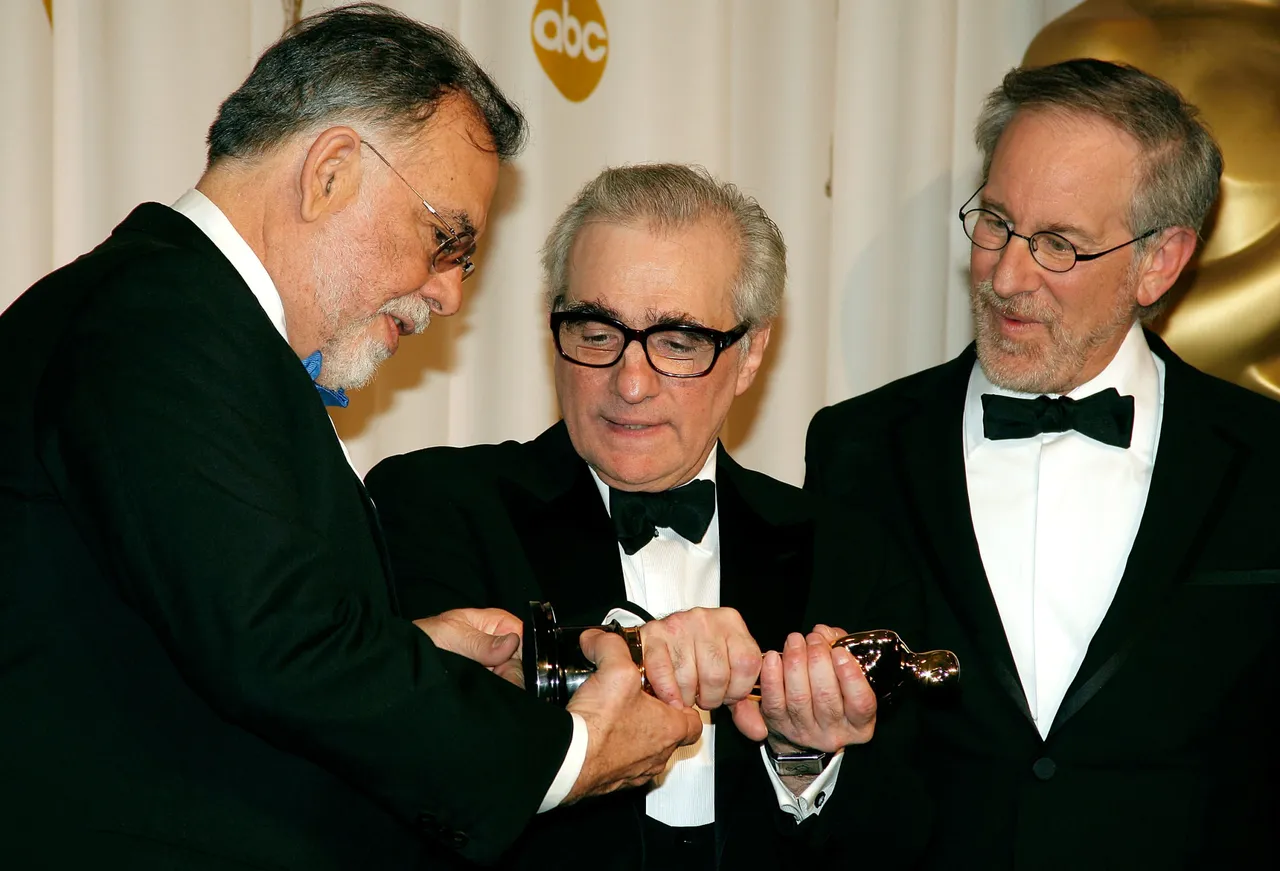
HOLLYWOOD – FEBRUARY 25: (L-R) Presenter Francis Ford Coppola, winner of Best Achievement in Directing for “The Departed” Martin Scorsese, and presenter Steven Spielberg pose in the press room during the 79th Annual Academy Awards at the Kodak Theatre on February 25, 2007 in Hollywood, California. (Photo by Vince Bucci/Getty Images)
Cinema was an art form, like painting or literature. From soup to nuts, writing to camerawork, these films were beautifully crafted. The people who made them aspired to something greater than box office returns. One of the greatest artists of his time, Stanley Kubrick, was exacting and meticulous. He was a madman, a genius who would shoot hours and hours of footage, practically torturing his actors, as he carefully framed and lit each shot until it fit his definition of perfection. Just take a look at his 1975 film Barry Lyndon. These images are like old-world paintings languidly brushed onto a screen. They are beautiful to behold. They’re so beautiful and compelling that they make you want to step into this world and live in it briefly.
Watching a movie of Barry Lyndon‘s quality, or at least a movie that aspired to such quality, was also an intellectual experience as much as an aesthetic one. Not a decade ago, you could actually go to a theater and see a film all by yourself, as if you were reading a novel, or walking through a museum gallery, and nothing about you being there all in your lonesome was weird or off-putting to others around you. Nearly a decade ago, in fact, I was meeting someone in Los Angeles for an interview. The coffee shop where we met happened to be across the street from the famous ArcLight Cinerama Dome. After we parted ways, I had quite a bit of time to kill before I needed to head back downtown for a train in Union Station. It was raining, oddly enough, and instead of walking around the city, I decided to pop into the ArcLight and watch a matinee. It was Terrence Malick’s Song to Song. I’m going to sound like a massive nerd loner, but watching it, with the entire theater all to myself, was immensely pleasurable, one of the best movie-going experiences of my life. Imagine sitting through a Marvel superhero movie by yourself, surrounded by kids, families, and throngs of adults stuck in arrested development. People will think you are the saddest, loneliest, dorkiest person on earth — or, sadly, that you are a mass shooter.
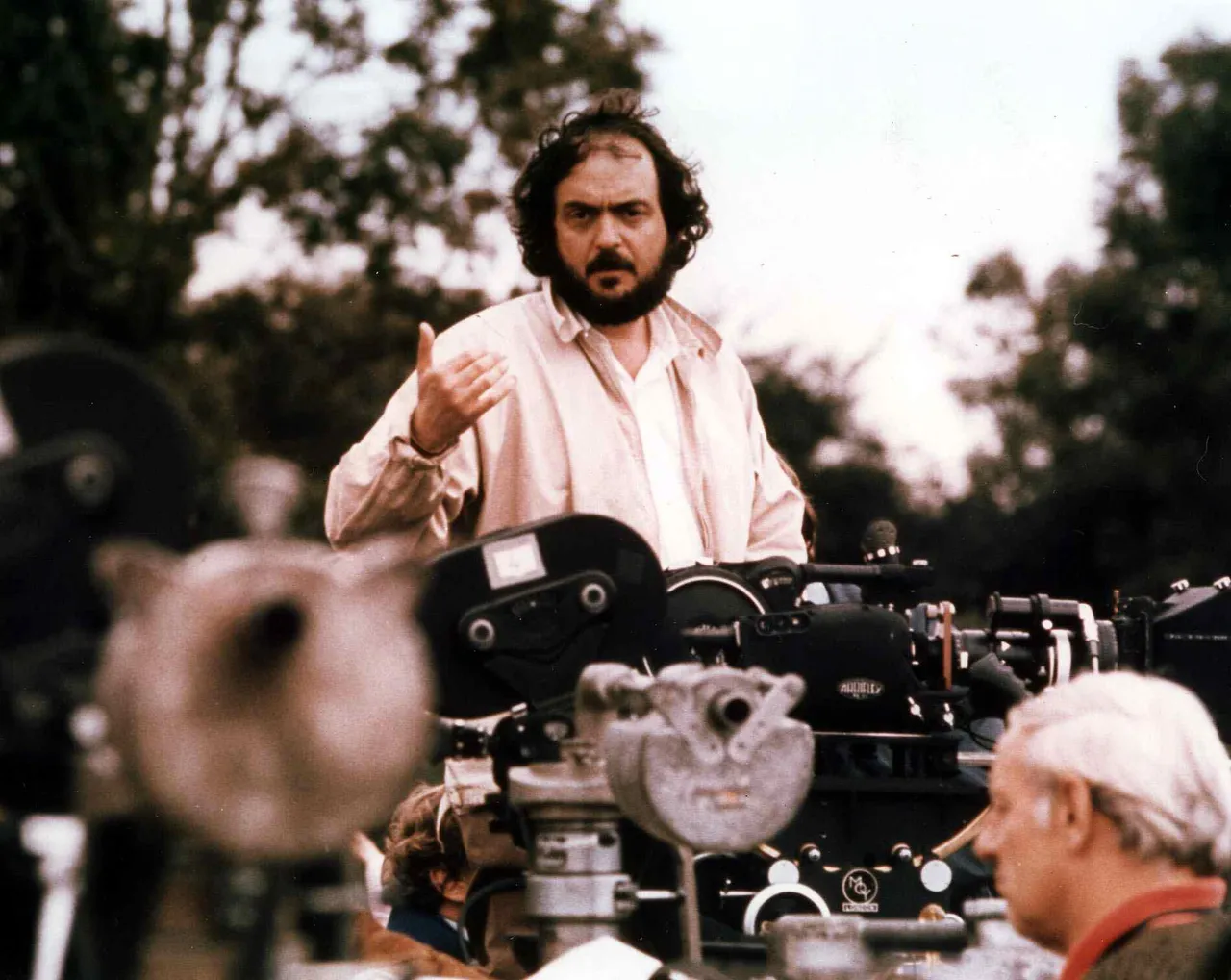
Kino. Stanley Kubrick, 1970er, 1970s, 1975, Barry Lyndon, Bart, British, Dreharbeiten, Filmkamera, Kubrick, Stanley, beard, cine camera, film director, on the set, portrait, shooting, Stanley Kubrick, 1970er, 1970s, 1975, Barry Lyndon, Bart, British, Dreharbeiten, Filmkamera, Kubrick, Stanley, beard, cine camera, film director, on the set, portrait, shooting, Stanley Kubrick am Set von Barry Lyndon, USA, 1975. (Photo by FilmPublicityArchive/United Archives via Getty Images)
So, yes, the state of Hollywood is depressing indeed. Very few American directors working today, aside from Scorsese, Paul Thomas Anderson, Christopher Nolan, the Coen Brothers, Quentin Tarantino, Wes Anderson, and a handful of others, are still making films that come close to matching the quality of their own earlier works, let alone the greatest works of the 20th Century.
But Pope Leo XIV, who recently became the Vicar of Christ by way of Chicago, wants to change that and revitalize the lost art of cinema. At the Vatican earlier in November, he gave a speech to a slate of A-list actors and filmmakers, including Viggo Mortensen, Cate Blanchett, Greta Gerwig, Spike Lee, Judd Apatow, Gus Van Sant, Chris Pine, Monica Bellucci, and Darren Aronofsky, among others. One of my personal favorites, the writer, director, and playwright, Kenneth Lonergan, whose 2016 film Manchester by the Sea won him an Academy Award, was also in attendance.
Here are a few snippets, but it is worth reading in full:
The logic of algorithms tends to repeat what “works,” but art opens up what is possible. Not everything has to be immediate or predictable. Defend slowness when it serves a purpose, silence when it speaks and difference when evocative. Beauty is not just a means of escape; it is, above all, an invocation. When cinema is authentic, it does not merely console but challenges. It articulates the questions that dwell within us and sometimes even provokes tears that we did not know we needed to express.
[…]
In the present era, there is a need for witnesses of hope, beauty and truth. You can fulfill this role through your artistic work. Good cinema and those who create and star in it have the power to recover the authenticity of imagery in order to safeguard and promote human dignity. Do not be afraid to confront the world’s wounds. Violence, poverty, exile, loneliness, addiction and forgotten wars are issues that need to be acknowledged and narrated. Good cinema does not exploit pain; it recognizes and explores it. This is what all the great directors have done. Giving voice to the complex, contradictory and sometimes dark feelings that dwell in the human heart is an act of love. Art must not shy away from the mystery of frailty; it must engage with it and know how to remain before it. Without being didactic, authentically artistic forms of cinema possess the capacity to educate the audience’s gaze.
The Pope’s words were inspiring to me, as someone who loves movies, especially older ones not made in this century, and I hope they are as inspiring for you as they were for me. I certainly hope that the stars came away with something. Hollywood does not suffer a want of talent; it’s more that the current studio and streaming system does not incentivize creative risk and keeps mindlessly churning out movies for streaming that are often “didactic” — woke propaganda pieces filled with stilted characters whose only purpose in the story is to add diversity for the sake of diversity. As Leo pointed out, thanks to streaming platforms, studios have opted for algorithmically driven quantity over cinematic quality. Gone are the days of Stanley Kubrick.
And even if you are not a cinephile, his speech is powerful. The Pope seems to be clued in to what is going on with the rampant advance of technology in the 21st century, and how AI and the “logic of algorithms” are not only melting our minds, but also eroding our shared humanity. In the coming years, his wisdom will be vital in helping all of us deal with the far-reaching, usually damaging effects that social media and the internet have had on civilization.
(P.S., I didn’t mention many examples of movies that I think reach the level of cinema, so here’s a list, ranked in no particular order. Feel free to discuss a movie you love or drop recommendations in the comments section.)
- All of Billy Wilder’s movies, but especially Some Like It Hot and Sunset Boulevard
- The Treasure of the Sierra Madre





![Donald Trump Slams Chicago Leaders After Train Attack Leaves Woman Critically Burned [WATCH]](https://www.right2024.com/wp-content/uploads/2025/11/Trump-Torches-Powell-at-Investment-Forum-Presses-Scott-Bessent-to-350x250.jpg)



![Kamala Comes Unglued, Makes Bogus Claim About Her Landslide Loss to Trump [WATCH]](https://www.right2024.com/wp-content/uploads/2025/10/Kamala-Comes-Unglued-Makes-Bogus-Claim-About-Her-Landslide-Loss-350x250.jpg)