David Gauke is a former Justice Secretary and was an independent candidate in South-West Hertfordshire at the 2019 general election.
Last week’s budget was an important one, but not in the way that might have been expected.
It will be remembered as much for the speculation in advance as its contents. Indeed, the biggest single controversy that rages today is about what was said by the Government in advance of the budget, as opposed to within it.
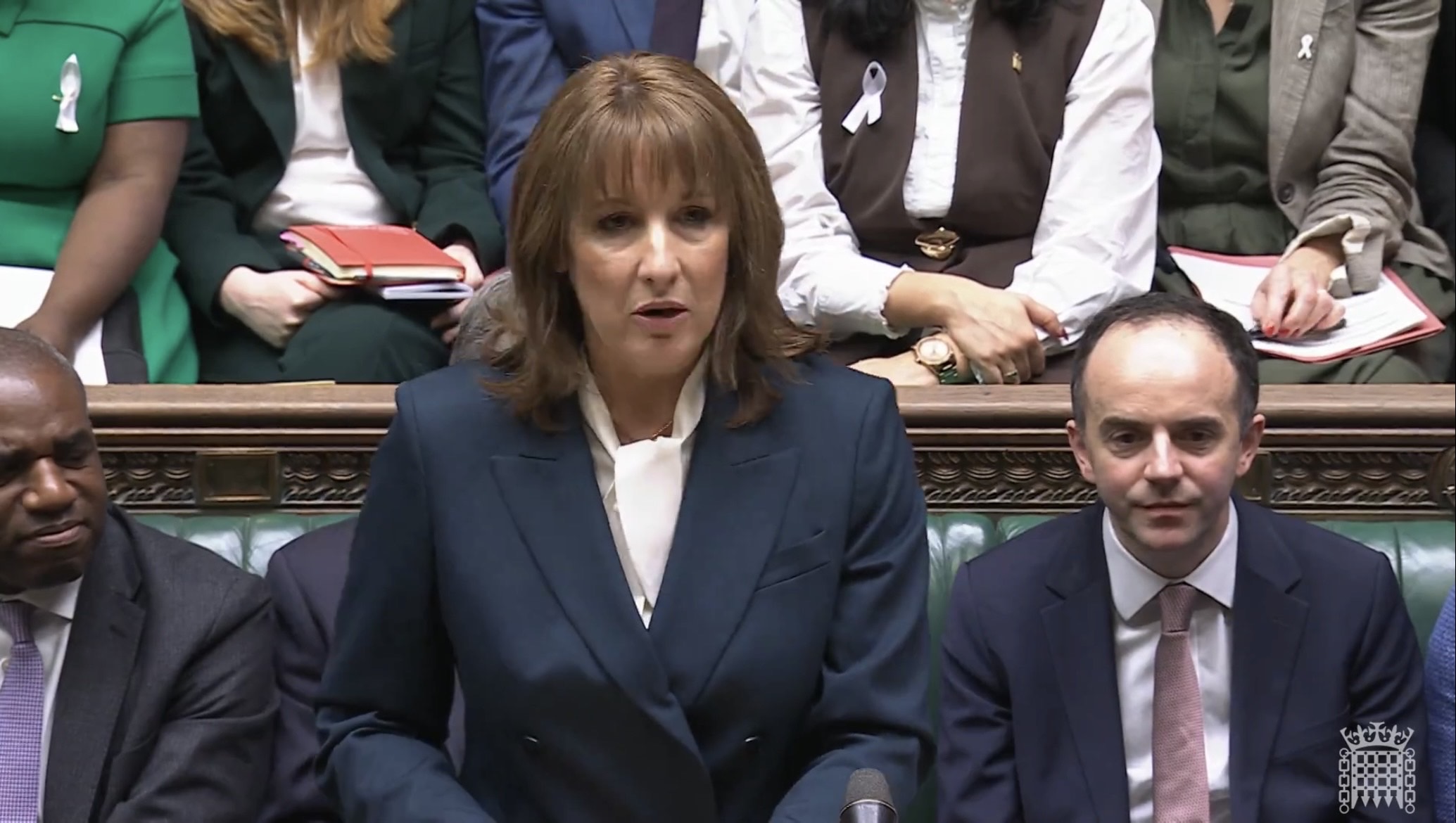
We should start with that controversy. Most independent commentators concluded that if the Office for Budget Responsibility was to downgrade its productivity growth forecasts, the Chancellor would face a substantial fiscal black hole. Once you added in higher borrowing costs, Government retreats on welfare cuts and the need to get the headroom up (so we didn’t have to go through a repeat of months of speculation next year), it looked likely that the Chancellor would need to find something like £40bn worth of tax increases or spending cuts.
By the time we got to September, we knew that the productivity downgrade was happening. During the party conference season, this was a story that received less attention than it might (it was the issue that dared not speak its name during Labour’s conference) and Rachel Reeves sounded more chipper than most. But subsequently, speculation took off that taxes were going to have to rise substantially, creating economic uncertainty and a cooling of business and consumer confidence. This is bad news economically, at least in the short term, but can be helpful politically in terms of “rolling the pitch” for difficult budget measures.
The Treasury did nothing to dampen the speculation that big tax rises were on the way. By 31 October (at the latest), however, they knew that the OBR’s productivity downgrade was accompanied by more positive news about tax receipts. This news was not evident to the rest of us and the Chancellor was not going to disabuse us. On the contrary, she was out making a breakfast speech hinting heavily that income tax rates were going up or giving interviews emphasising the bleakness of the situation.
Then, very suddenly, the situation changed. After a turbulent political week, in which it appeared that sources within Number 10 were accusing Wes Streeting of preparing to launch a leadership coup, the Financial Times revealed that an income tax increase was off the table. This news was not welcomed by the markets (how were the sums going to add up without an income tax rate increase?), bond yields increased, the pound fell. There was then a hurried Treasury briefing to Bloomberg stating that the OBR had come forward with good news, and the fiscal black hole was not as bad a feared.
This was, to put it charitably, a half-truth. Yes, the OBR had come forward with some relatively good news, but we now know that this had happened some weeks previously and well before the briefing on income tax increases had been in full swing.
What follows from this is that the messaging of early November – that tax increases were necessary because of a productivity growth downgrade – was untrue. That is not to say that some kind of fiscal retrenchment was unnecessary (the welfare retreats had to be paid for, and the previous headroom of £9.9bn was clearly inadequate), but the scale of the fiscal challenge was – and had been for some time – much less than the country had expected.
Why the subterfuge?
The most obvious reason was a hope to make the story of the budget the absence of a rate increase – that this would be the rabbit pulled out of the hat to wrong foot the Government’s critics. If so, this was a shabby exercise that has gone badly awry. An alternative explanation is that Reeves wanted the additional revenue from an income tax increase to fund even more headroom (£22bn, which is where she ended up with, is still low), providing greater market reassurance and giving the Government a potential war-chest for use later in the Parliament. But – with the political difficulties of the moment – abandoned (or was forced to abandon) the plan. Whatever the reason, Reeves’ will deservedly continue to face a difficult time from a media who were led up the garden path.
The fact that the public finances were not in quite such a ghastly place, however, meant that the budget itself was not the horror show that it might have been. The political consequences of putting up income tax rates might have been catastrophic given the repeated promises not to do so. The expectation management may have been dishonest and has been exposed as such, but it still partially succeeded.
Reeves achieved her two principal objectives. She calmed the markets (bond yields fell on the day) and she satisfied Labour MPs by scrapping the two-child benefit cap. There were plausible scenarios in which her budget would be immediately followed by market or political turmoil. That did not happen.
What she has done, however, is vacate political space which Labour’s opponents can fill.
This was very much a Labour budget in which taxes were increased to pay for higher welfare spending. This was surely not what Reeves had intended when she came to office. She wanted to cut winter fuel payments, control disability benefit spending, and (it was widely reported) maintain the two-child benefit cap. Instead, policy has been determined by Labour MPs and taxes have gone up as a result.
Then there is the issue of growth, and the absence of a plan to deliver more of it. To be fair, there are no big tax increases for business or for the internationally mobile wealthy (that was last year’s budget) but a Government should be more ambitious in terms of supply-side reform. The Fingleton Report set out an agenda to reduce the cost of commissioning nuclear power stations, but the budget speech was lukewarm about it (although there may be more to come). Efforts to reduce the regulatory costs that are impeding house building are badly needed, but we heard nothing about it. We need to attract more private investment into infrastructure projects but this did not feature. Nor did we hear about the transformative potential of AI.
This, again, looks to be about political self-preservation. All of the policies set out above would provoke opposition from Labour MPs instinctively opposed to any deregulatory measure or an increased role for the private sector and fearful that technology will take away jobs. The most pro-business piece of news last week was dropping the proposal to allow employees to claim for unfair dismissal on day one – and that was only announced a day after the budget, insulating Reeves from criticism.
This brings me to the wider significance of the budget. As it turned out, it was not so much the measures that matter but the confirmation that this is a Labour Government in its comfort zone, led by a Prime Minister and a Chancellor who are unwilling or incapable of challenging the party’s instincts and prejudices on the economy.
This is not good news for the country.
It should, however, provide an opportunity for the Conservative Party. If the Tories can remain disciplined enough to focus on the economy, make the case for spending control and welfare reform, and set out a convincing theory of growth that acknowledges the value of the private sector, there should be a ready audience to attract new voters.
The economic limitations of the centre left have become all too apparent; it is time to make the economic case for the centre right.
![Donald Trump Slams Chicago Leaders After Train Attack Leaves Woman Critically Burned [WATCH]](https://www.right2024.com/wp-content/uploads/2025/11/Trump-Torches-Powell-at-Investment-Forum-Presses-Scott-Bessent-to-350x250.jpg)