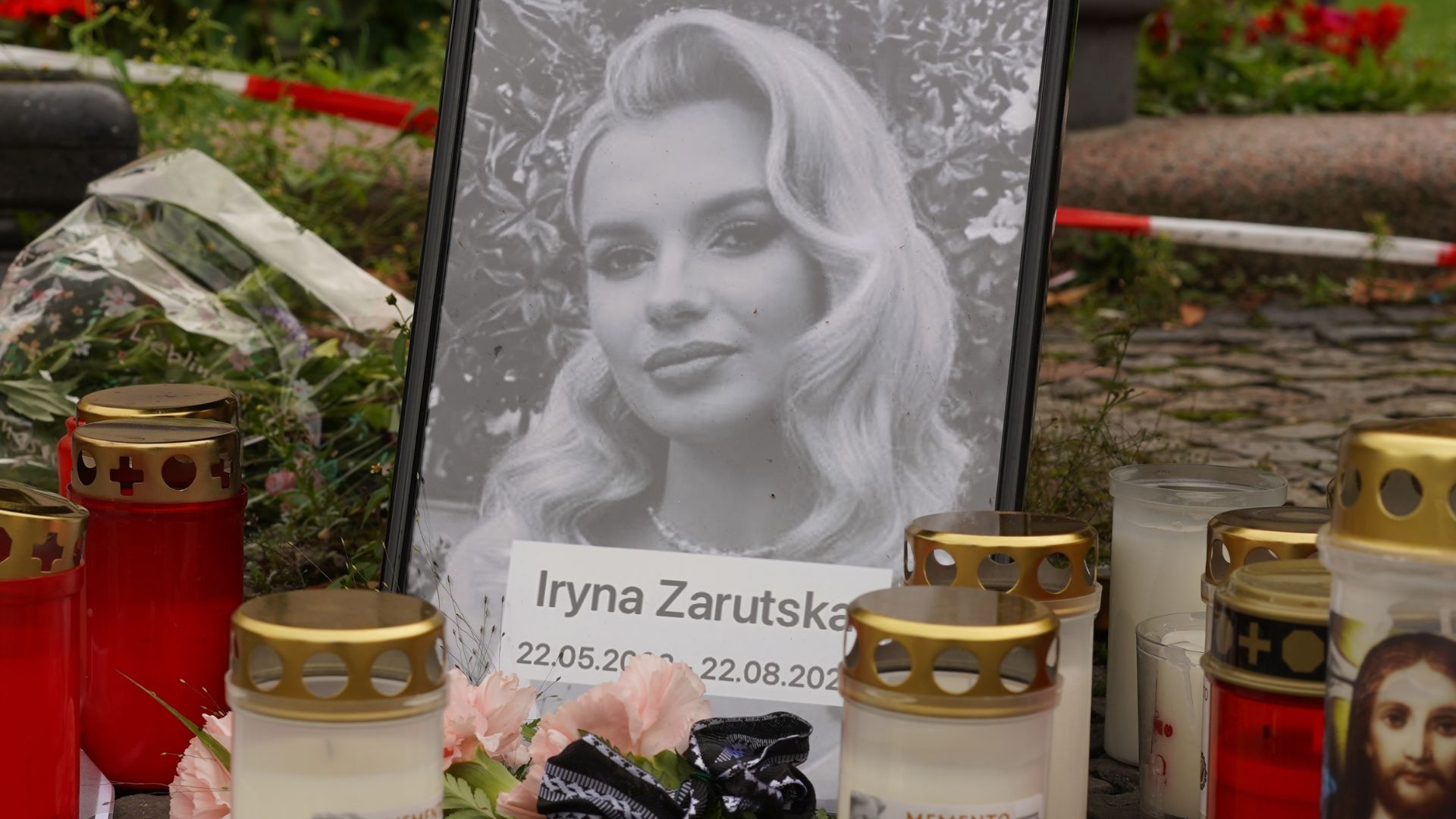
The August 2025 killing of Ukrainian refugee Iryna Zarutska on a Charlotte, North Carolina, light rail train prompted state lawmakers to pass new criminal-justice legislation aimed at repeat violent offenders.
The incident drew national attention after the attack was captured on video and the suspect’s criminal history became public.
Police identified the suspect as Decarlos Brown Jr., who had 14 prior arrests, including charges for armed robbery and assault.
He had been released without bond months earlier following a diagnosis of schizophrenia.
Zarutska was killed during what authorities described as an unprovoked attack.
Court and public-safety records show Brown had faced multiple previous charges.
He had also been released in earlier cases under bond policies that allowed defendants to remain free while awaiting trial.
This Could Be the Most Important Video Gun Owners Watch All Year
In this case, local officials said Brown had been released without bond following the mental-health evaluation.
The case led to renewed scrutiny of pre-trial release policies and prompted debate within the North Carolina General Assembly.
Lawmakers introduced “Iryna’s Law,” a measure that increases restrictions on release for defendants accused of certain violent crimes and repeat offenses.
The legislation passed the North Carolina House of Representatives by a vote of 82–30 and the state Senate by a vote of 28–8.
Ten Democrats voted for the bill in the House. No Democrats supported the bill in the Senate.
The statute expands the definition of “violent offenses” and places limits on when defendants can be released without bond.
It also removes the option for a written promise to appear for all criminal charges.
Under the law, defendants accused of violent offenses and certain repeat offenders will be subject to stricter pre-trial conditions.
“Iryna’s Law” also includes provisions requiring mental-health evaluations for some defendants.
During the legislative process, lawmakers added additional provisions addressing capital punishment.
A last-minute amendment introduced by Senate President Pro Tempore Phil Berger expedited procedures related to the death penalty.
That amendment prompted Senate Democrats to walk out before the vote.
Supporters of the legislation said the measure was designed to address public-safety concerns and close gaps in existing bail rules.
They argued that the changes would reduce the likelihood that individuals with prior serious offenses would be released without sufficient judicial review.
Opponents raised concerns about the scope of the expanded definitions and the potential impact on the state’s prison population.
🚨#BREAKING: Charlotte NC officials are PANICKING as Iryna’s Law takes effect in 4 days and will EXPLODE the prison population…
“We are bracing for Monday, as you do when there’s a hurricane or a tragic storm that is coming.”
Bunkbeds are now being set up in the prisons. pic.twitter.com/tvpadDzEvD
— Matt Van Swol (@mattvanswol) November 26, 2025
Some lawmakers said the capital-punishment amendment had not gone through the usual committee process and objected to its inclusion in the final bill.
The law follows a series of high-profile cases nationwide in which defendants with prior criminal records were released pre-trial and later charged with new violent offenses.
In North Carolina, state officials said the Charlotte incident contributed to bipartisan efforts to reconsider pre-trial release standards.
Gov. Roy Cooper has not yet issued a formal statement on the implementation timeline for “Iryna’s Law.”
State agencies began preliminary planning after the bill’s passage to adjust procedures for bond hearings, risk assessments, and evaluation requirements.
Brown remains in custody in Mecklenburg County. Court records show his next hearing is scheduled later this year.





![Donald Trump Slams Chicago Leaders After Train Attack Leaves Woman Critically Burned [WATCH]](https://www.right2024.com/wp-content/uploads/2025/11/Trump-Torches-Powell-at-Investment-Forum-Presses-Scott-Bessent-to-350x250.jpg)



![Kamala Comes Unglued, Makes Bogus Claim About Her Landslide Loss to Trump [WATCH]](https://www.right2024.com/wp-content/uploads/2025/10/Kamala-Comes-Unglued-Makes-Bogus-Claim-About-Her-Landslide-Loss-350x250.jpg)