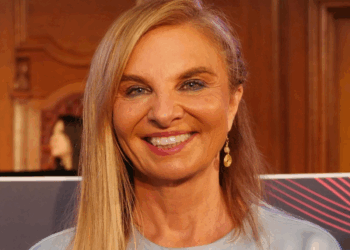
Shazna Muzammil is leader of the Conservative group on Milton Keynes City Council and a former parliamentary candidate.
There is a quiet unease growing across Britain.
Not shouted or dramatic – but unmistakably there. You hear it in town halls, in parks, in WhatsApp groups, over cups of tea, and at the school gates. It is the sense that something precious is slipping away – something distinctly British, something that once made us feel confident, comfortable, grounded.
Part of that unease is about immigration – and it is foolish to pretend otherwise. People can see that the scale has grown beyond what our public services, our communities, and even our national story feel equipped to absorb. But the deeper concern – the one people rarely articulate out loud – is what this change means for their own place in their own country. Immigration is not the only issue, but combined with a fading sense of identity, it becomes a profound one.
People feel that our national identity is being diluted, dismissed, or defined by others. And worse still, they feel that speaking about it invites judgement rather than understanding. Yet identity is not trivial. It is the foundation on which every stable society is built. And today, as Labour manages Britain into dependency and Reform exploits frustration for political theatre, Conservative values – and a confident British identity – are being tested like never before.
This is not a call for nostalgia, nor a longing for a past that cannot return. It is a call for honesty about who we are, where we are going, and what we stand to lose if we do not reclaim the principles that built this country.
Labour, for all its talk of fairness, has presided over a model of governance that traps people in dependency instead of lifting them up. For decades, especially in some of our great cities, Labour MPs have represented communities that remain some of the poorest in the country. That is not coincidence. It is consequence. I saw it personally in Birmingham. Families were not being helped out of poverty; they were being managed in poverty. People who wanted to work found few routes into jobs. People with ambition found little support. Generations were taught that benefits were not a safety net – but a way of life.
This Budget is no different. Labour say they are lifting children out of poverty, yet their measures do the opposite. They are taxing schools, reducing their spending power, and offering parents fewer opportunities to work, train or get ahead. They promise compassion. But compassion is not keeping people dependent on the state; it is giving them the tools to leave dependency behind. It is standing up for farmers, not undermining food security. It is encouraging enterprise, not penalising it.
Labour’s Britain is a Britain without hope, and we can see it now. Hard-working people are being taxed out of working; in too many cases, it has become more beneficial not to work at all. Pensioners are being squeezed. Families are being pushed backwards. Labour have taken the very things that build aspiration and replaced them with dependency.
Reform, meanwhile, prides itself on speaking hard truths. But shouting the loudest is not the same as speaking the clearest. They claim to be the defenders of real Conservative values, yet offer no meaningful plan to improve the NHS, support British farmers, or strengthen our place in the world. Instead, they wield patriotism like a cudgel. They wave the flag, but offer no roadmap. Patriotism is meant to unite a nation – not divide it into camps of “real” and “not real” Britons. When Reform weaponises Conservatism, it robs those values of their dignity. It turns principles into slogans and tells frustrated people that anger is a solution when anger is only a symptom.
One of the most sensitive issues in Britain today is demographic change. And because it is sensitive, too many politicians whisper about it – or avoid it entirely. But avoiding a conversation is how you lose control of it. Silence is not moderation; it is abdication. The facts are clear. Most babies born in Britain are still born to UK-born mothers. But the proportion of births involving at least one parent born outside the UK continues to rise and now exceeds a third.
Alongside this, another trend is unfolding. A record 255,000 British citizens left the UK in the year to March 2025. That is not a statistic – it is a warning signal. Even more striking is who is leaving: 174,000 of those emigrants were aged just 16 to 34 – our working-age engine, the very people who should be building their lives and families here at home. At the same time, 845,000 people moved to the UK, most of them non-EU nationals – yet only 143,000 British nationals returned.
These numbers are not conspiratorial. They are simply reality. And Britain does not fear reality. The danger is not demographic change. The danger is pretending it isn’t happening. When politicians refuse to speak openly, they leave a vacuum – and vacuums get filled by extremes. By rumour instead of fact. By fear instead of leadership.
A strong Conservative voice is needed: one that speaks plainly, without hostility or hesitation. One that knows a confident country can integrate newcomers, support communities, and protect its identity at the same time. One that understands that Britishness is not fragile – but it does need defending, articulating, and passing on with pride. Because when we stop talking about who we are, we start forgetting who we are. And Britain must never forget itself. I chose Britain. I built my life here. And I will fight for the identity that made this country worth choosing.
The anxiety people feel is not statistical; it is cultural. It is in the small moments that once felt ordinary. There was a time when the Union Jack was flown on streets with pride, not suspicion. When St George’s Day meant bunting, long tables, and children with painted faces. When neighbours came together for the Queen’s Jubilee or a royal wedding without a second thought. Street parties were not political gestures. They were expressions of who we were: a joyful, communal nation that understood patriotism is not pomp – it is belonging.
Today those celebrations feel quieter. More hesitant. In some places they have vanished. It is not that Diwali or Eid festivals are wrong – they enrich our modern Britain. But the question many quietly ask is simple: Why do our own national celebrations feel like they are fading? Why is flying the national flag treated as provocation instead of pride? Why are British children more familiar with international festivals than with St George’s Day? Why do people whisper about identity while every other culture celebrates theirs confidently?
This is not racism. It is the universal human need to feel at home in one’s country – to recognise it, to see oneself reflected in it, to belong to it. A nation that loses confidence in its identity cannot offer confidence to its people.
This is why Conservative values matter now more than ever. Conservatism understands that identity is not about superiority – it is about stability. It knows that pride is not something to apologise for – it is something to build from. A strong national identity and a strong economy are not opposites; they are partners. Without identity, there is no cohesion. Without cohesion, there is no shared purpose. Without shared purpose, ambition dries up.
If Britain wants to rebuild itself – economically, socially, culturally – it must rediscover the Conservative values that built it: rewarding effort; supporting families; making work pay; cherishing local pride; ensuring integration is real, not rhetorical; and celebrating British heritage with the same enthusiasm with which we celebrate every other culture in this country. A confident nation does not erase the past. It honours it. A confident nation does not silence its traditions. It strengthens them.
Britain is not broken. But it is drifting. Labour’s drift leads to dependency and decline. Reform’s drift leads to division and despair. The Conservative path – the real Conservative path – leads to responsibility, identity, aspiration and unity. We stand at a crossroads. If we choose courage over caution, truth over silence, and pride over apology, then Britain’s future will not be defined by decline or division. It will be defined by renewal.
Because Conservative values did not simply build this nation.
They are the only values that can rebuild it.


![Donald Trump Slams Chicago Leaders After Train Attack Leaves Woman Critically Burned [WATCH]](https://www.right2024.com/wp-content/uploads/2025/11/Trump-Torches-Powell-at-Investment-Forum-Presses-Scott-Bessent-to-350x250.jpg)