Lord Ashcroft KCMG PC is an international businessman, philanthropist, author and pollster. For more information on his work, visit lordashcroft.com.
The last ten days have arguably seen the most intense rounds of diplomacy in modern history.
Negotiations over a potential peace deal for Ukraine have consumed much of Washington’s bandwidth.
With General Kellogg announcing his retirement from the process and Steve Witkoff facing criticism for his lack of diplomatic experience, the American mediation team has now been reinforced by Donald Trump’s son-in-law Jared Kushner. It remains deeply unfortunate – and very odd, given his position as Secretary of State – that an experienced and respected operator such as Marco Rubio has been excluded from the process.
As expected, Witkoff and Kushner returned from Moscow with little to show for their efforts.
Between the city tours and Michelin-star dinners, their five-hour meeting in the Kremlin produced nothing tangible. The EU’s intervention to reshape the scandal-ridden 28-point proposal into a more credible 19-point framework clearly irritated the Russian president, triggering another round of sabre-rattling in which he accused Europe of calling war upon themselves. If anything, his outburst confirms that Europe’s revisions were effective.
Ukraine’s refusal to cede territories that Russia has failed to conquer has further provoked Putin’s familiar threats to “take everything by force.” Yet after almost four years of full-scale war – and more than one million Russian military losses – Moscow still cannot control the totality of Donbas. Scarcity of Ukrainian resources does not disguise the enduring reality – Russian incompetence on the battlefield remains the defining feature of this war.
As Ukrainian officials travelled to Florida for a debrief – and most likely, more demands – it has become abundantly clear that the peace process goes on.
What is new, however, is Europe’s reinvigoration. After nearly four years of bold statements paired with strategic ambiguity, Europe has finally confronted the obvious: if Ukraine is defeated – and until now, the American-led mediation has tilted uncomfortably in that direction – the war will eventually reach the EU soil. That is why European allies rushed to convene a NATO foreign ministers’ meeting the day after the Kremlin talks.
Yet Europe still has a long reckoning ahead regarding its preparedness for war. Its inability to overcome internal blockages on the use of frozen Russian assets – arguably the greatest leverage the West possesses – remains astonishing. Belgium’s resistance to seizing or monetising Russian funds, even as collateral for loans to Ukraine, has made it Moscow’s most valuable proxy inside Europe. Meanwhile, the European Commission’s search for creative circumvention is being disrupted by one of the most serious fraud scandals it has faced in years.
Hybrid warfare in Europe is no longer a threat – it is a daily reality.
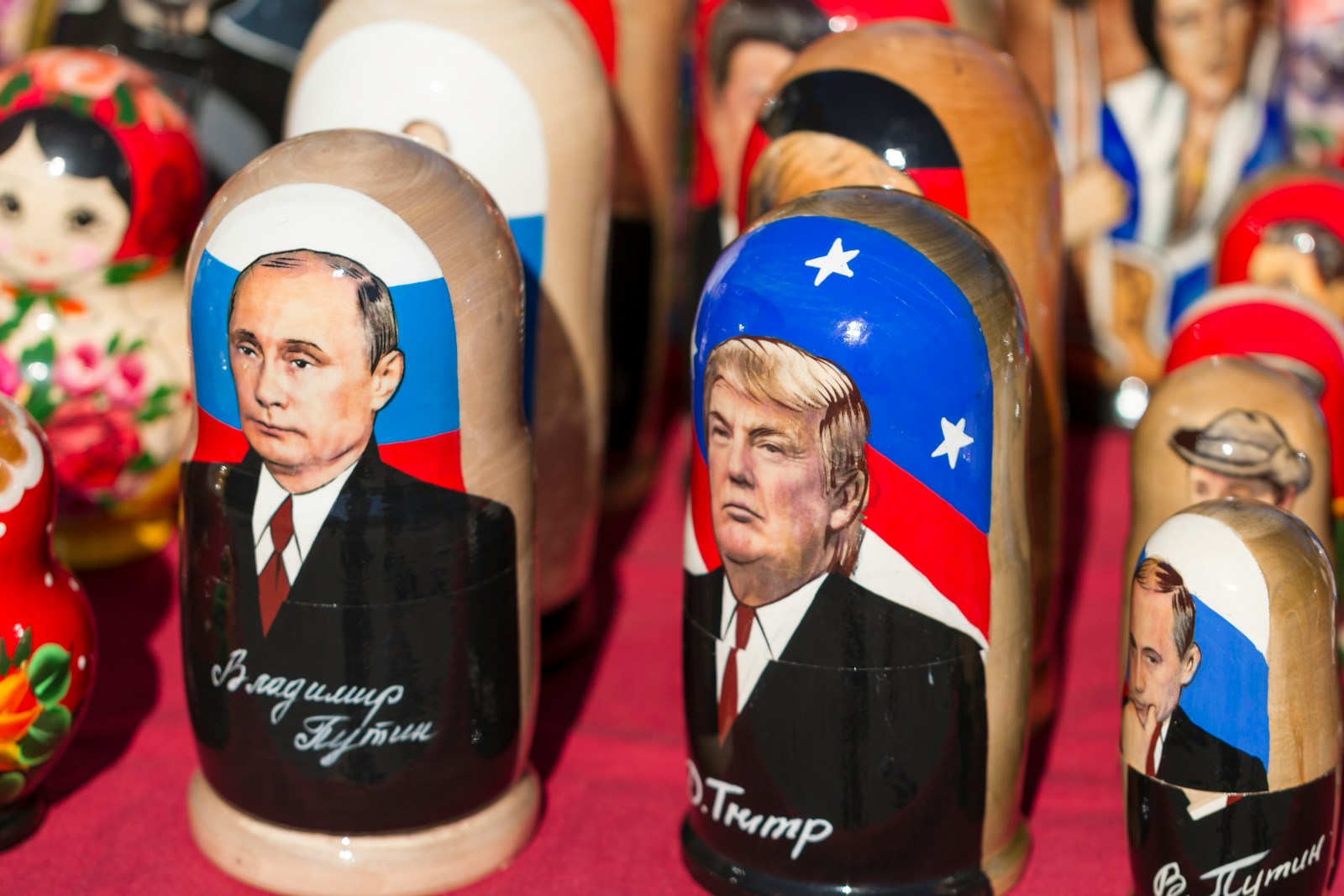
Even as Europe attempts to raise its game, it is still the United States that holds the keys to any eventual agreement. But Donald Trump has complicated matters by viewing every geopolitical decision through the prism of economic gain. He appears to harbour an outdated illusion that Russia could be a promising economic partner. The Wall Street Journal’s recent investigation into potential Russian business interests among those closest to Trump makes for unsettling reading.
Leaving out the moral factor, this thinking is fundamentally flawed – and at least two decades out of date. Russia’s long-term trajectory remains one of decline. Its economy is roughly the size of Spain’s. Ukrainian long-range strikes have cut Russia’s energy output by 20%. Moscow is now selling off its gold reserves – a clear sign of deep economic distress. Of all people, Donald Trump should recognise that this is not the profile of a worthwhile economic partner.
A rush to normalise relations with Russia would be a grave, historic mistake – one that Europe and the world will pay for dearly.
Trump insists that Europe must be able to defend itself against its adversaries. But if the United States chooses to appease Russia now, is America prepared to confront an emboldened, nuclear-armed China backed by aggressive North Korea, spiteful Iran, and a weakened yet China-dependent Russia – alone?
Because as things stand, Europe – frozen out of the negotiations and potentially facing war on its soil as a result of flawed decision-making, may not be in a position to come to America’s aid when Washington needs it next.


![Donald Trump Slams Chicago Leaders After Train Attack Leaves Woman Critically Burned [WATCH]](https://www.right2024.com/wp-content/uploads/2025/11/Trump-Torches-Powell-at-Investment-Forum-Presses-Scott-Bessent-to-350x250.jpg)

![Kamala Comes Unglued, Makes Bogus Claim About Her Landslide Loss to Trump [WATCH]](https://www.right2024.com/wp-content/uploads/2025/10/Kamala-Comes-Unglued-Makes-Bogus-Claim-About-Her-Landslide-Loss-350x250.jpg)