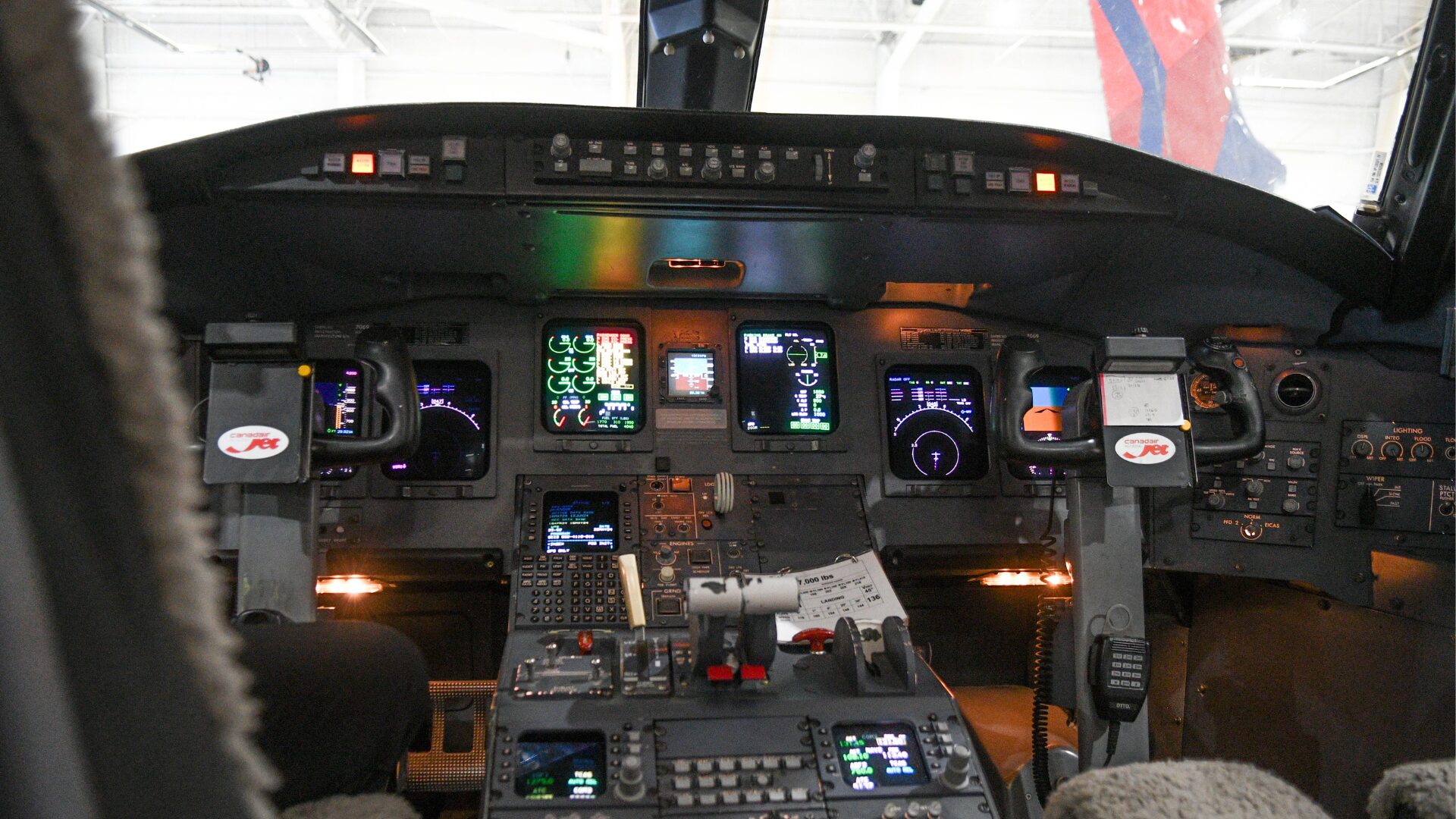
A JetBlue flight traveling from Cancun to Newark on Oct. 30 experienced a sudden and severe drop of several thousand feet, injuring multiple passengers and forcing an emergency landing, as reported by The New York Post.
Space analysts now say the incident was most likely caused by cosmic rays originating from a star that exploded in another galaxy.
‘Cosmic Rays’ from Distant Supernova May Have Caused JetBlue Flight to Drop Mid-Air, Expert Says
The Oct. 30 incident saw the plane rapidly lose altitude and sent at least 15 to 20 people to the hospital
I wonder what else ‘cosmic rays’ are causing?https://t.co/yyIFv7V7Ku
— BirdieBittern (@BirdieBittern) December 4, 2025
The Airbus A320 abruptly plunged during the flight, a drop that sent 15 people to the hospital and left roughly 20 passengers with serious injuries, including head wounds.
This Could Be the Most Important Video Gun Owners Watch All Year
Pilots regained control of the aircraft and diverted to Tampa, Florida, where the plane landed safely.
Initial statements from Airbus pointed to “intense solar radiation” interfering with the aircraft’s navigation computer.
The plane involved was about 20 years old, and the manufacturer indicated solar activity may have disrupted its systems.
However, according to Clive Dyer, a space and radiation specialist at the University of Surrey, the solar radiation recorded at the time was not strong enough to have caused the failure.
Speaking to space.com, Dyer said the more likely explanation is that the plane was hit by cosmic rays from a distant supernova.
“Cosmic rays can interact with modern microelectronics and change the state of a circuit,” Dyer said.
“They can cause a simple bit flip, like a zero to one or one to zero. They can mess up information and make things go wrong. But they can cause hardware failures too, when they induce a current in an electronic device and burn it out.”
Cosmic rays originate from massive stars that explode in supernovas, sending high-energy particles across the universe at the speed of light.
When these particles eventually reach Earth, they can strike electronics inside aircraft sensors or onboard computers, triggering malfunctions such as the one that caused the sudden plunge.
Dyer has spent decades studying how solar and cosmic radiation affects aviation and satellite equipment.
He noted that while the sun can produce radiation spikes capable of disrupting systems, conditions on the day of the JetBlue incident did not match the levels required to cause such a malfunction.
The National Transportation Safety Board continues to examine the incident, though investigators have not publicly identified a definitive cause.
The event has renewed attention on the vulnerability of commercial aircraft electronics to rare but powerful cosmic phenomena.
The opinions expressed by contributors and/or content partners are their own and do not necessarily reflect the views of LifeZette. Contact us for guidelines on submitting your own commentary.





![Donald Trump Slams Chicago Leaders After Train Attack Leaves Woman Critically Burned [WATCH]](https://www.right2024.com/wp-content/uploads/2025/11/Trump-Torches-Powell-at-Investment-Forum-Presses-Scott-Bessent-to-350x250.jpg)