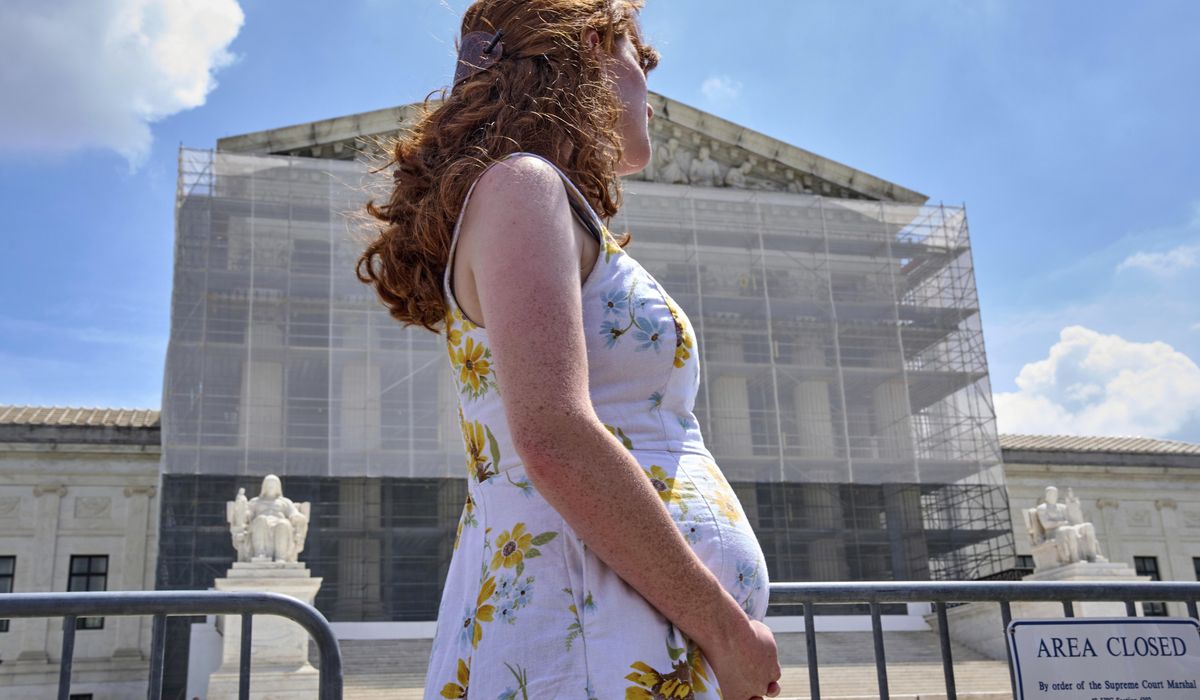
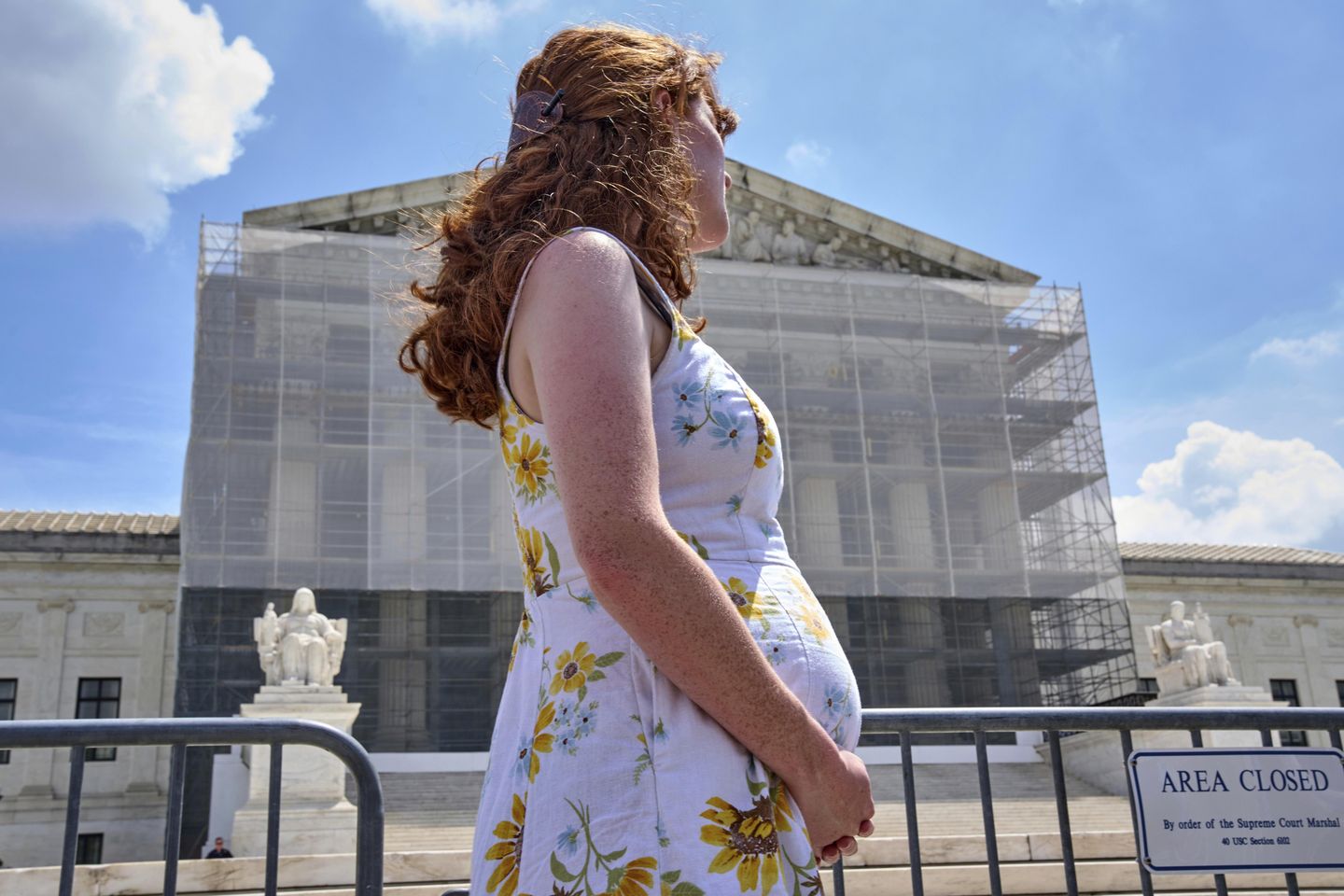
The Supreme Court said it will hear a case involving President Trump’s attempt to rewrite the rules on birthright citizenship, adding a monumental battle over immigration and constitutional rights to its docket.
Mr. Trump, acting by executive order, attempted to bar the government from recognizing citizenship of children born to illegal immigrant or temporary visitor parents.
That policy has been blocked by lower-court judges in every case where it’s been challenged. With its action on Friday, the Supreme Court will now have final say.
Mr. Trump’s opponents argue the 14th Amendment of the Constitution is clear in granting automatic citizenship to nearly every person born on U.S. soil — including illegal immigrants.
The amendment grants citizenship to “all persons born or naturalized in the United States, and subject to the jurisdiction thereof.”
Mr. Trump argues that illegal immigrants and temporary visitors aren’t subject to the jurisdiction of the U.S., and therefore their children don’t automatically qualify for citizenship.
“The Citizenship Clause of the 14th Amendment was adopted to grant citizenship to newly freed slaves and their children — not to the children of temporary visitors or illegal aliens,” Solicitor General D. John Sauer wrote in asking the justices to take the case.
But even if the language does have some wiggle room, some legal scholars say it’s up to Congress to change the policy and it cannot be done by presidential action alone.
The case that the justices are hearing comes out of New Hampshire and is known as Barbara v. Trump. Barbara was the pseudonym given to a Honduran woman living in the U.S. without permanent legal status with her husband, also without firm status. They were expecting their fourth child at the time they sued.
U.S. District Judge Joseph Laplante, a George W. Bush appointee, ruled against Mr. Trump, rejecting his attempt to place babies born to illegal immigrants and temporary visitors outside the 14th Amendment’s reach.
He cited the 1898 Supreme Court precedent known as Wong Kim Ark, which found only a few exceptions to the 14th Amendment’s automatic citizenship. Among them were babies born to foreign diplomats, on foreign ships, to enemy forces here during an occupation and to members of some American Indian tribes.
“Every citizen or subject of another country, while domiciled here, is within the allegiance and the protection, and consequently subject to the jurisdiction, of the United States,” wrote Justice Horace Gray.
That ruling has paved the way for Mr. Trump’s lower court losses.
But Mr. Sauer, in briefs to the Supreme Court, said those courts are misinterpreting Wong Kim Ark.
He said illegal immigrants and temporary visitors aren’t legally domiciled in the U.S. so they aren’t covered by the ruling.
“That limit was central to the analysis; the word ‘domicil’ appears more than 20 times in the opinion. And the opinion suggests that U.S. citizenship does not extend to the children of aliens who are not ‘permitted by the United States to reside here,’” Mr. Sauer wrote.
He said the decision’s misinterpretation has had “destructive consequences” and he said Mr. Trump’s executive order would “restore” the original meaning of the 14th Amendment.
The justices, in their previous term, dealt with birthright citizenship cases, though only in a tangential form.
They scolded lower courts that had issued universal injunctions, telling them to go back and be more rigorous about who should qualify for relief under their rulings.
The justices at the time did not rule on the merits of Mr. Trump’s claims, though some of them made clear where they were leaning.
“As far as I see it, this order violates four Supreme Court precedents,” Justice Sonia Sotomayor said during oral arguments in May.
The American Civil Liberties Union argued the case for Barbara and other migrants. The organization said it is eager to see vindication in the high court.
“No president can change the 14th Amendment’s fundamental promise of citizenship,” said Cecillia Wang, the ACLU’s national legal director. “We look forward to putting this issue to rest once and for all in the Supreme Court this term.”
Mr. Trump issued his birthright citizenship order on Inauguration Day.
His order directed government officials not to recognize automatic citizenship, and not to issue documents confirming it, for babies born to a mother unlawfully present and a father who is not a citizen or legal permanent resident, or born to a mother who is here as a lawful but temporary visitor and whose father was not a citizen or lawful permanent resident.
![Donald Trump Slams Chicago Leaders After Train Attack Leaves Woman Critically Burned [WATCH]](https://www.right2024.com/wp-content/uploads/2025/11/Trump-Torches-Powell-at-Investment-Forum-Presses-Scott-Bessent-to-350x250.jpg)