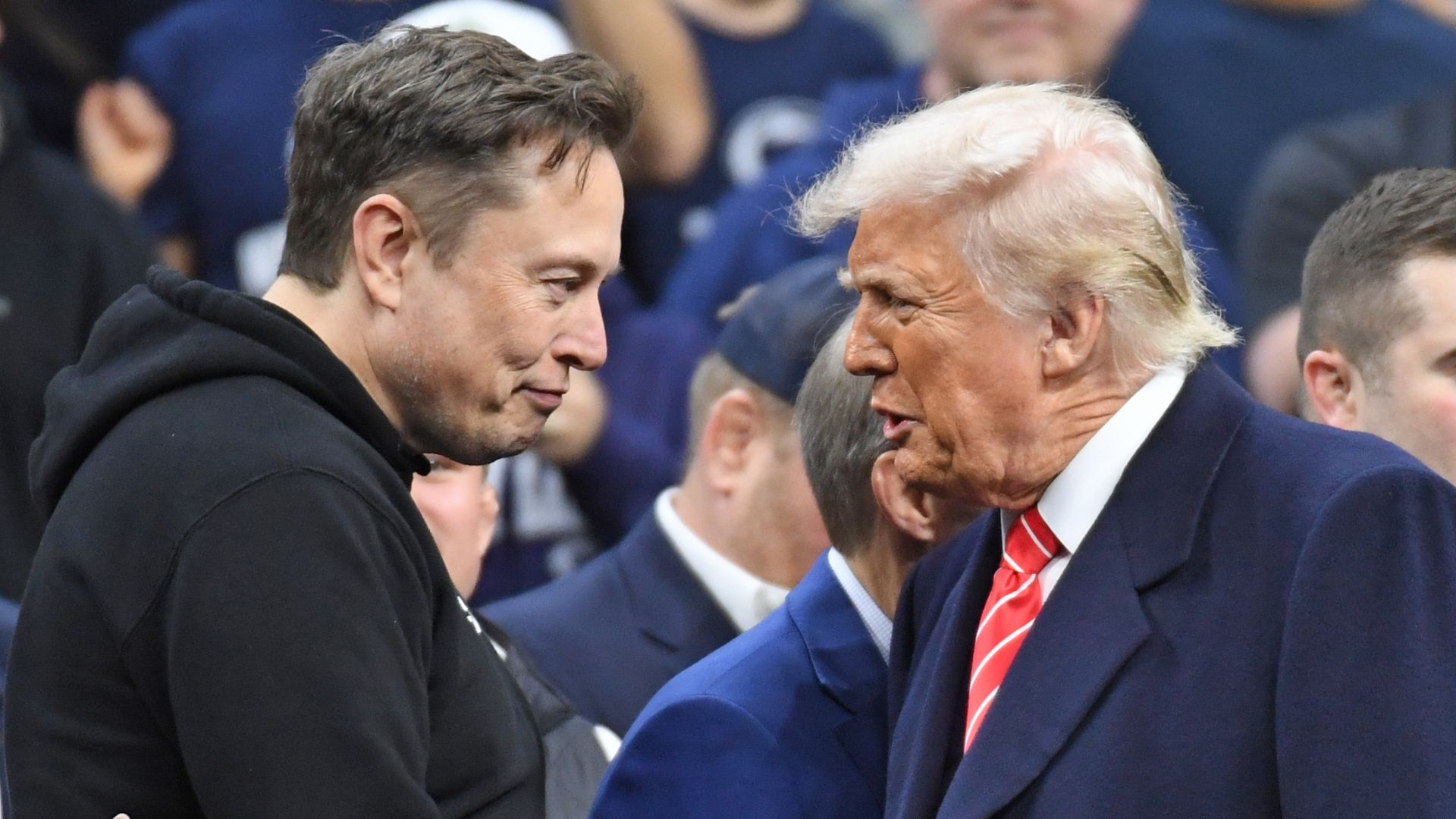
Elon Musk and multiple Trump administration officials sharply criticized the European Union after the European Commission announced a $140 million fine against X on Friday.
The commission said the penalty was issued for “non-compliance with transparency obligations” under the Digital Services Act (DSA).
Musk responded throughout the weekend on the platform, calling the action an attack on sovereignty and free speech.
“The EU should be abolished and sovereignty returned to individual countries, so that governments can better represent their people,” Musk wrote on X on Saturday.
He added the hashtag “AbolishTheEU.”
The EU should be abolished and sovereignty returned to individual countries, so that governments can better represent their people
— Elon Musk (@elonmusk) December 6, 2025
This Could Be the Most Important Video Gun Owners Watch All Year
The European Commission said the fine stemmed from what it described as “deceptive” design of the platform’s blue checkmark system, a “lack of transparency of its advertising repository,” and X’s “failure to provide access to public data for researchers.”
The commission’s announcement was posted directly on X.
Sen. Ted Cruz, R-Texas, reacted to the fine by calling it an “abomination” and urged President Donald Trump to impose sanctions “until this travesty is reversed.”
“You don’t have common values if you’re so afraid of your own people that you have silence them and shut them up!” JD Vance was dead right. pic.twitter.com/TNMEgIAwsv
— Global Index (@TheGlobal_Index) December 6, 2025
Musk replied that “The ‘EU’ imposed this crazy fine not just on X, but also on me personally, which is even more insane!”
He added, “Therefore, it would seem appropriate to apply our response not just to the EU, but also to the individuals who took this action against me.”
The “EU” imposed this crazy fine not just on @X, but also on me personally, which is even more insane!
Therefore, it would seem appropriate to apply our response not just to the EU, but also to the individuals who took this action against me. https://t.co/n2LE0eZiI7
— Elon Musk (@elonmusk) December 5, 2025
In another post, he called the penalty “bullsh*t.”
Bullshit
— Elon Musk (@elonmusk) December 5, 2025
Musk also wrote, “I love Europe, but not the bureaucratic monster that is the EU.”
I love Europe, but not the bureaucratic monster that is the EU
— Elon Musk (@elonmusk) December 6, 2025
Secretary of State Marco Rubio said on X that the fine “isn’t just an attack on X, it’s an attack on all American tech platforms and the American people by foreign governments.”
The European Commission’s $140 million fine isn’t just an attack on @X, it’s an attack on all American tech platforms and the American people by foreign governments.
The days of censoring Americans online are over.
— Secretary Marco Rubio (@SecRubio) December 5, 2025
Before the fine was issued, Vice President JD Vance said, “The EU should be supporting free speech not attacking American companies over garbage.”
Rumors swirling that the EU commission will fine X hundreds of millions of dollars for not engaging in censorship. The EU should be supporting free speech not attacking American companies over garbage.
— JD Vance (@JDVance) December 4, 2025
The DSA, adopted in 2022, was designed to regulate online platforms, restrict illegal or harmful content, and address the spread of disinformation.
Its enforcement has drawn criticism from the Trump administration as U.S. officials have emphasized global free speech protections and argued that the law imposes burdens on American companies.
At a Friday briefing, Thomas Reigner, spokesperson for Tech Sovereignty, Defense, Space and Research at the commission, rejected the suggestion that the fine was connected to content regulation.
“Today’s decision has nothing to do with content moderation,” Reigner said.
“It’s about transparency provisions for citizens here in the European Union.”
Commerce Secretary Howard Lutnick echoed concerns raised by other U.S. officials.
“The Digital Services Act is designed to stifle free speech and American tech companies,” Lutnick wrote on X.
“We have made our position clear to our counterparts in Europe.”
The Digital Services Act is designed to stifle free speech and American tech companies. We have made our position clear to our counterparts in Europe. https://t.co/YCgosWMt8Y
— Howard Lutnick (@howardlutnick) December 5, 2025
Sen. Eric Schmitt, R-Mo., added, “Foreign bureaucrats have zero right to tell Americans what they can and can’t say.”
Foreign bureaucrats have zero right to tell Americans what they can and can’t say.
The European Commission’s attempt to censor American speech is a fundamental attack on our sovereignty.
I’m working on legislation to protect American speech from foreign subversion. Stay tuned. https://t.co/2vv4N36dEY
— Eric Schmitt (@Eric_Schmitt) December 5, 2025
Federal Communication Commission Chair Brendan Carr criticized the commission’s decision as well.
“Once again, Europe is fining a successful U.S. tech company for being a successful U.S. tech company,” Carr said.
“Europe is taxing Americans to subsidize a continent held back by Europe’s own suffocating regulations.”
Once again, Europe is fining a successful U.S. tech company for being a successful U.S. tech company.
Europe is taxing Americans to subsidize a continent held back by Europe’s own suffocating regulations. pic.twitter.com/EzeOWZRC2t
— Brendan Carr (@BrendanCarrFCC) December 5, 2025
Sen. Rick Scott, R-Fla., also weighed in, saying, “America is done looking the other way while foreign governments seek to censor our people and bully our companies.”
America is done looking the other way while foreign governments seek to censor our people and bully our companies.@ElonMusk turned @X into a place where free speech thrives. It speaks volumes that the European Commission has a problem with that. https://t.co/tXcNaOwh5u
— Rick Scott (@SenRickScott) December 5, 2025
The European Commission elaborated on its position in a press release, stating, “X’s use of the ‘blue checkmark’ for ‘verified accounts’ deceives users. On X, anyone can pay to obtain the ‘verified’ status without the company meaningfully verifying who is behind the account, making it difficult for users to judge the authenticity of accounts and content they engage with. This deception exposes users to scams, including impersonation frauds, as well as other forms of manipulation by malicious actors.”
The commission also said, “X’s advertisement repository fails to meet the transparency and accessibility requirements of the DSA. Accessible and searchable ad repositories are critical for researchers and civil society to detect scams, hybrid threat campaigns, coordinated information operations and fake advertisements.”
The opinions expressed by contributors and/or content partners are their own and do not necessarily reflect the views of LifeZette. Contact us for guidelines on submitting your own commentary.





![Donald Trump Slams Chicago Leaders After Train Attack Leaves Woman Critically Burned [WATCH]](https://www.right2024.com/wp-content/uploads/2025/11/Trump-Torches-Powell-at-Investment-Forum-Presses-Scott-Bessent-to-350x250.jpg)



![Kamala Comes Unglued, Makes Bogus Claim About Her Landslide Loss to Trump [WATCH]](https://www.right2024.com/wp-content/uploads/2025/10/Kamala-Comes-Unglued-Makes-Bogus-Claim-About-Her-Landslide-Loss-350x250.jpg)