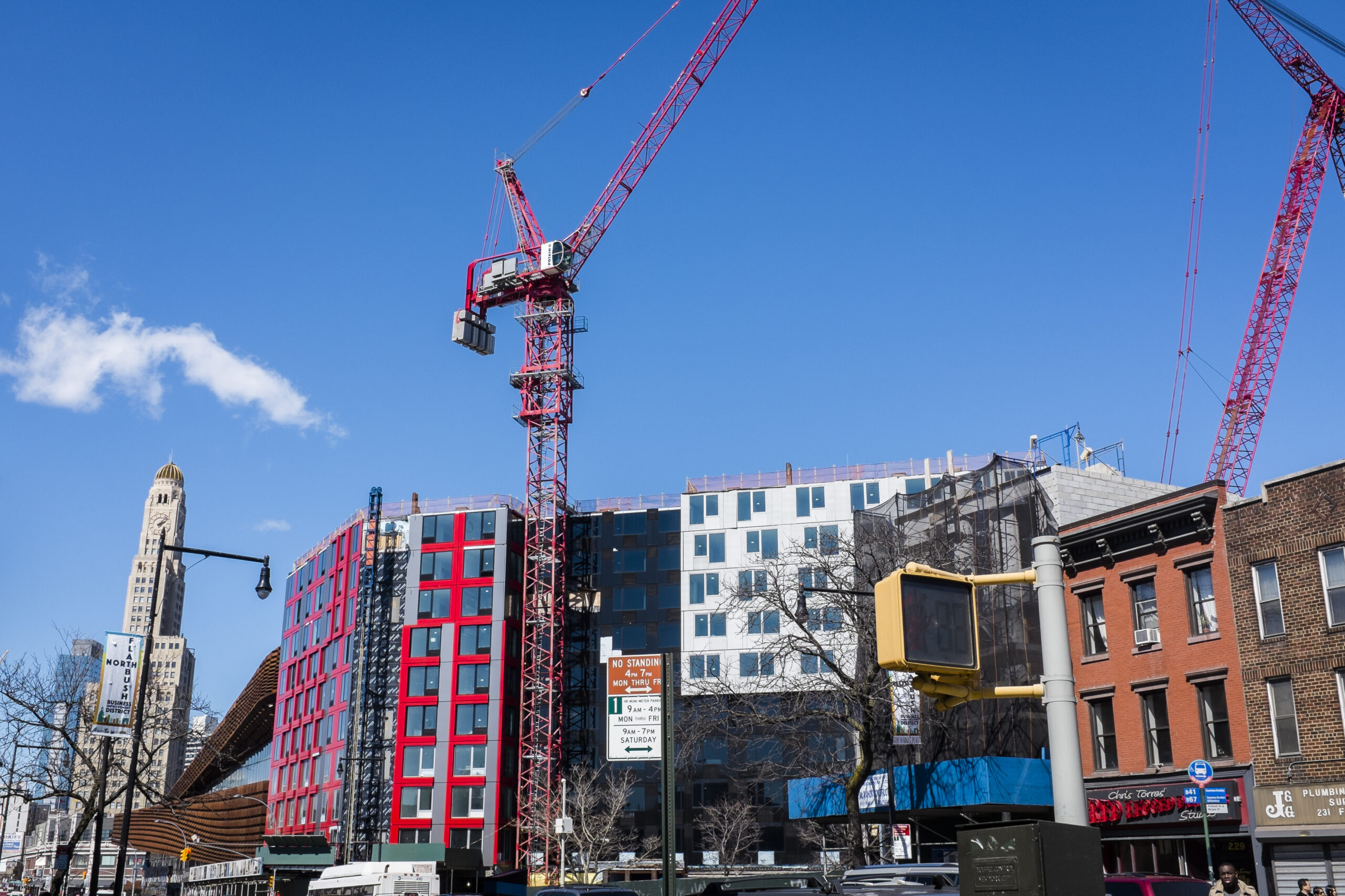
If the road to hell is paved with good intentions, America’s lawmakers are the ones pouring the asphalt. Across the country, progressive policymakers insist that economic reality will bend to their rhetoric — and every time, ordinary families pay the price.
Policymakers can’t regulate away human behavior or rewrite the laws of supply and demand.
Nowhere is that clearer than in New York City, which has become the nation’s testing ground for policies that sound compassionate but collapse upon contact with the real world.
The latest example is the proposed Community Opportunity to Purchase Act (COPA), or Intro 902, now before the New York City Council.
On paper, the bill claims to fight the housing crisis by giving nonprofits and tenant associations the “first shot” to buy apartment buildings. It’s marketed as a way to take properties off the speculative market and convert them into permanently affordable housing.
In practice, it’s a slow-motion disaster.
COPA would force any building owner who wants to sell to notify a long list of organizations and tenants, then wait months — in some cases half a year — while those groups decide whether they can assemble financing. That lengthy limbo would depress sale prices, reduce tax revenue, make banks less willing to lend against affected buildings, and trap countless small property owners who need to sell in order to retire, reinvest, or simply stay afloat.
A bill sold as a path to stability would, ironically, freeze the market. Transactions would stall, construction would slow, and owners with limited liquidity would be unable to exit or maintain their properties.
And perhaps the most telling data point of all: New York already has more than 20,000 rent-regulated apartments sitting vacant because owners can’t afford to renovate or re-rent them under the city’s restrictive rules. Instead of fixing the policies that created this massive dead zone of unusable housing, lawmakers want to double down with yet another barrier to transactions and investment.
It is textbook economic distortion — and New York has seen this movie before.
In 2023, the city enacted Local Law 18, a sweeping crackdown on short-term rentals that nearly wiped out Airbnb in the five boroughs. The law required hosts to be physically present during stays and capped occupancy at two guests, effectively eliminating the vast majority of listings.
The stated goal was to return thousands of units to the long-term rental market. Instead, short-term rental inventory collapsed by 92 percent, while rents kept climbing to record highs.
Manhattan vacancy rates stayed near historic lows. The data showed what economists had warned all along: Airbnb wasn’t the culprit behind the affordability crisis, and the crackdown simply made life more expensive. Hotels, thrilled to see their competition vanish, pushed rates even higher, with average daily prices hitting $417 a night during peak season and more than $530 over Thanksgiving.
The same “ignore the market and protect the little guy” governing philosophy is now appearing in Washington.
Sen. Bernie Sanders (I-VT) and an unlikely ally, Sen. Josh Hawley (R-MO), are pushing a national 10 percent cap on credit card interest rates, insisting it will protect families from predatory lenders. But like New York City’s housing experiments, this policy ignores the fundamentals of risk and incentives.
Credit card interest rates reflect the likelihood that a borrower will default. Forcing all rates down to 10 percent doesn’t eliminate risk — it simply prohibits lenders from pricing it.
Every previous attempt at such caps has had the same result: banks tighten lending standards, prime borrowers remain unaffected, and subprime borrowers — the very people the policy claims to help — get shut out of the system entirely. They don’t magically become financially stable; they turn to payday lenders, pawn shops, and rent-to-own schemes with far higher effective interest.
Banks will still recoup their losses, just in ways that hurt responsible consumers too. Expect higher fees, reduced rewards programs, and fewer credit options across the board.
The pattern is identical from New York City housing policy to federal financial regulation: lawmakers ignore how markets function, pass laws that feel good, and then act surprised when reality doesn’t cooperate. They treat economics as optional and incentives as irrelevant — and the fallout lands squarely on working families.
What happens in New York should stay in New York. But progressive legislators across the country continue treating the city as a policy laboratory.
If COPA passes, similar proposals will crop up in blue states nationwide. If Sanders and Hawley succeed, millions of Americans will lose access to credit exactly when they need it most.
Good intentions don’t overcome bad economics. Policymakers can’t regulate away human behavior or rewrite the laws of supply and demand. Until they accept that, the road to hell will stay freshly paved — and Americans will keep paying the toll.
READ MORE:
New York City Policing at a Crossroads
Mamdani’s Agenda: Stalinism and Sloth
The Democrats Choose the World Over America
John Faso is a former Member of Congress from New York and the former Minority Leader of the New York State Assembly.








![Florida Officer Shot Twice in the Face During Service Call; Suspect Killed [WATCH]](https://www.right2024.com/wp-content/uploads/2025/12/Inmate-Escapes-Atlanta-Hospital-After-Suicide-Attempt-Steals-SUV-Handgun-350x250.jpg)