The New Yorker was founded in 1925 as a humor weekly — a whimsical little Roaring Twenties bauble written largely by members of the fabled Algonquin round table for sophisticated urban readers. When its founding editor, the ribald Colorado-born newspaperman Harold Ross, died in 1951, the top job passed to the dour, buttoned-up William Shawn, during whose 36-year reign the magazine ballooned in size (thanks largely to lucrative ads from Tiffany, Bonwit Teller, and other spiffy Fifth Avenue emporia), acquired a staid, serious, often ex cathedra tone, and became a key staple of culturally aspirational postwar households in and around New York as well as in the nation’s more affluent suburbs.
So it’s simply bizarre to hear Remnick enthuse so nauseatingly over his magazine and, implicitly, over himself.
The relatively brief editorships of Robert Gottlieb, a longtime literary editor at Simon & Schuster and Knopf, and the celebrity-focused Tina Brown, who came to The New Yorker from Vanity Fair, were succeeded in 1998 by the reign of David Remnick, who has steered it through a tough era for high-end glossies and who remains at the helm as this relic turns 100.
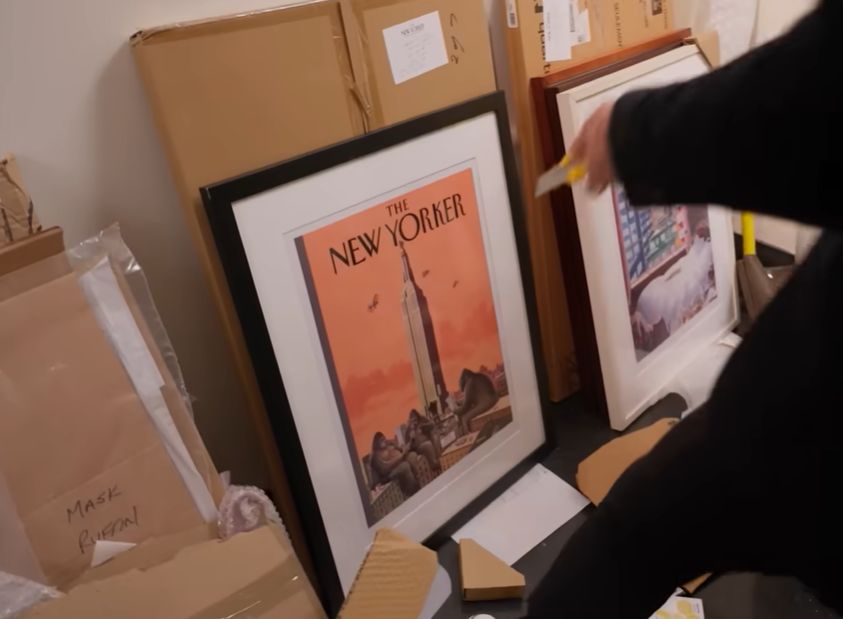
It’s Remnick, as it happens, who’s at the center of Marshall Curry’s new Netflix offering The New Yorker at 100. In fact, the documentary is a veritable love letter to the guy. Which is unfortunate, because this film could have been an engaging overview of a century’s worth of reportage, fiction, poems, humorous essays, cartoons, profiles, and reviews of everything from books to movies to art, in addition to a fun look behind the scenes at the practical aspects of how such a product is put together, week after week.
Instead, it’s in surprisingly large part a slavering portrait of Remnick, focusing largely on his mind-bogglingly predictable politics — which is, admittedly, relevant, given that when he took over, The New Yorker became, above all else, a hard-core outlet for left-wing propaganda. Yes, it had always…
The New Yorker Makes a Shrine to Itself | The American Spectator
Related Posts

Rayner Returns With Plot to Save Beloved Employment Rights Bill – Guido Fawkes
Angela Rayner is emerging from cryosleep to agitate over her beloved Employment…

Labour Finally Acknowledges Lucy Powell’s Existence – Guido Fawkes
After ignoring its own Deputy Leader since the day she cruised to victory,…

Mark Warner and Eric Swalwell Are Hoping the U.S. Military Will Rescue America From Trump – Twitchy
If Democrats sound like they’re hoping for a military coup in the U.S.,…

INGERSOLL: It’s Time To Put The Feminine Policy Regime On A Train To Nowhere
Greetings, Dear Reader, Welp, as promised. TRAINS FOR WOMEN In one of my many…

Israel blocks a Canadian delegation from going to occupied West Bank
OTTAWA, Ontario — Israel on Tuesday blocked a private Canadian delegation that…
![Donald Trump Slams Chicago Leaders After Train Attack Leaves Woman Critically Burned [WATCH]](https://www.right2024.com/wp-content/uploads/2025/11/Trump-Torches-Powell-at-Investment-Forum-Presses-Scott-Bessent-to-350x250.jpg)
Donald Trump Fires Back at MTG, Slams Stahl and 60 Minutes Leadership
President Donald Trump issued a lengthy response Monday to Rep. Marjorie Taylor…

Bertie Ballinger: How Conservatives can fight the Green Party
Bertie Ballinger is the Deputy Chairman for Fundraising of the Worcester…
![James Carville Admits Democrats Had No Shutdown Endgame, Mishandled Strategy [WATCH]](https://www.right2024.com/wp-content/uploads/2025/11/1763070634_James-Carville-Admits-Democrats-Had-No-Shutdown-Endgame-Mishandled-Strategy-350x250.jpg)
James Carville Claims the ‘Walls Are Closing In’ on Trump Again [WATCH]
Democratic strategist James Carville said during a recent podcast appearance…

Dem’s Veteran Gotcha Collapses as DHS Exposes Full Criminal Record [WATCH]
An exchange during a House Homeland Security Committee hearing on Thursday drew…
![Two Dead, 14 Injured After Gunfire Erupts Following College Football Game in Alabama [WATCH]](https://www.right2024.com/wp-content/uploads/2025/10/Two-Dead-14-Injured-After-Gunfire-Erupts-Following-College-Football-350x250.jpg)
Two Dead, 14 Injured After Gunfire Erupts Following College Football Game in Alabama [WATCH]
At least two people were killed and 14 others were injured in a mass shooting in…