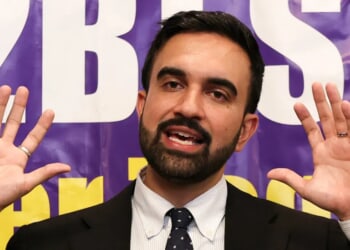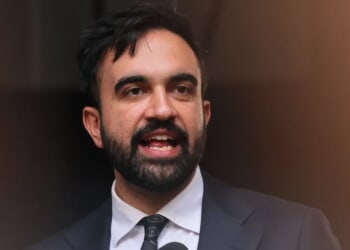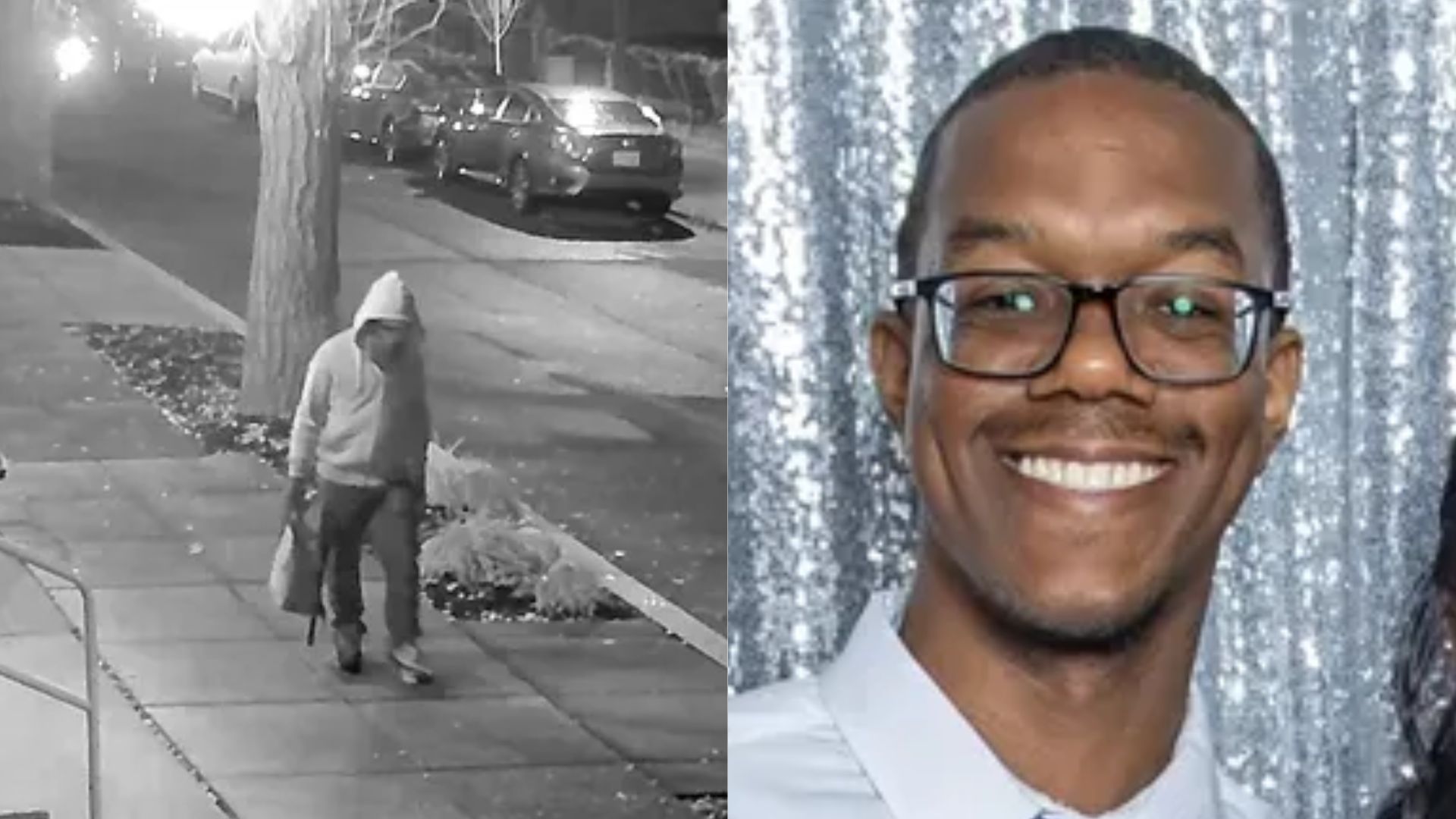
Court documents and recent media reports following the arrest of Jan. 6 pipe bomb suspect Brian Cole Jr. describe him as a 30-year-old resident of Woodbridge, Virginia, who lived in his mother’s home about 20 minutes from Washington, D.C.
Relatives told reporters he is socially isolated and has developmental challenges.
His grandmother, Loretta Cole, said he is “very naïve . . . He’s almost autistic-like because he doesn’t understand a lot of stuff,” adding, “He’s slow. He may be 30, but he’s got the mind of a 16-year-old.”
The account of Cole as described by family members contrasts with the fact that the suspect remained unidentified for almost five years.
The J6 Pipe Bomber Brian Cole Jr comes from a far Left BLM family whose father sued the Trump Administration and wanted the Biden Administration to address “racism”.
He had the same attorney as Trayvon Martin.
Does Chris Wray not arresting him make sense now? pic.twitter.com/TsrbKk6twM
— C3 (@C_3C_3) December 5, 2025
This Could Be the Most Important Video Gun Owners Watch All Year
Statements made in interviews and public comments have pointed to concerns about lapses in the early stages of the investigation.
Former federal officials suggested that actions taken in 2021 may have contributed to delays, including what one former official referred to as “intentional negligence.”
The case unfolded during a period when the FBI located and charged more than 1,500 individuals connected to the Capitol breach.
Investigators used cellphone data and video footage to identify those who were present in restricted areas.
Surveillance images from the evening of Jan. 5, 2021, showed an individual in a gray hoodie and white mask walking near the Democratic National Committee and Republican National Committee buildings.
The person appeared to be holding a phone while moving through the area where the explosives were later found.
According to an FBI filing submitted in federal court during Cole’s arraignment, Cole’s cellphone “engaged in approximately seven data session transactions with [his cell phone provider’s] towers between 7:39 p.m. and 8:24 p.m. . . . in the area of the RNC and DNC on January 5, 2021.”
The filing stated that investigators obtained this information within weeks of the discovery of the devices.
A congressional report released in January by House subcommittee chairmen Barry Loudermilk and Thomas Massie said investigators initially identified 186 cellphone numbers “of interest,” and 130 “devices of interest.”
Unbelievable. Former FBI in charge of Jan 6 investigation tells me phone data that could have been used to identify the person who placed pipe bombs on Jan 5 was CORRUPTED.
Thank you @DarrenJBeattie whose groundbreaking reporting and help was used to formulate my questions. pic.twitter.com/Ga9mK9eSwm
— Thomas Massie (@RepThomasMassie) June 15, 2023
By early February 2021, agents had begun outreach connected to 36 of those numbers.
The report said that 98 numbers needed additional investigative work and that 51 numbers were classified as requiring no further steps because the devices “belong[ed] to law enforcement officers or persons on the exclusion list.”
The report stated that Congress was never informed of the outcomes of those leads.
Questions expanded after former FBI Washington Field Office head Steve D’Antuono testified before Congress in June 2023.
He said investigators had received “corrupted data” from one of the wireless carriers.
“We did a complete geofence. [but] there’s some data that was corrupted by one of the providers, not purposely by them,” he said.
He also stated that he could not recall which carrier was involved.
“The [J6 pipe bomb] narrative we were sold on is NOT EVEN CLOSE to what the evidence is bringing up.”@RepLoudermilk tells me the corrupted AT&T data connected to the pipe bombs was actually handled by FirstNet, a Congressionally established network for first responders: “Was it… pic.twitter.com/Xi206gBDWy
— Glenn Beck (@glennbeck) October 2, 2025
Did Assistant Director of the FBI Washington Field Office Under Biden Directly Lie To Congress To Bury The J6 Pipe Bomber Case?
The newly released affidavit says the FBI obtained cell data from towers near the RNC and DNC which pinged Brian Cole’s phone SEVEN different times… pic.twitter.com/70cXeyHy5G
— Benny Johnson (@bennyjohnson) December 5, 2025
However, all three major carriers later told the Loudermilk subcommittee they “did not provide corrupted data to the FBI and that the FBI never notified them of any issues with accessing the cellular data.”
The investigation also involved reviewing approximately 39,000 surveillance video files.
Footage released publicly was low resolution.
Mike Benz, a former State Department official and executive director of the Foundation for Freedom Online, said that one publicly released clip appeared to show a blur or pixel effect over the suspect’s eyes while the individual sat on a bench outside the DNC.
It was OBSTRUCTION (A CRIME) not “incompetence.” A critically important point and video on what must be pursued next in the J6 pipe bomber case. pic.twitter.com/zN9brf1dm7
— Mike Benz (@MikeBenzCyber) December 6, 2025
Historic J6 Pipe Bomber Arrest: First Reaction & Analysis Stream
0:00 get cozy
4:05 my personal little road to this story’s perdition
1:28:22 line-by-line analysis of today’s DOJ filings for the arrest pic.twitter.com/ujqQy5ktkh— Mike Benz (@MikeBenzCyber) December 5, 2025
Whether the effect came from the original recording or later compression was not clarified in the materials released.
According to subcommittee findings, investigators had multiple persons of interest during the initial weeks.
By late February 2021, the report said the investigation began shifting resources away from the pipe bomb case.
At the same time, investigators increased resources connected to identifying individuals involved in unlawful entry onto Capitol grounds.
Public commentary following Cole’s arrest has raised questions about the early direction of the investigation and whether decisions made by leadership affected the pace or focus of the case.
Statements made by critics referenced political dynamics surrounding the events of Jan. 6 and public messaging by federal officials during that period.
![Donald Trump Slams Chicago Leaders After Train Attack Leaves Woman Critically Burned [WATCH]](https://www.right2024.com/wp-content/uploads/2025/11/Trump-Torches-Powell-at-Investment-Forum-Presses-Scott-Bessent-to-350x250.jpg)
![CNN's Kaitlan Collins Fact-Checks Rep. Jasmine Crockett Over False Trump Ballroom Claim [WATCH]](https://www.right2024.com/wp-content/uploads/2025/10/1761954330_CNNs-Kaitlan-Collins-Fact-Checks-Rep-Jasmine-Crockett-Over-False-Trump-350x250.jpg)