SEOUL, South Korea — China’s simmering dispute with Japan escalated over the weekend from name-calling to dangerous games of chicken between fighter jets, while Beijing’s info warriors ramped up a news and social media campaign questioning Tokyo’s sovereignty over the Ryukyus, a strategic island chain near Taiwan.
Chinese forces have wide experience in keeping coercion and intimidation operations sub-kinetic, but the heavy use of the second tactic puzzles experts, who see it as self-defeating.
The Ryukyus, which extend southwest of Japan’s main islands to less than 100 miles off Taiwan, dominate key regional straits. As “unsinkable aircraft carriers,” the islands would, in the event of a contingency, present a major risk to Chinese naval forces seeking to encircle or blockade Taiwan from the north.
On Saturday afternoon and evening, Chinese carrier-borne J-15 aircraft twice locked their radars onto Japanese F-15s monitoring the Chinese force. The incidents took place over international waters southeast of Okinawa, the main island of the Ryukyu Chain, and east of Mikayo.
The Liaoning had earlier transited the deep-water Miyako Strait between the two islands; a critical naval choke point.
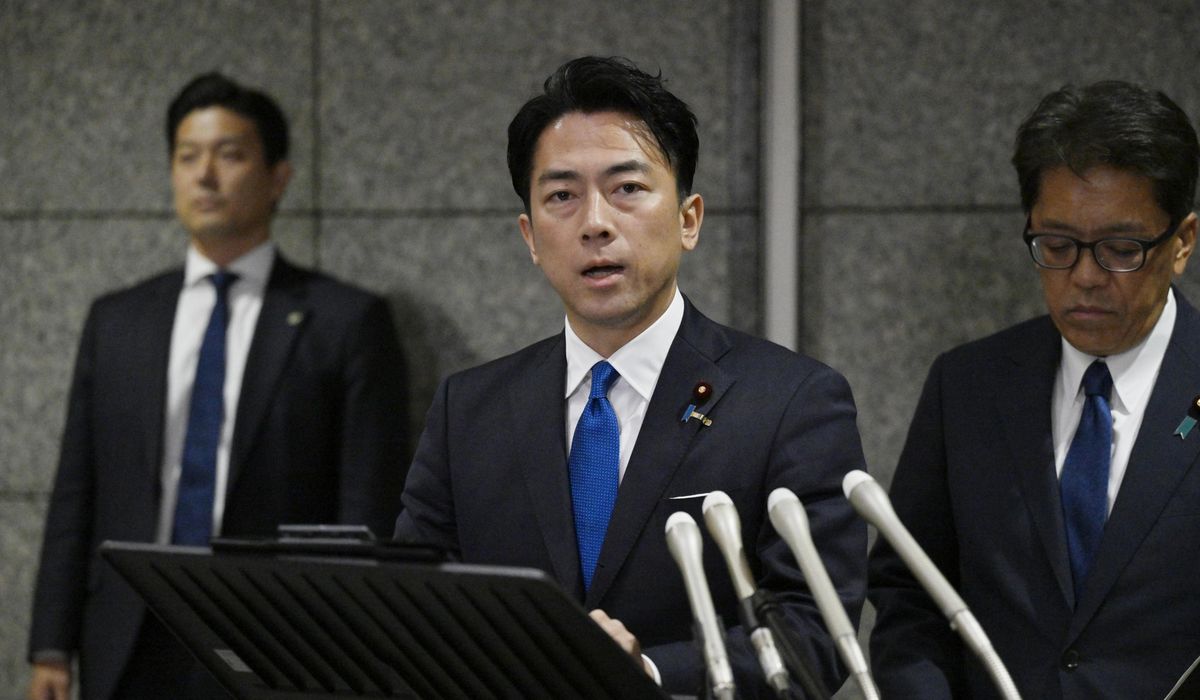
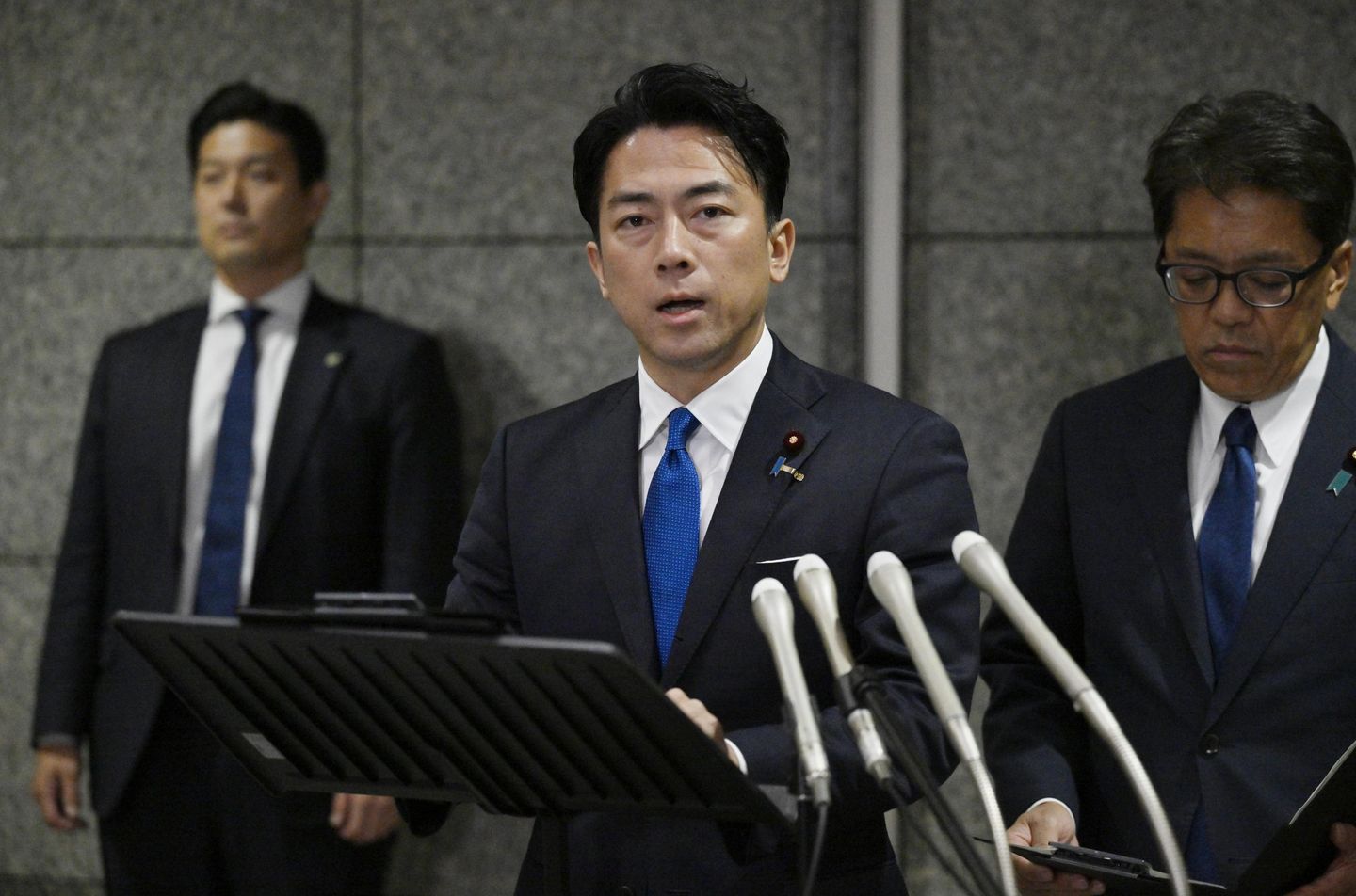
“These were dangerous acts,” said Defense Minister Shinjiro Koizumi during a press conference called in the early hours of Sunday morning. “They went beyond what is necessary for the safe flight of an aircraft.”
Beiing’s ambassador to Tokyo was summoned over the incident.
A Chinese navy spokesperson said that Japanese aircraft “repeatedly approached and harassed” the Liaoning’s flight training, which had been pre-announced, “posing a grave threat to flight safety.”
Beijing frequently shadows and condemns foreign naval forces transiting the Taiwan Strait. Chinese carrier drills east of the Ryukyus reportedly continued Monday.
The radar incident raised eyebrows.
“A radar lock on traditionally refers to the moment when a fighter’s radar transitions from general surveillance to specific fire-control mode,” wrote specialist media The Aviationist. The action is “… a clear signal of hostile intent, as it represents the final step before a missile can be launched.”
Chinese probes and maneuvers build an intelligence picture.
“These provocations are used to detect how the Japanese react, the time it takes, and so forth,” said Tokyo-based Lance Gatling, principal of Nexial Research, and a former officer in U.S. Forces Japan.
The weekend’s confrontation is the latest in a string of Chinese responses to comments made by Japanese Prime Minister Sanae Takaichi on Nov. 7 that had Beijing fuming.
The newly-installed premier, answering a question in the Diet, said a military contingency off Taiwan would constitute “a survival- threatening situation” for Japan — a scenario that would, presumably, call for Japan to respond militarily.
Beijing is hyper-sensitive to any claims about democratically-ruled Taiwan, which China considers a breakaway province that must one day be reunified with the mainland.
Beijing unleashed multi-pronged counter-actions.
First came threatening comments from diplomats. Next came economic retaliation: Beijing warned its millions of Japan-bound tourists to stay away. It also cancelled concerts by Japanese stars — one of whom was ushered off-stage mid-act.
However, Beijing’s main actions are aimed at Japan’s southern and southwestern islands.
Dire straits
In the early hours of Dec. 2, a confrontation took place between Coast Guard vessels from China and Japan off the Senkakus. Uninhabited, the islands are administered by Japan, but claimed by China.
It is unclear what happened as both countries put forth different narratives. Both nations’ Coast Guards claim to have driven the other’s off.
The incident recalled similar actions in the South China Sea. There, China has used water cannons, rammings and other intimidation tactics to push both Vietnamese and Philippine forces from disputed maritime territories, while creating fortified air-navy presences on terra-formed reefs and islets.
In the East China Sea, Japan — which deploys a powerful navy, the Maritime Self Defense Force — has not budged.
Moreover, Tokyo in recent years has been fortifying the Ryukyu Islands with troops, radar stations, electronic warfare outposts and missile emplacements supported by U.S. Marines.
Last month, Mr. Koizumi visited the closest of the Ryukyu Islands to Taiwan, Yonaguni. There he inspected new bases and sought to reassure the local populace.
“if you are going to attack Taiwan, you need to cover your flanks,” said Grant Newsham, a former U.S. Marine officer and diplomat. “The Ryukyus threaten the People’s Liberation Army’s left flank, if the Americans and Japanese wish to interdict a Chinese assault force using naval, air, missile or other weaponry.”
History at war
Formerly a kingdom that paid tribute to both China and Japan, the Ryukyus were invaded by samurai in 1609, then annexed by Tokyo in 1879.
In 1945, the islands guarded the southwestern route to Japan’s home islands. Okinawa was the scene of devastating battles, with U.S forces eventually victorious.
Governance was only handed back to Tokyo in 1972.
Now, with China’s naval reach expanding, the Ryukyus have regained strategic significance. This may explain the barrage of reports being fired by state-owned media questioning the Ryukyus’ political status.
“It is an orchestrated message that looks grass roots, but is pretty contrived: There is a lot of it from Chinese propagandists and from rental academics,” said Shaun O’Dwyer, a professor of political philosophy at Kyushu University and editor of the World War II collection, “Confucianism at War.” “It is being mainstreamed in an opportunistic way by the Chinese government to throw the Japanese off-balance.”
Take Beijing TV channel CGTN.
On Nov. 18, the state-run broadcaster published “Qing Dynasty Ryukyu robe reveals historic bonds.” On Nov. 23 came “A Chinese researcher’s modest view on the ’undetermined status of Ryukyu.’” Five days later, a piece appeared on “The undetermined status of Ryukyu.” On Nov. 30 came yet another piece, “Museum exhibits imperial edict, showing Ryukyu as Chinese vassal state.”
Or, take Beijing media Global Times. On Nov, 19, it ran an editorial headlined “Why researching ‘Ryukyu studies’ is highly necessary.” On Nov 30, it published “Ryukyu-related edict exhibited in Dalian, revealing key historical facts of Ryukyu as Chinese vassal state.” That was followed up on Wednesday with “What insights can today’s Ryukyu studies in China offer into historical memory and contemporary interpretations?”
Beijing may believe it is pushing against an open door, but while Okinawa Prefecture forms less than 1% of Japan’s land mass, it hosts some 70% of all U.S. bases in Japan and roughly half the U.S. personnel.
Environmental and noise pollution and crimes committed by GIs against Okinawans generate frequent news, but Beijing’s apparent designs on independence for Ryukyu Islands appear vain.
“There is no independence movement in Okinawa that means anything,” said Mr. Gatling. “To wrest the islands away is not a realistic near-term objective.”
The Okinawa Times, citing 2022 opinion polls, reported that 42% of respondents favor the status quo, 48% sought stronger local authority, but only 3% sought independence.
“The Chinese have been trying to subvert Okinawa for a long time — meeting with officials and other ’influencers’ and hosting trips to China, etc.,” said Mr. Newsham, author of “When China Attacks: A Warning to America.” “Looking back over the last 30 years, it’s notable how little success the Chinese had at this political warfare effort.”
Beijing may aim to leverage widespread anti-colonial sentiment in the Global North and the Global South, contrasting it with the “One China Policy,” which is widely underpinned by global diplomacy.
“They are saying, ‘You think we claim Taiwan, but look at you and Okinawa: You don’t have a basis, your claims are illegitimate, but our claims to Taiwan are legitimate,” said Mr. O’Dwyer.
Blowback for Beijing?
Ironically, Beijing may be strengthening Ms. Takaichi.
Drops in Chinese tourism have generated wry commentary, as over-tourism was an issue Ms. Takaichi — seen as a nationalist hardliner — campaigned on a tougher line on China prior to her election in an intra-party contest in October.
“To be honest, I don’t know what the [Chinese Communist Party] is thinking, it seems they just want to make a lot of noise — ironically, to the opposite effect,” said Haruko Satoh, who teaches regional relations at the Osaka School of Public Policy. “How very funny that the CCP is actually driving Japanese nationalism.”
Ms. Takaichi’s ratings through November were 60%-65%. A poll taken on Nov. 30 gave her 75%.
So strong is the trend, some Japanese media speculate that she may call a snap election to fortify the precarious Diet position her party was left in by her predecessor, middle-of-the-roader Shigeru Ishiba.
But Beijing’s info war may be craftier than it appears.
“I think it’s a matter of degree rather than absolute; there are always going to be people in opposition to the [Japanese] ruling party,” said Mr. Gatling. “They may want to sway the population toward a softer line on China — holding off on the doubling of the defense procurement budget.”
Ms. Takaichi has made clear her aims to accelerate defense spending. When she made her fateful Nov. 7 remarks, she was answering a question at the Diet Budget Committee.





![Donald Trump Slams Chicago Leaders After Train Attack Leaves Woman Critically Burned [WATCH]](https://www.right2024.com/wp-content/uploads/2025/11/Trump-Torches-Powell-at-Investment-Forum-Presses-Scott-Bessent-to-350x250.jpg)


![James Carville Admits Democrats Had No Shutdown Endgame, Mishandled Strategy [WATCH]](https://www.right2024.com/wp-content/uploads/2025/11/1763070634_James-Carville-Admits-Democrats-Had-No-Shutdown-Endgame-Mishandled-Strategy-350x250.jpg)