David Gauke is a former Justice Secretary and was an independent candidate in South-West Hertfordshire at the 2019 general election.
There is a distinct sense of relative optimism within and about the Conservative Party at the moment, as Giles noted in his piece yesterday. Whereas three months ago all the talk was that the Tories were finished, it is not uncommon to hear the argument that the party can survive the next General Election. Some even suggest that the Conservatives might not just survive it, but emerge as the largest party. It is quite the mood shift.
Before considering this mood shift, it is only fair to point out that – whatever the change in atmosphere in Westminster – there has not been a dramatic revival of the Tories’ fortunes in the voting intention opinion polls. The Politico Poll of Polls has the Tories on a miserable 17 per cent, which is barely above the low point of 16 per cent.
Nor is the story in council by-elections any better – seats continue to be lost to Reform and the Liberal Democrats.
It is worth pointing these facts out because there is a risk of a commentariat groupthink. The media might have got bored with writing off the Tories; the desire to be contrarian, to say something fresh, might encourage some to detect a revival that really isn’t there; and it is very easy to under-estimate quite how unpopular the Conservatives were after 14 years in office.
But it is also fair to argue that, even though the Conservatives have not improved their popularity of late, the conditions for such an improvement are there.
The principal reason for this relates to the travails of the Labour Party.
Labour won a huge majority on the basis of being ill-defined and under-scrutinised. It was inevitable that they were going to put up taxes, but had no mandate to do so. Left-wing voters had told themselves that all the problems in the country were the result of the wicked Tories; centrist voters were reassured that the grown-ups were going to be in charge. Both groups have been left disappointed by a Government that has had to confront complexity, but not been very good at doing so. The lack of definition – so helpful in opposition in being all things to all people – has been an impediment in office as the administration is blown about by events.
The Parliamentary Labour Party is ill at ease with power, and the soft left has thrown its weight around. The retreat on welfare cuts looks like being the pivotal moment of the Parliament. From a position of political weakness, the Chancellor delivered a budget that was light on measures to support growth but put up taxes to pay for higher welfare – which was very much not what was offered to the electorate at the General Election.
The British public has not reacted positively, with polls showing increasing support for lower spending and lower taxes.
As for the trajectory of the Labour Party, the most probable scenarios is that Keir Starmer continues to appease the soft left, or is replaced by one of their number. If so, Labour will fight the next election from the territory from which it habitually loses.
If Labour is set to lose office, the opinion polls suggest that the beneficiaries will be Reform.
That may well turn out to be the case, but whereas the party was on the charge for the first half of 2025, the last few months has seen their increase in the polls stall. When the attention has turned to the economy, Reform has had little to say as it has struggled to reconcile the small-state instincts of its leadership with a voting base heavily dependent on public services and benefits.
Nigel Farage had the good sense to junk the fantasy pledges of the 2024 Reform manifesto but, as yet, nothing has replaced it. Progress in looking like a Government-in-waiting has been negligible. And, as the Conservatives could do with noting, a party so closely associated with Brexit is at a disadvantage in winning economic credibility with an electorate that perceives our departure from the EU as having delivered no tangible economic benefits.
Brexit-scepticism is at heart of the Liberal Democrats’ economic offer.
Indeed, it is the entirety of the Liberal Democrats’ economic offer.
They now have an economic policy of consequence – rejoining the customs union – which is more than could be said for their General Election campaign but there is no sign of the party positioning itself as a party of government unambiguously to the pro-market right of Labour, largely because the party membership is not unambiguously to the pro-market right of Labour.
Their role at the next election appears destined to be as a support act for Labour continuing to hold office. Anyone determined to throw Labour out of office is not going to be voting for them.
But the Tory optimism is not all about the failure of other parties to occupy the territory that was traditionally Conservative.
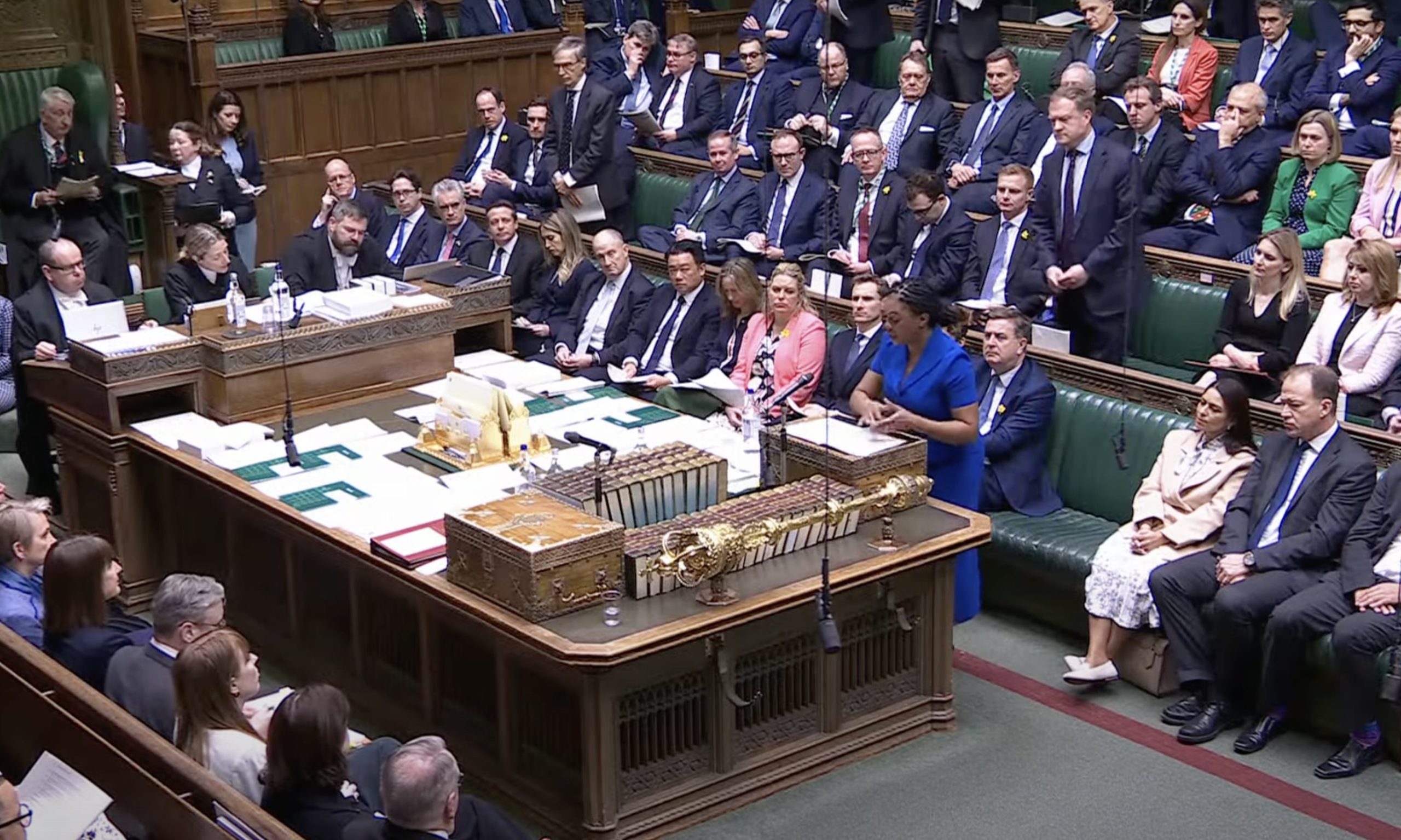
Kemi Badenoch has raised her game, delivering a successful party conference speech, a series of confident PMQs performances, and a Budget response that attracted much publicity, most of it positive. The party’s poll rating may not have been transformed, but her personal ratings have improved, and the hope will be that this is a leading indicator.
The focus on the economy is also helping. For too long, Badenoch stayed within her comfort zone of debating cultural issues. She evidently cares deeply about such matters, but it played into the hands of Farage.
Whatever the reason for the improved performances and strategic shift (and one popular theory within Westminster is that she is listening attentively to the advice of her Parliamentary Private Secretary, John Glen), her personal standing is much strengthened and she is much better placed than she was to survive a difficult set of results in the May elections.
Put all of this together and one can make a case for a political recovery. A Labour government struggling on the economy and moving leftwards; Reform with little to offer on economic growth; the Liberal Democrats not stepping up to being anything more than a centre-left protest party; a Tory leader more at ease in the role focusing on the right issues.
Is it enough, however?
There is always a tendency in politics to move quickly from despair to complacency and then back again.
The loathing provoked by the chaos on the last few years in office will not dissipate over four or five years without demonstrating real change. There is still more that has to be done, for example, to distance the party from the mistakes of the Truss and Johnson administrations.
This is particularly important if the Conservatives wish to win over an important part of Labour’s 2024 coalition. Starmer won the support of many who were not natural Labour voters because they saw him as a reassuring figure – professional, decent, in control of his party’s extremes, keen to ensure that politics trod more lightly on people’s lives. These qualities are not sufficient to make a successful Prime Minister (vision and leadership are also required), but they are necessary to win the support of those voters who value competence.
The Conservatives need to speak to those voters.
Offer a credible economic plan; demonstrate a determination to solve problems, not just exploit them; recognise that lessons have been learnt from the Tory time in office.
There are plenty of votes to play for and, more importantly, it is what the country needs.

![Donald Trump Slams Chicago Leaders After Train Attack Leaves Woman Critically Burned [WATCH]](https://www.right2024.com/wp-content/uploads/2025/11/Trump-Torches-Powell-at-Investment-Forum-Presses-Scott-Bessent-to-350x250.jpg)


![Kamala Comes Unglued, Makes Bogus Claim About Her Landslide Loss to Trump [WATCH]](https://www.right2024.com/wp-content/uploads/2025/10/Kamala-Comes-Unglued-Makes-Bogus-Claim-About-Her-Landslide-Loss-350x250.jpg)