Aaron Jacob is a solicitor, and former district councillor. He was the Conservative candidate for Sheffield Brightside and Hillsborough in 2024.
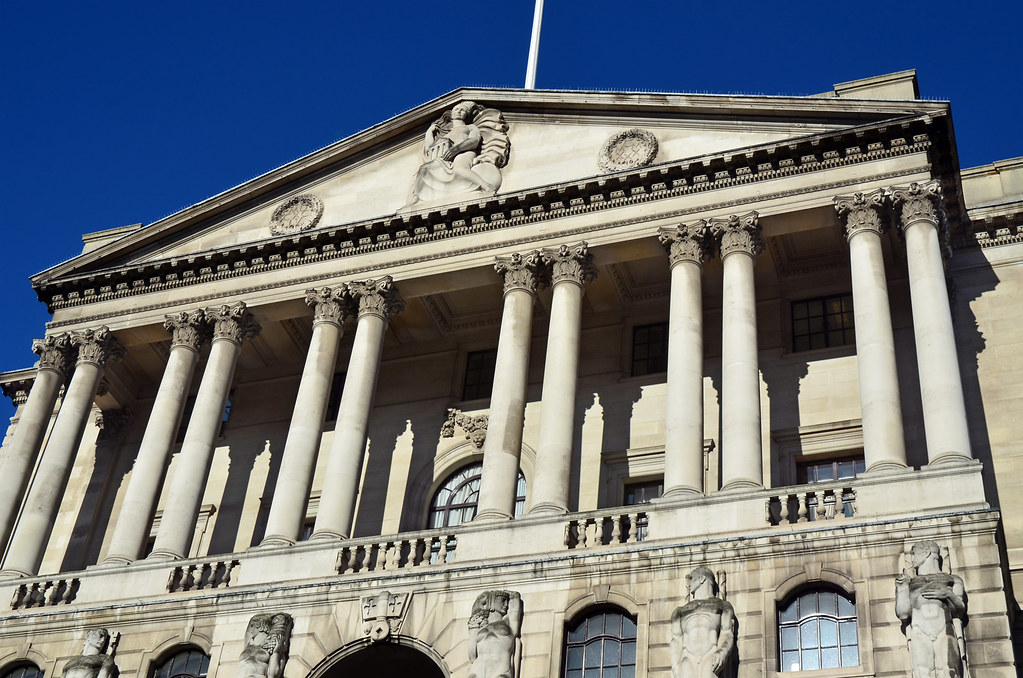
An erudite reader, such as yourself, obviously knows what the Bank of England is.
You may know, too, of its mandate in ensuring “price stability”, over and above other economic variables, such as employment, or the balance of payments.
What is less well known, however, is that in ensuring price stability, there is a narrow and crude emphasis on Consumer Price Inflation (CPI). Whilst consumer prices have monopolised our understanding of what it means to “combat inflation”, that exclusivity has neglected critical parts of our economy, and our overall economic performance.
The Conservative policy renewal continues apace, and most notably for me, includes the intention to abolish Stamp Duty Land Tax (SDLT) on primary residences. I can claim no credit, but I can say that such a policy was included in my Policy Renewal submission to the party back in September. I considered home ownership in depth, and why there had been such a precipitous decline since the early 2000s.
Having considered this issue, it is my firm contention that we need to re-orient this debate to one focused on why there is a crisis of affordability, rather than one focussed exclusively on supply-side solutions, important though they are. What was most striking during my research is just how central monetary policy, credit policy and the wider role of real estate in advanced economies is in driving an affordability crisis. More than that, the status quo is generating a state of perma-hopelessness, reflected in the volume of Brits leaving the UK in 2024.
Conservatives, instinctively, are for institutional continuity. That is why I do not think that we need to reconsider the institution of the Monetary Policy Committee (MPC) and how it makes its decisions, let alone Bank of England independence. Nor does this article seek to propound the view that price stability should be sacrificed or subordinated to other macroeconomic variables. Far from it: price stability is critical in meeting all other variables, as well as for a contented society. However, perhaps now is the time to consider whether the target that the Bank of England has needs re-visiting, and whether it should specifically target asset price inflation, too. There are three arguments in favour of doing this.
Firstly, the most powerful argument in favour of including a measure of asset prices in the Bank of England mandate is the real-world evidence since the financial crash of 2008-2009. Consumer prices were on the floor in nominal terms for much of the 2010s, largely due to China’s entry into the global trading system, creating a large disinflationary anchor on prices.
Monetary policy was specifically used to try and bring CPI back to target. Asset prices, meanwhile, continued to surge ever higher, benefiting owners of existing capital. The implications of this were addressed by a House of Lords Committee, which concluded that: “The mechanisms through which quantitative easing effectively stabilised the financial system following the global financial crisis have benefited wealthy asset holders disproportionately by artificially inflating asset prices. On balance, we conclude that the evidence shows that quantitative easing has exacerbated wealth inequalities”. Failing to take account of asset prices has had extraordinary distributional consequences of which we are still contending.
Secondly, historical evidence suggests that housing and equity bubbles have preceded severe recessions. This was notably the case in the UK leading up to the financial crisis of 2008–2009, but it has also been true at other times and in other places. For example, Japan experienced a dramatic housing and equity bubble in the early 1990s, and in the eurozone periphery during the 2000s, the convergence of borrowing costs under the single currency helped fuel large housing and credit booms, particularly in Spain and Ireland, which later unwound with severe economic consequences.
A similar dynamic was evident in the run-up to the Wall Street crash of 1929, when stretched asset valuations and easy credit amplified the scale of the downturn that followed. Once the bubble bursts, the recovery tends to take longer as the private and corporate sector retrenches, taking demand out of the economy. Discussion continues to swirl around whether we are living through an “AI bubble”, as the Bank of England has recently warned. Including asset prices in any central bank mandate would specifically aim to reduce the probability of such “boom-and-bust” cycles.
Thirdly, there is an argument that stabilising the financial cycle can improve long-run economic growth. Ensuring that asset price growth was factored into monetary policy decisions could smooth out the financial cycle. Preventing vertiginous asset price growth and bubbles to form would be the corollary of fewer, and less severe, deleveraging episodes following a crash. This would not be the elixir to ending “boom-and-bust”, but spending would be smoothed across the economic cycle, permitting higher nominal output growth.
The consequence of inaction here is that central banks that target only CPI risk ignoring the long-run output losses from financial instability. After almost two decades of low nominal economic growth, this would surely be welcome in an ageing society, with public sector net debt equivalent to around 94.5 per cent of GDP at the end of October 2025.
Monetary policy is a powerful tool. The last crisis of confidence in monetary policy occurred when Britain was dumped out of the ERM following “Black Wednesday” in 1992. That crisis triggered a policy consensus in the move to direct inflation targeting and central bank independence shortly thereafter. Whilst that policy architecture remains broadly sound, the myopic focus on consumer prices alone has neglected the distributional effects that monetary policy has wrought since the financial crash. Now should be the time to think again about how policy ensures “price stability”.




![Donald Trump Slams Chicago Leaders After Train Attack Leaves Woman Critically Burned [WATCH]](https://www.right2024.com/wp-content/uploads/2025/11/Trump-Torches-Powell-at-Investment-Forum-Presses-Scott-Bessent-to-350x250.jpg)


![Kamala Comes Unglued, Makes Bogus Claim About Her Landslide Loss to Trump [WATCH]](https://www.right2024.com/wp-content/uploads/2025/10/Kamala-Comes-Unglued-Makes-Bogus-Claim-About-Her-Landslide-Loss-350x250.jpg)