Bishop Michael Martin of the Diocese of Charlotte announced Wednesday that altar rails, kneelers, and prie-dieus can no longer be used for receiving Holy Communion in diocesan churches across half of North Carolina.
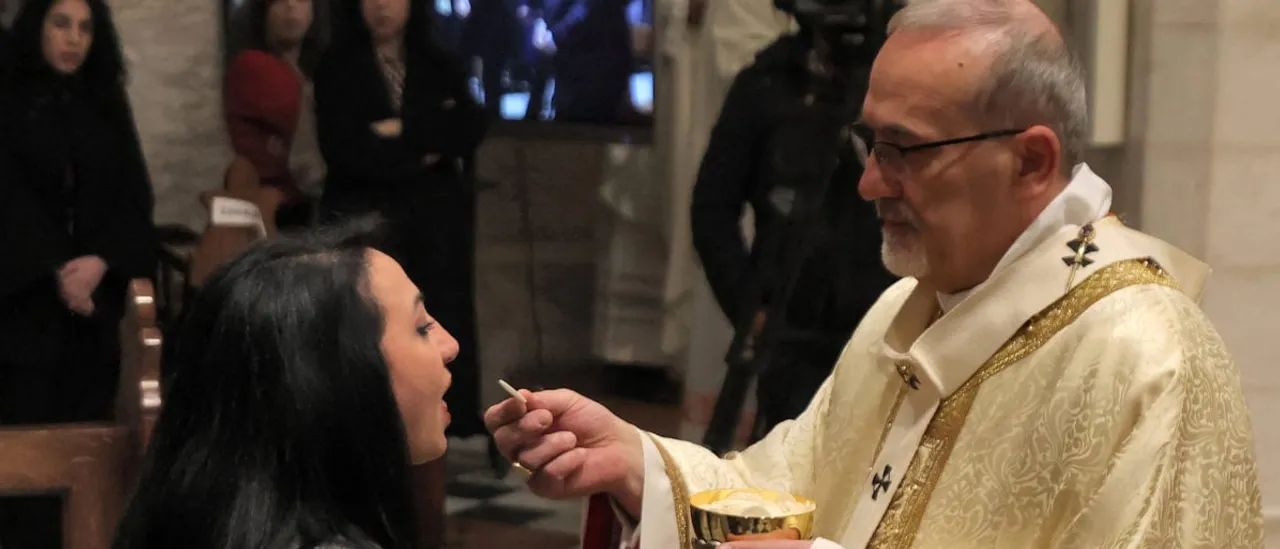
These objects serve as practical and symbolic tools for Catholics who prefer to receive Communion in the traditional, kneeling posture.
Martin issued the guidelines in a pastoral address to more than 565,000 Catholics, with the new norms taking effect in mid-January. Catholics believe Holy Communion is the partaking of the literal body and blood of Christ, a sacrament instituted by Jesus during the Last Supper that increases the sanctifying grace of the recipient. (RELATED: Vatican Replaces Conservative Archbishop With ‘Moderate’ Who Shared Anti-Mass Deportation Message)
The practice dates back over 2,000 years, and many Catholics hold that each element of its reception — including posture — carries meaning that transcends the merely physical.
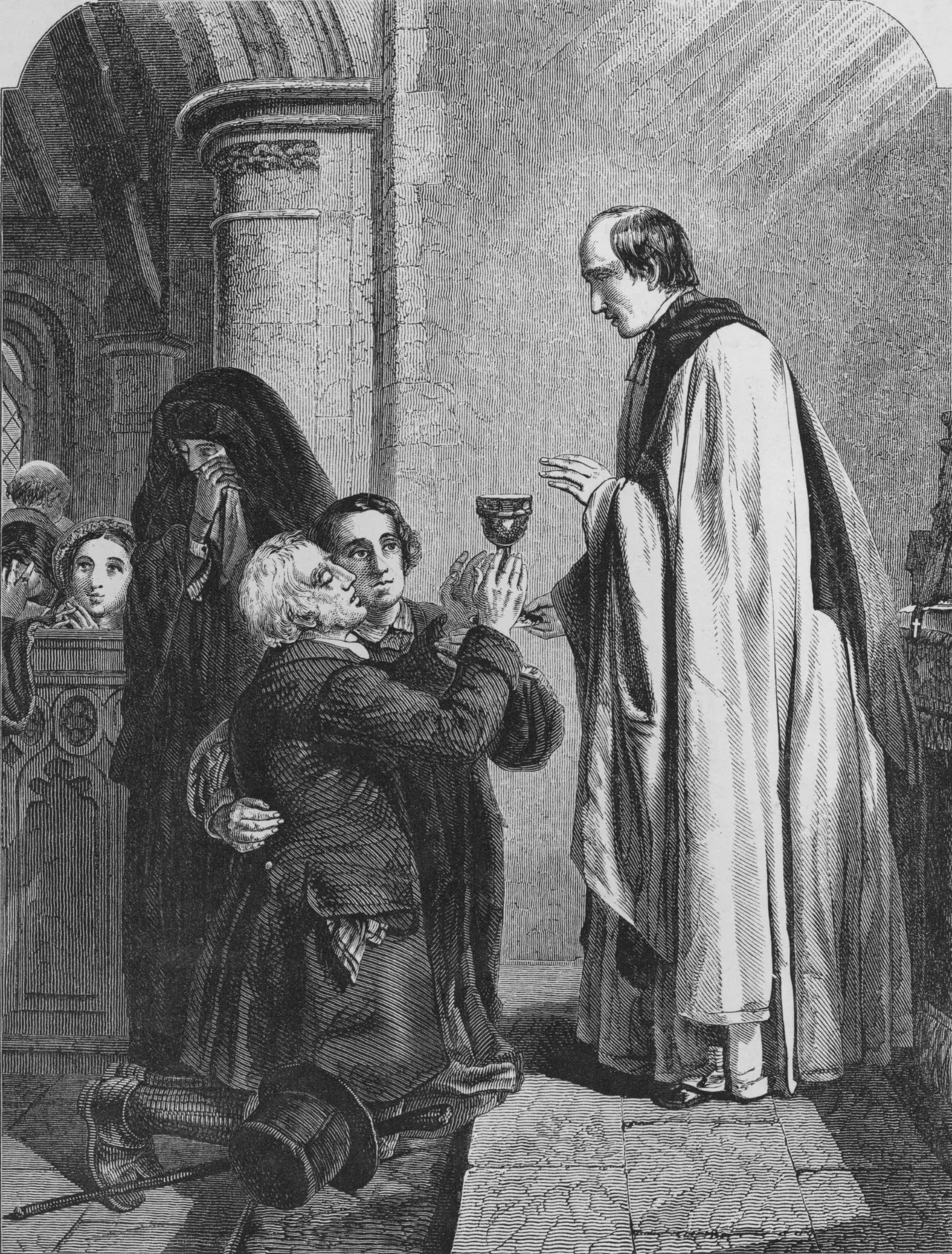
The administration of the Holy Communion in church, circa 1860. Engraved by M. Jackson for ‘The Art Journal’. (Photo by Hulton Archive/Getty Images)
Kneeling to receive Communion is seen as an act of submission to Christ and a literal fulfillment of Romans 14:11 — “every knee shall bow to me, and every tongue shall confess to God” — according to Fr. Chad Ripperger, a Catholic priest and exorcist. Removing altar rails and kneelers makes this posture both physically and socially more difficult to maintain.
Kneeling also allows the priest to more easily place the host directly on the communicant’s tongue. Traditionalists like Ripperger hold that only the consecrated hands of a priest should touch the Eucharist — not the unconsecrated hands of the laity.
“Throughout the ages and within the context of our rich liturgical traditions from the East to the West, our unity as believers in Holy Communion is expressed through our postures and gestures that reflect our mystical communion and unity as fellow believers,” Martin’s letter stated, before outlining “norms and guidelines for all public celebrations of the Most Holy Eucharist in the Diocese of Charlotte.”
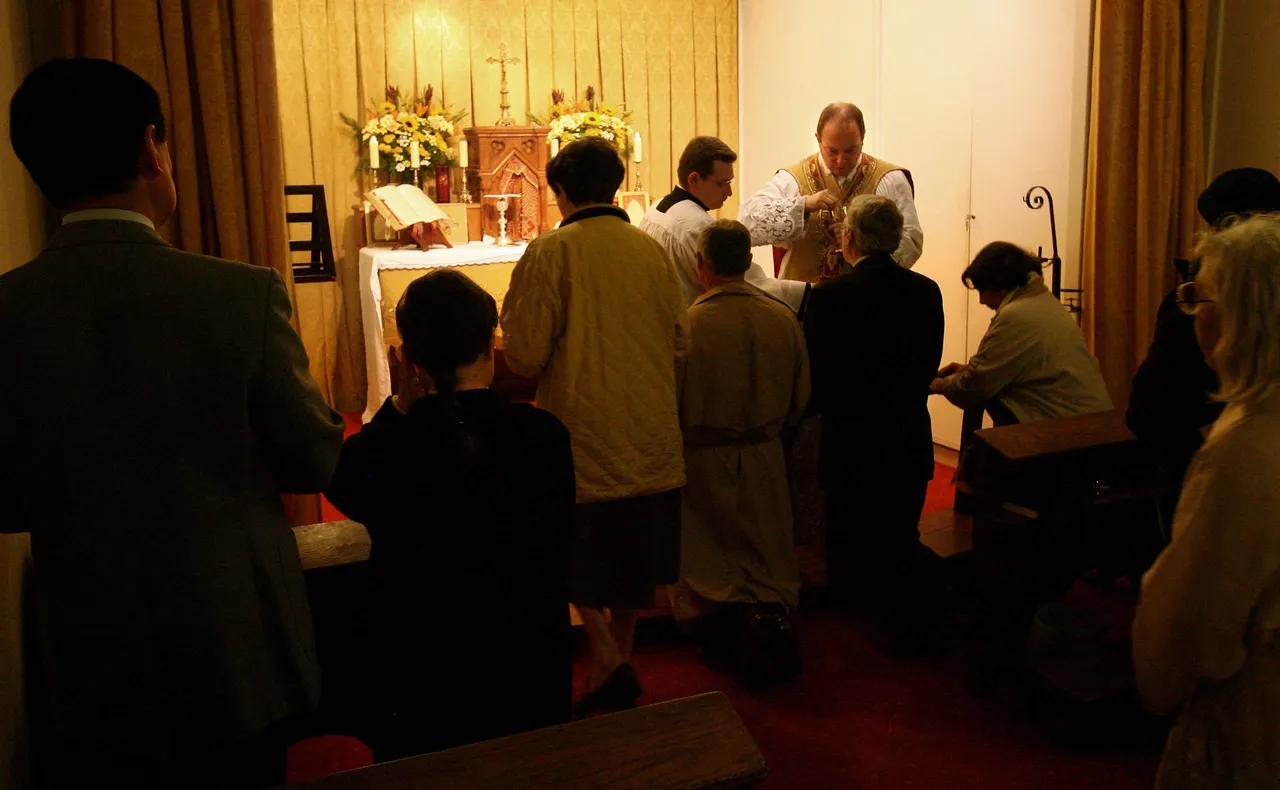
L’abbé traditionaliste de Paris Guillaume de Tanouarn donne la communion à des fidèles à genoux lors d’une messe en latin dans leur centre culturel de Paris, le 29 octobre 2006. (Photo by THOMAS COEX/AFP via Getty Images)
Starting Jan. 16, altar rails, kneelers, and prie-dieus will no longer be permitted for receiving Communion at public Masses. Temporary or movable kneeling fixtures must also be removed by that date.
Church leaders are instructed to teach communicants only the standing posture, which the letter calls “normative.”
These changes align with standards set by the United States Conference of Catholic Bishops and approved by the Vatican. The letter notes that “the norm … is that Holy Communion is to be received standing, unless an individual member of the faithful wishes to receive Communion while kneeling.” (RELATED: Rachel Maddow Wants To Be Catholic Again — Church Leaders Have Questions)
Despite removing the infrastructure that facilitates kneeling, the letter emphasizes that leaders remain committed to allowing communicants to receive in their preferred manner, stating the new norms “move us together toward the Church’s vision for the fuller and more active participation of the faithful.”





![Donald Trump Slams Chicago Leaders After Train Attack Leaves Woman Critically Burned [WATCH]](https://www.right2024.com/wp-content/uploads/2025/11/Trump-Torches-Powell-at-Investment-Forum-Presses-Scott-Bessent-to-350x250.jpg)


![Two Dead, 14 Injured After Gunfire Erupts Following College Football Game in Alabama [WATCH]](https://www.right2024.com/wp-content/uploads/2025/10/Two-Dead-14-Injured-After-Gunfire-Erupts-Following-College-Football-350x250.jpg)