This content was produced via a partnership with KCPAC. The views and opinions expressed in this commentary are those of the authors and do not reflect the official position of the Daily Caller.
Chinese Stealth
When people hear about Korea, they are usually hearing about North Korea, the Democratic People’s Republic of Korea (DPRK). And its leader Kim Jong Un makes news. He was dubbed Rocket Man by President Donald Trump due to his determination to create an arsenal of nuclear weapons that could be launched towards the U.S. at will.
North Korea’s southern neighbor on the Korean Peninsula is the Republic of Korea (ROK), also known as South Korea. This democratic nation of just over 50 million people was established in 1948. When hostilities ceased in the Korean War in 1953, the 38th parallel became the rough boundary between the two countries. The U.S.-South Korea Alliance formed in the aftermath of the fighting on the peninsula helps stabilize what continues to be a volatile part of the world. (RELATED: Dangerous Mindsets In Asia: Another Long March By China)
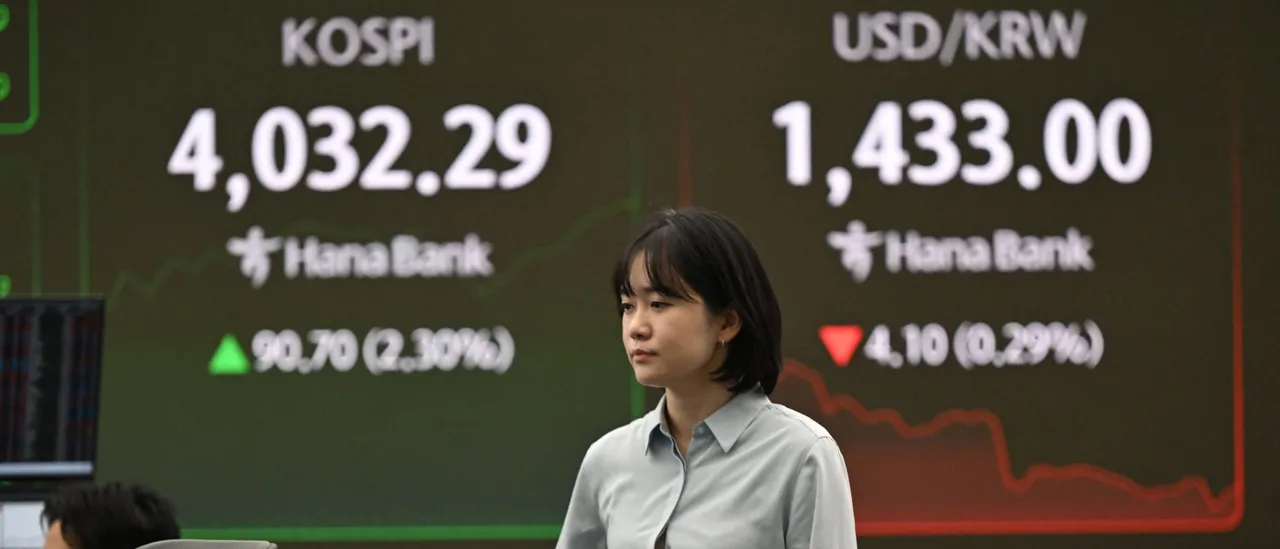
However, there are hidden threats to this part of Northeast Asia that are potentially more damaging to the future of South Korea. Beijing has quietly deployed a different kind of weapon on the Korean Peninsula. It doesn’t involve any military. It is all about money, large amounts of it. Over the last decade, the Chinese Communist Party (the CCP) has methodically cornered the market on South Korean sovereign debt. Recent analysis indicates that China is now the largest foreign holder of South Korean government bonds. The Chinese likely control over one hundred billion dollars’ worth of the country’s national debt.
Kill Switch
This is not simply an investment portfolio — it is a financial weapon. It is a loaded gun pointed at the heart of the South Korean economy. We might call this a financial hostage situation. Right now, in peacetime, Beijing is playing the role of a benevolent investor. But come a geopolitical crisis, the Chinese would have the leverage to trigger a potentially catastrophic financial meltdown in Seoul within hours. Such a meltdown would compromise South Korea’s ability to act as an independent sovereign nation and fulfill its responsibilities to its citizens. It casts a shadow over the U.S.-South Korea Alliance and serves as a warning to the U.S. that China is once again up to no good.
Let’s suppose for a minute that the threat is enacted. The results could be devastating. It is what market analysts might call a Sell Korea scenario. If Beijing decides to suddenly dump all of its massive holdings of Korean bonds at once, this simple move could trigger a vertical spike in interest rates. This is because buyers expect to benefit from the inverse relation between price and interest. Lower price means higher interest. The value of the local currency, the Korean Won, could collapse. Capital would flee the country.
Unfortunately, this is not a hypothetical risk. It has been tested. We believe that Beijing closely studied the Western sanctions on Russia in 2022. They learned that financial dependency is a strategic weapon that masks a vulnerability in financial systems. So they have aggressively diversified away from U.S. Treasuries and into the debt of its allies like South Korea. The Chinese are building a kill switch to cripple America’s partners without firing a shot.
Strategic Void
How important is this to the U.S.? Because the dollar is the world’s reserve currency, America doesn’t need to hold foreign sovereign debt. Therefore, the U.S. holdings of Korean bonds are negligible compared to China’s stash. This difference in holdings can be thought of as a strategic void which Beijing has cunningly exploited over the years. They now occupy the financial high ground that Washington neglected because they saw no need to be there. (RELATED: The Chinese Trap Sprung On America In South Korea)
By dominating the Korean bond market, China is aiming to become part of the nervous system of the Korean economy. Korean policymakers are now operating under the constant threat of Chinese financial retaliation. This secretive coercion can force national policy towards hesitation and neutrality when Washington needs clarity and commitment. The U.S. provides the security umbrella but China holds the economic purse strings which could effectively paralyze its important ally.
This South Korean vulnerability is a direct threat to national security. South Korea is not just a military outpost. It is a critical node in the global economy and a crucial part of the supply chain for American defense industries.
If China’s able to pull the trigger on a Sell Korea operation, the chaos will not stay in South Korea. Firstly, the global semiconductor supply chain would freeze up. The South Korean corporations Samsung and SK Hynix, which power American technology innovation and defense systems, would face a liquidity crisis. Secondly and even more importantly, a financially crippled South Korea would not be able to support U.S. military operations.
International Repercussions
Let’s imagine that China attacks Taiwan. Beijing could threaten to bankrupt the South Korean economy if the country’s administration allowed U.S. forces to launch sorties from the peninsula. If Seoul was forced to choose between economic survival and alliance commitments, you can see that the financial gun to its head presents a real dilemma.
The U.S. cannot expect its allies to stand firm against Chinese aggression if their economies are held hostage. This debt imbalance, the strategic void, is nothing less than an urgent national security emergency for America and Korea. The health of the alliance depends on it.
But what should we do about it? We should build financial firewalls. This includes establishing a real-time monitoring system for hostile capital flows and expanding currency swap lines with the U.S. and Japan to reduce reliance on Chinese liquidity. We need transparency rules that distinguish between private investment and state directed capital. (RELATED: Why Is South Korea Punishing Success?)
Beijing has billions of dollars in deposit — and it is changing all the time — that can potentially buy South Korea’s submission to their will. It threatens the U.S.-South Korea Alliance and the peace of the region. We must mitigate this covert threat before a payday arrives and the disruption brings down our country and the alliance.





![Donald Trump Slams Chicago Leaders After Train Attack Leaves Woman Critically Burned [WATCH]](https://www.right2024.com/wp-content/uploads/2025/11/Trump-Torches-Powell-at-Investment-Forum-Presses-Scott-Bessent-to-350x250.jpg)


![CNN's Kaitlan Collins Fact-Checks Rep. Jasmine Crockett Over False Trump Ballroom Claim [WATCH]](https://www.right2024.com/wp-content/uploads/2025/10/1761954330_CNNs-Kaitlan-Collins-Fact-Checks-Rep-Jasmine-Crockett-Over-False-Trump-350x250.jpg)