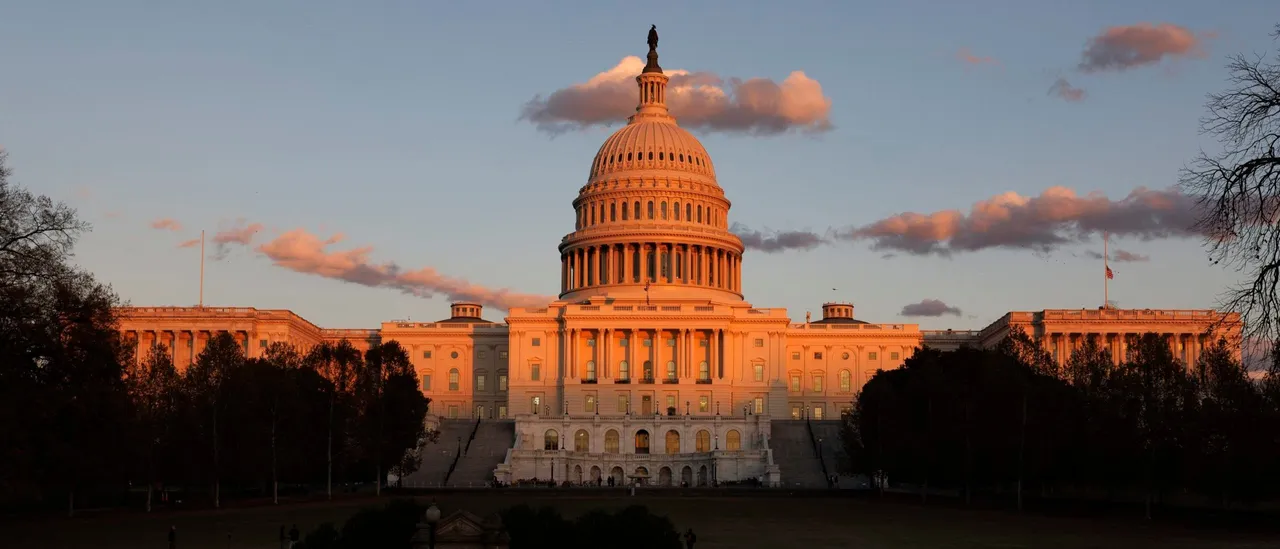
The U.S. House of Representatives, heavily criticized recently for its failure to get much done this year outside of the passage of the One Bill Beautiful Bill Act in July, gave its do-nothing reputation a hit on Thursday with the bipartisan passage of the SPEED Act on a 221-196 vote.
The SPEED Act – full name, Standardizing Permitting and Expediting Economic Development — is exactly what its name says, an effort by Congress to streamline federal permitting requirements for energy projects subject to the National Environmental Policy Act, or NEPA. It isn’t the sort of comprehensive permitting reform legislation sought by former Democratic Sen. Joe Manchin of West Virginia during 2022 and 2023. But the bill will, if passed by the Senate in its current form, constitute a very good start towards that ultimate goal, since NEPA has always served as one of the most impenetrable roadblocks to expeditious development of major energy-related development projects. (RELATED: Biden Admin Shoveled Billions Out The Door With Poor Oversight, Internal Watchdog Says)
The process improvements contained in the SPEED Act would be impactful and immediate. Among other things, the bill will:
- Establish firm deadlines for NEPA environmental reviews and judicial challenges
- Cut legal challenges that currently can drag on for years to 150 days
- Requires agencies to limit reviews to environmental impacts that can be tied directly to specific projects, not indirect effects
- Clarifies what constitutes a “major federal action” to prevent minor projects from triggering lengthy reviews
- Prevents presidential administrations from reversing prior NEPA decisions and limits their ability to rescind previously issued permits
Unsurprisingly, representatives of various energy trade associations expressed approval on news of the House passage of the bill. “We have a generational choice in front of us, where we must decide if we are going to be builders or not, said Melissa Simpson, president of the Western Energy Alliance. “Reforming the nation’s outdated permitting system is critical to bolstering energy security, growing jobs, building vital infrastructure, and supporting the projected energy demands of our country in the coming years. Our nation’s economy can no longer sustain the strategy of activist groups to defer, delay, and deny high-value energy and infrastructure projects.”
Independent Petroleum Association of America (IPAA) President and CEO Edith Naegele said, “Reforms made to the 50-year-old National Environmental Policy Act (NEPA) in the SPEED Act provide greater certainty for energy producers, address delays, and accelerate the approval process for oil and natural gas projects that provide needed energy for Americans.”
U.S. Oil and Gas Association (USOGA) President Tim Stewart, who manages one of the most entertaining energy-related accounts on X, was more succinct, posting, “Cool. Now, LET’S GO BUILD THINGS.”
Stewart’s celebratory note captures in a few words the central objective of the overall energy agenda of this second Trump presidency, which can be encapsulated with the slogan, “Build, Baby, Build.”
As I pointed out here shortly after Donald Trump’s inauguration in January, the backlog of much-needed new infrastructure projects and expansions of existing installations accumulated during the Biden years meant this focus on getting big things like pipelines, power plants, transmission lines, and LNG export facilities expedited and built was inevitable. It is, in fact, a national imperative if the country is to be able to meet the explosion in demand driven by the AI datacenter boom and other major energy hogs.
It’s an obvious fact that you can’t build big things without first obtaining the array of permits required to get started. That means finding ways to cut absurdly lengthy timelines for permitting new mines (as much as 30 years), nuclear power plants (10-12 years), major transmission projects (up to 17 years) and other big builds.
The current status quo is simply not sustainable if America is to remain a dominant global power and hope to win the AI race with China. The SPEED Act doesn’t solve the whole problem, but it does address one of the problem’s biggest parts. The bill isn’t a magic bullet, but it sure is a very good start.
David Blackmon is an energy writer and consultant based in Texas. He spent 40 years in the oil and gas business, where he specialized in public policy and communications.
The views and opinions expressed in this commentary are those of the author and do not reflect the official position of the Daily Caller News Foundation.
All content created by the Daily Caller News Foundation, an independent and nonpartisan newswire service, is available without charge to any legitimate news publisher that can provide a large audience. All republished articles must include our logo, our reporter’s byline and their DCNF affiliation. For any questions about our guidelines or partnering with us, please contact licensing@dailycallernewsfoundation.org.





![Donald Trump Slams Chicago Leaders After Train Attack Leaves Woman Critically Burned [WATCH]](https://www.right2024.com/wp-content/uploads/2025/11/Trump-Torches-Powell-at-Investment-Forum-Presses-Scott-Bessent-to-350x250.jpg)