Harriet Cross is the Conservative and Unionist MP for Gordon and Buchan.
Energy. Every moment of every day is powered by it. The UK would grind to a halt without it.
But what Ed Miliband seems determined to forget, is that 80 per cent of the UK’s energy still comes from oil and gas. Not from wind. Nor solar. But from good, old-fashioned hydrocarbons. And, as much as it may disappoint the Energy Secretary, this will remain the case for many years to come.
“Oil and gas will be with us for years to come…”. That is the constant refrain we hear from Labour when challenged about their North Sea oil and gas policies.
Indeed they will. There is no denying that. But what Labour are either deliberately glossing over, or conveniently misunderstanding, is that because of their green ideology verging on zealotry, we won’t be using British oil and / or gas for “years to come”. We will be increasingly reliant on imports from Norway, Qatar, Mexico, America… indeed any oil and gas producing nation which is not shackled by leaders that do not value energy independence or sovereignty of supply.
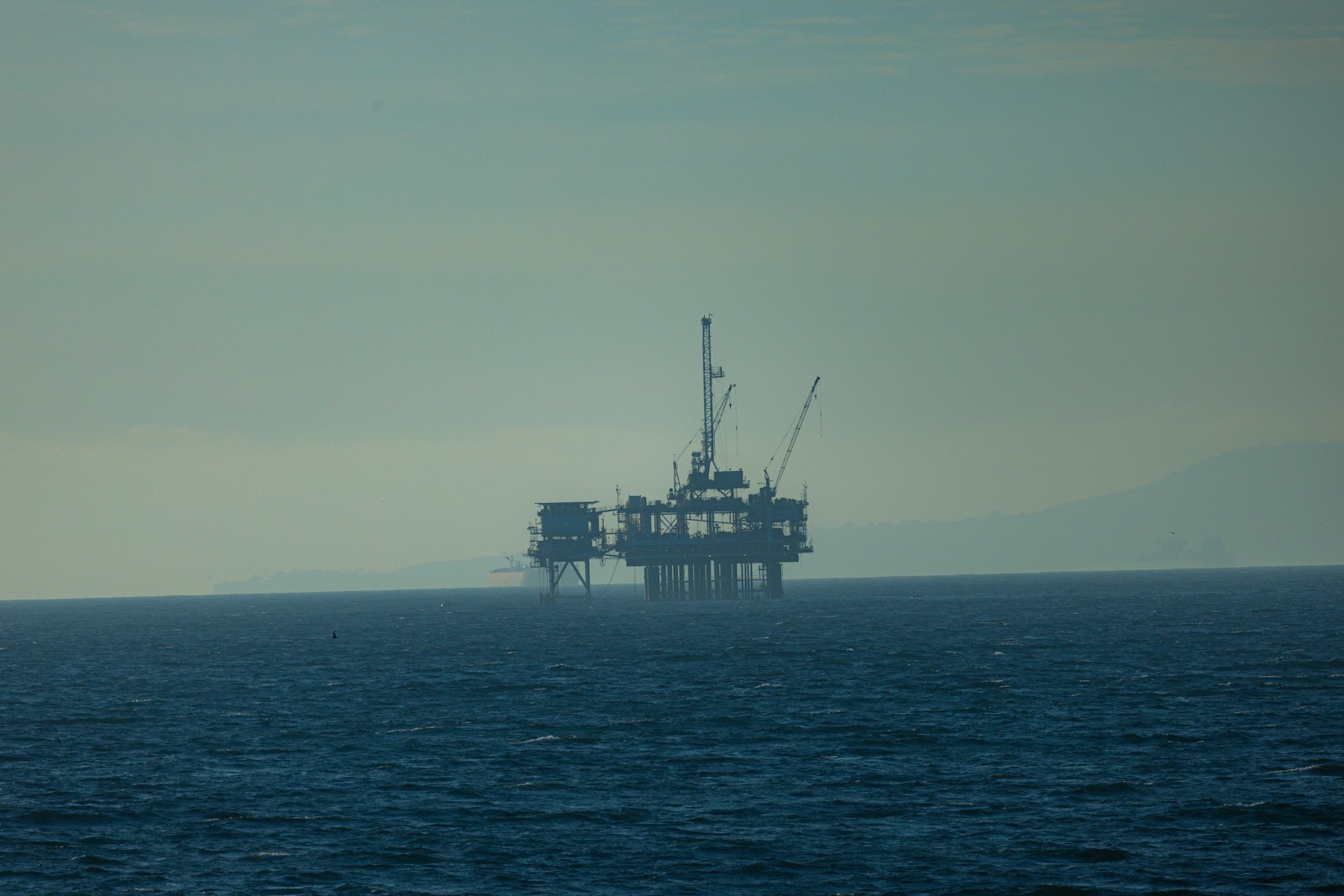
The UK’s oil and gas sector emerged in the 1960s, when vast reserves were identified off our east coast. A geological jackpot!
Those reserves have brought wealth, employment, skills and expertise, billions in tax, and economic activity and endless opportunity that in no small way have contributed to the Britain we are today.
Today the industry is as a turning point. The North Sea is unquestionably a ‘mature basin’, meaning it has passed its peak; that was hit in 2001, since when production has indeed been naturally declining, and we been net importers of oil and gas since 2005. That is all fact. All understood. All expected. And all normal.
What, however, the industry cannot understand, should never be expected, and is definitely not normal is for the Government to be actively trying to shut down arguably the most crucial of domestic industries.
But, driven by Miliband’s eco-zealotry and Sir Keir Starmer’s inability to act in the national interest, Labour are over-seeing a sustained and likely fatal assault on the UK’s oil and gas sector, including the nearly 200,000 people either directly or indirectly it employs.
There are two main issues: one regulatory, one fiscal.
Firstly, and despite the Government’s acceptance that we will be using oil and gas “for years to come”, they have banned new exploration licences.
This, in effect, has hung a ‘Closed for Business’ sign over the North Sea. Any company wanting to explore for more reserves in the untapped parts of Britain’s North Sea maritime zone will have no opportunity to do so. This move is equivalent to telling the car industry that they cannot produce any new models in their British factories – but allowing British consumers to import new models from abroad in ever higher numbers.
That, rightly, would be absurd. It would undermine British industry and be a waste of a skilled workforce, resources and opportunity for inward investment. Those same arguments apply when considering the ban on new oil and gas licences.
What other country, anywhere in the world, would ban itself from its own resources? Let alone from resources it still needs, will need for decades and already does not have enough of? From resources which will instead be imported at huge expense?
Why are we doing this? Because (apparently) it shows we are green. That we are environmentally conscious. So other countries can see us as a shining example and follow our lead. It completely ignores the fact that liquefied natural gas (LNG) imports are over four times as carbon intensive as the gas produced in the North Sea. That is the inconvenient truth that Miliband and the green lobby don’t talk about.
But yet, and incredibly, the ban on future licences is not even the biggest threat to the sector. For that, we have to look to the Treasury and to the Energy Profits Levy (EPL). For those (which I expect is most) who spend much less time thinking about the EPL than I do, a brief history…
The EPL, also known as the windfall tax, was introduced in 2022 in response to soaring energy bills when oil and gas prices spiked following Russia’s invasion of Ukraine. At that time, oil peaked at almost $140/barrel, and gas at over 555 pence/therm. But since 2022 prices have cooled, a lot. Today, oil is at $59/barrel, and gas at 72 pence/therm. Absolutely in line with historic averages and certainly not windfall territory.
Despite this, the Labour Government extended the EPL (the ‘windfall tax’) to 2030 in their first Budget and, despite pleas and endless evidence from the sector, in the most recent Budget confirmed the tax will remain for until the end of the decade, ensuring that this ‘temporary’ tax will in place for eight years. They also increased the rate to 38 per cent, bringing the headline rate for UK oil and gas production to 78 per cent.
And the impact of this? Creating the most punitive fiscal framework for the sector anywhere in the world and ensuring that oil and gas production from the UK is uniquely uncompetitive. This means businesses – businesses which operate globally – are turning their backs on the UK and increasingly looking overseas.
This has significant and potentially irreversible consequences for Britain. Oil and gas production is down, and falling at an increasing rate. The OBR now expects British gas production to fall by 55 per cent and oil by 33 per cent by 2030.
A huge amount of investment is being lost. Offshore Energies UK estimates that keeping the EPL will be at the cost of £50 billion in lost investment over the coming years. Similarly, £150 billion of economic activity is being forgone.
A thousand jobs are being lost from oil and gas producers, operators and the supply chain every single month. This, incidentally, is the same supply chain which will be central to rolling out the ‘clean’ projects to which the Energy Secretary is apparently so committed, but which will be unachievable if the skills and expertise of the existing oil and gas supply chains are wiped away.
And, ironically, tax revenues from the sector falling at an accelerating rate. Revenues from the EPL have just been downgraded by a huge £2.6bn just since June. Overall oil and gas revenues were also downgraded in the Budget, by an even more staggering £6.2bn. Total oil and gas revenues for 2025-26 are now expected to be £2.7bn, a 41 per cent decrease on 2024-25.
By 2030, the OBR now expects the EPL to bring in just £300m. A pitiful sum, and an example of just how much the sector is expected to be gutted over the next 5 years.
To add insult to injury, the Government has defined what they consider as windfall prices: $90/barrel and 90p/therm. Today, we are nowhere near the Government’s self-defined windfall levels, and yet the industry will still remain burdened with the world’s highest taxes for another four years. It feels like Labour are laughing at the sector, at the tens of thousands of workers who jobs are on the line and at the companies being pushed away from the UK.
The industry is unanimous: the EPL is to blame for the spiralling decline in production, investment and jobs; the EPL can, by the Government’s own definitions, no longer be justified. So, the EPL must go… before the oil and gas sector does.
What was introduced as a temporary tax has become an 8-year death sentence for one of our most valuable industries. It is (or at least should be) so simple: there are no longer windfall prices, there are no longer windfall profits. So why are oil and gas companies still paying windfall taxes?
One statistic, above all others, epitomises the failure in the Government’s oil and gas fiscal and regulatory regime. In 2025, for the first time since the 1960s, no new exploration wells have been drilled in the British North Sea. Meanwhile Norway have drilled almost 40 – in the same North Sea basin. The only difference is the governments of the two countries.
So, while we will be using oil and gas “for years to come”, unless we change course immediately we will not be using the oil and gas on our own doorstep. Kemi Badenoch has confirmed that the Conservatives will scrap the EPL on our return to office. We just must hope that the damage done to the sector in the meantime is not fatal.
![Scott Bessent Explains The Big Picture Everyone is Missing During the Shutdown [WATCH]](https://www.right2024.com/wp-content/uploads/2025/11/Scott-Bessent-Explains-The-Big-Picture-Everyone-is-Missing-During-350x250.jpg)