
Vatican City, Dec 25, 2025 /
06:35 am
Pope Leo XIV on Christmas Day deplored the “falsehoods” used to justify wars that leave young people “forced to take up arms” and “sent to their deaths,” while also drawing attention to the humanitarian suffering of displaced people, including families living in tents in Gaza.
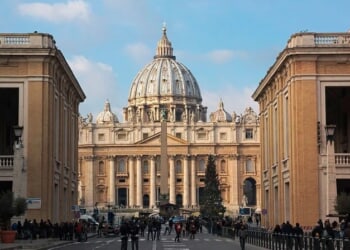
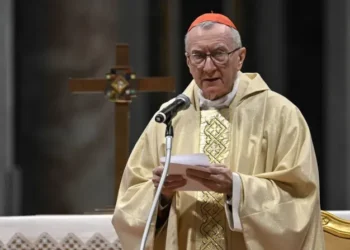
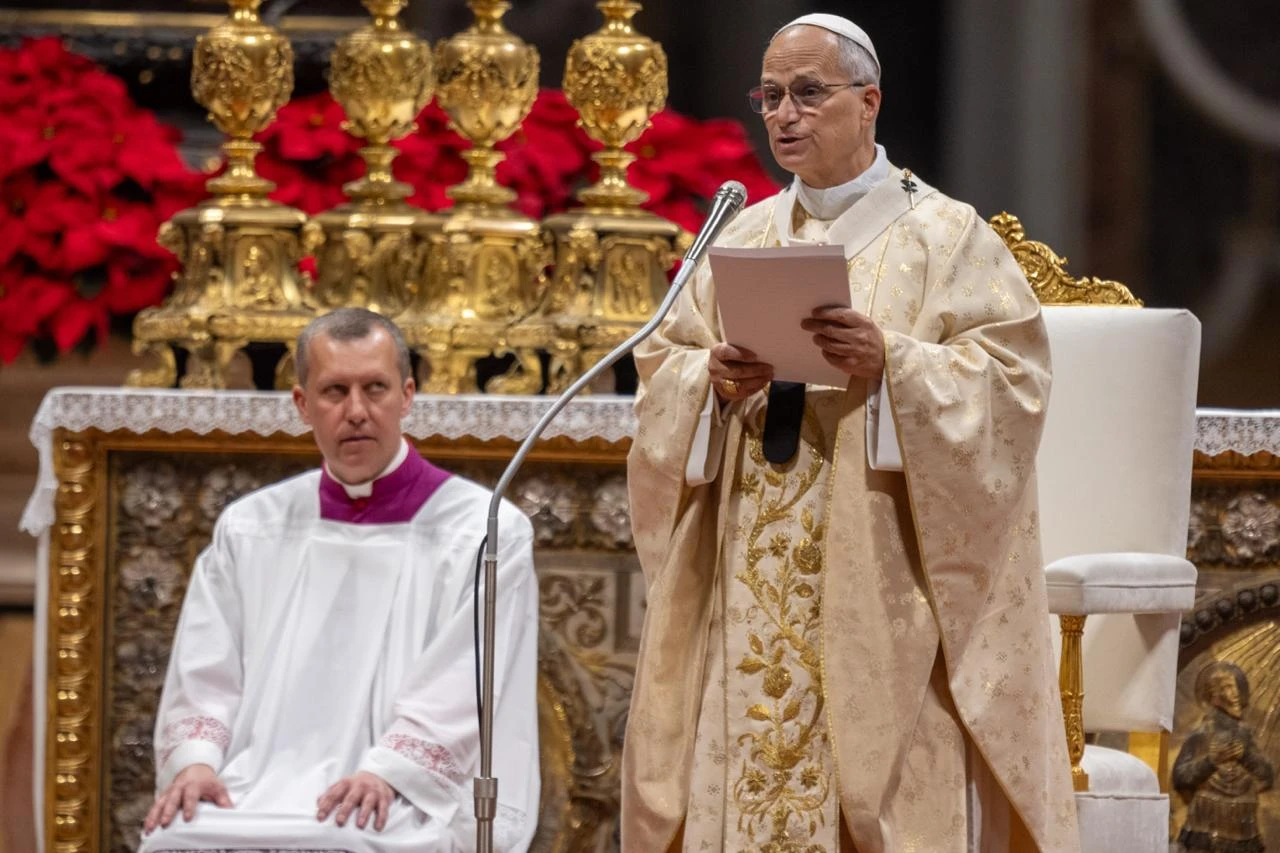
In his first Christmas as pope, Leo celebrated Christmas Day Mass in St. Peter’s Basilica, reviving a practice not seen since 1994 during the pontificate of St. John Paul II. Reflecting on the prologue of St. John’s Gospel, the pope said in his homily that the Christmas liturgy highlights a striking contrast: God’s Word, which acts with power, comes into the world in utter weakness.
“The ‘Word’ is a word that acts,” Leo said. Yet, he added, “the Word of God appears but cannot speak. He comes to us as a newborn baby who can only cry and babble.”
Leo said the mystery Christians celebrate at Christmas cannot be separated from the vulnerability of those whose dignity is assaulted by war, displacement, and poverty. He urged Catholics to let Christ’s birth pierce complacency and move them toward tenderness and solidarity.
“‘Flesh’ is the radical nakedness that, in Bethlehem as on Calvary, remains even without words – just as so many brothers and sisters, stripped of their dignity and reduced to silence, have no words today,” he said.
In one of the homily’s most striking passages, Leo connected the Gospel image of the Word “pitching” his tent among humanity with the reality faced by families living in makeshift shelters amid conflict.
“Dear brothers and sisters, since the Word was made flesh, humanity now speaks, crying out with God’s own desire to encounter us. The Word has pitched his fragile tent among us,” he said, before asking: “How, then, can we not think of the tents in Gaza, exposed for weeks to rain, wind and cold; and of those of so many other refugees and displaced persons on every continent; or of the makeshift shelters of thousands of homeless people in our own cities?”
The pope also described the toll of war in terms of both shattered communities and wounded consciences.
“Fragile is the flesh of defenseless populations, tried by so many wars, ongoing or concluded, leaving behind rubble and open wounds,” he said. “Fragile are the minds and lives of young people forced to take up arms, who on the front lines feel the senselessness of what is asked of them and the falsehoods that fill the pompous speeches of those who send them to their deaths.”
Leo framed Christmas as a proclamation that peace is not merely a hope for the future but a gift already present in Christ, even when few recognize it. Quoting Jesus’ words to the disciples, he said: “‘Peace I leave with you; my peace I give to you; not as the world gives do I give to you’ (Jn 14:27).”
That peace, he said, begins not in rhetoric but in concrete compassion that listens, stays close, and responds to suffering.
“When the fragility of others penetrates our hearts, when their pain shatters our rigid certainties, then peace has already begun,” he said. “The peace of God is born from a newborn’s cry that is welcomed, from weeping that is heard. It is born amidst ruins that call out for new forms of solidarity.”
The pope warned that believers can bury what the Gospel calls “the power to become children of God” by keeping their distance from the vulnerable.
“Becoming children of God is a true power – one that remains buried so long as we keep our distance from the cry of children and the frailty of the elderly, from the helpless silence of victims and the resigned melancholy of those who do the evil they do not want,” he said.
This story was first published by ACI Prensa, CNA’s Spanish-language news partner. It has been translated and adapted by CNA.

As a journalist, Victoria Cardiel has specialized in social and religious news. Since 2013, she has covered the Vatican for various media outlets, including Europa Press and Alfa and Omega, the weekly newspaper of the Archdiocese of Madrid.