The next Patrick Mahomes, Aaron Judge or Michael Phelps could be waiting in the wings at the local Pee-Wee football field, Little League diamond or YMCA pool. They probably aren’t, but what if?
That possibility is enticing enough for thousands of parents to bet on their children’s athletic future, siloing them into a single sport and dropping a college fund in cash on their development, despite the risk of injuries and burnout.
A study released by Project Play earlier this year found that 11% of parents thought their child could become a professional or Olympic athlete. A total of approximately 20% thought their youngster could compete at the Division 1 level in college.
The actual odds are much steeper. Only 1 in 610 high school baseball players will be drafted by an MLB club, for example. The chances of joining the NBA are even slimmer, with a whopping 0.0096% of high school ballers playing in the league.
“Dreaming is a big part of what we’re doing for our kids. … That’s sort of our role. We support, we guide, we grow,” said Asia Mape, founder of the “I Love to Watch You Play” campaign, at a Project Play summit. “But then there comes a point where we have to pivot, and this is one of the biggest problems. We don’t pivot with our kids.”
The detrimental impacts of this outsized belief — and the associated professionalization of youth sports — can have steep consequences for both parents and children.
Money, money, money
Sports are expensive. Gone are the days when a child could play in their local Little League, fall in love with the game and excel while holding onto their dream of playing in the majors without breaking the bank. Children as young as 7 years old are now being recruited to play on expensive travel teams or risk being left behind as their peers develop, thanks to more intensive coaching.
It now costs an average of $1,500 to have a single child play sports for a year, according to a study released by the Aspen Institute in September.
Travel fees and personal coaches are understandable. But some parents aren’t just outsourcing that work — many of them are investing in their own athletic education in novel ways.
Antony Zouzout thought that SoccerEDU, his company that provides video recordings and analysis of youth soccer games, would be reserved for coaches and scouts. The academies of top-tier soccer clubs like FC Barcelona, Bayern Munich and Liverpool recruit children as young as six, molding them into future stars with year-round instruction.
But instead, Mr. Zouzout said his product found a different market: soccer moms (and dads). It’s easy for them to set up a camera on the sidelines, record a game or practice and learn how to analyze the footage.
“Parents, they invest massively in their kids. So families often spend thousands of dollars a year on club fields, travel tournaments,” he said. “But what’s very interesting is the emotional investment for parents. They feel they are doing everything possible to support their kids. We’re just another channel to help this investment.”
It’s part of a broader shift he’s seen in American sports over the last few years. Your neighborhood youth league likely features a handful of young players there for the love of the game. But they’re being outnumbered and outclassed by a growing number of families who are devoting eye-popping resources to youth sports.
Mr. Zouzout’s program teaches parents how to analyze game film. For just under $2,000, coaches and family members receive 120 hours of courses and learn how to use the same tools as the pros.
“Youth sports today look more like professional environments: structure, schedules, training,” Mr. Zouzout said. “That’s exciting, of course, but also a little bit concerning. On one hand, those kids get access to resources that can really accelerate development. But on the other end, the pressure to perform is high at a very young age.”
Parents are well-meaning, he said, but the pressure adds up. The long-term impact of these uber-involved parents isn’t clear yet.
The shift in youth sports occurred quickly. Mr. Zouzout has tried his best to keep up and is already looking at what’s coming next. SoccerEDU is finding ways to expand into basketball, American football and hockey.
“We’re going to see more and more parents involved in their kids’ journey,” he said. “Yesterday, it was just the training ground. Today it’s video analysis, but tomorrow it will be data and AI.”
Under pressure
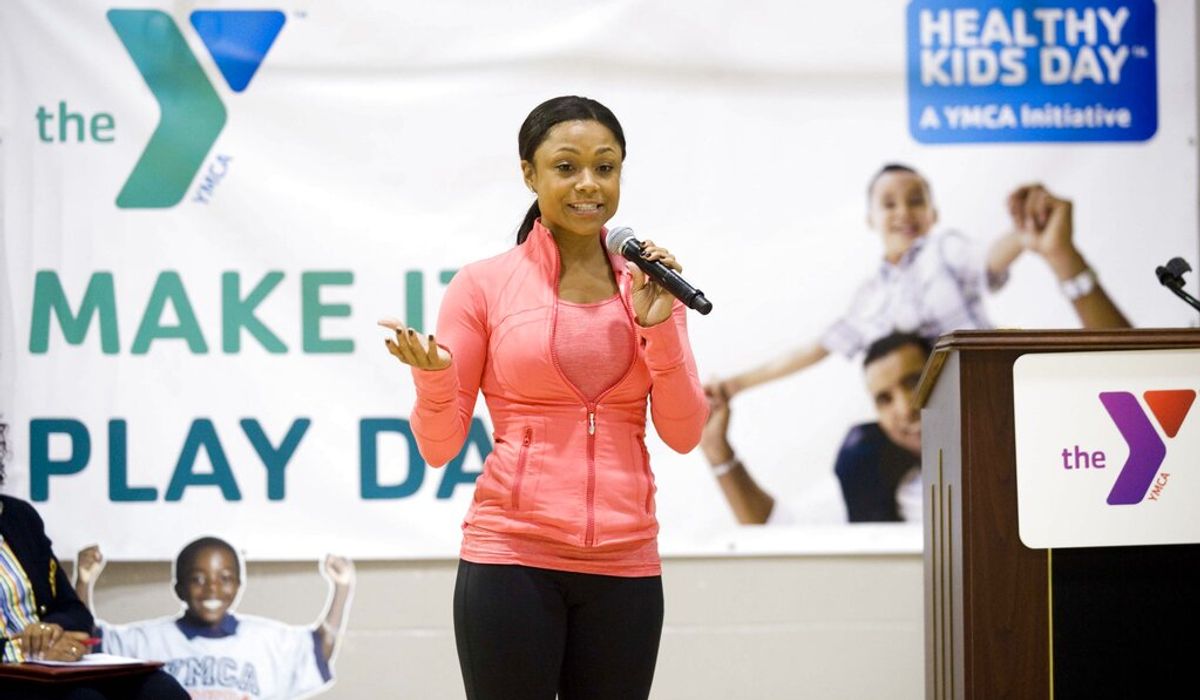
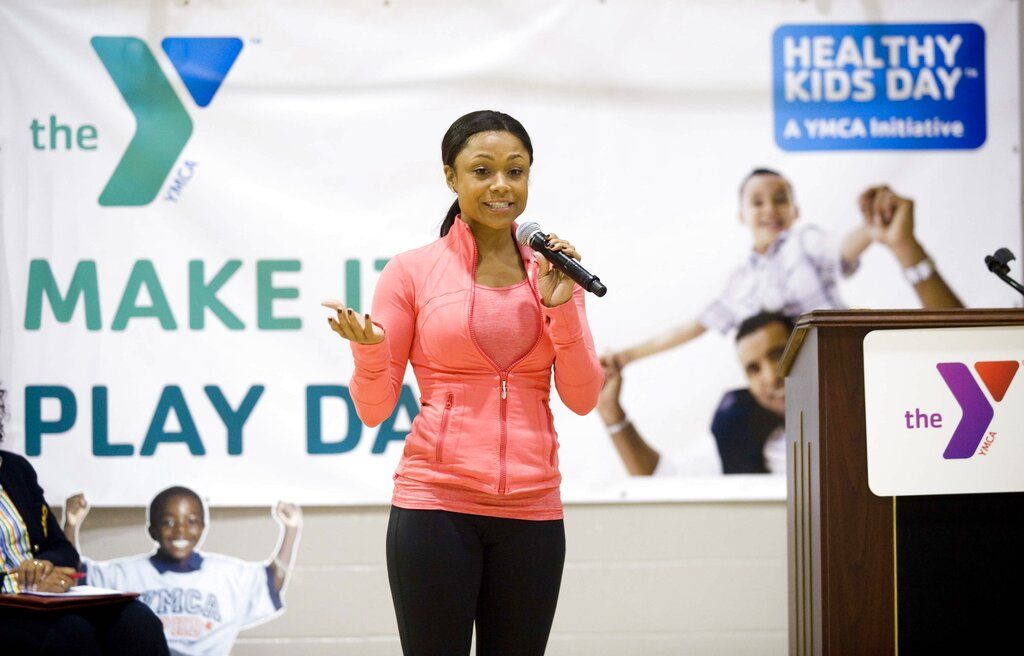
Dominique Dawes grew up in a high-pressure sporting environment. The former Olympic gymnast moved in with a coach as a kid — a move she would never approve of for her own children — in the chase of athletic success.
For her, it worked. The Maryland native won three Olympic bronze medals in her career and a gold at the 1996 Atlanta Games.
Ms. Dawes now has four children of her own. They’re all athletes. Her 10-year-old daughter and 7-year-old son are even on travel teams to play soccer and baseball, respectively.
She said she’s trying to avoid the mistakes her parents made. Ms. Dawes, despite her athletic achievements, described her childhood as “miserable.” The constant focus on winning left her permanently stressed, without many friends and lacking the social skills of her peers. While encouraging her children to enjoy athletics, she isn’t grooming them to become elite competitors.
“I see a level of talent in all four of my kids; it’s very unique, where they’re talented, and I can envision what their potential could be,” Ms. Dawes told The Washington Times. “But at the same time, I recognize that as a parent, I don’t want to add undue pressure and stress to them at such a young age.”
She now runs four gymnastics and “ninja gyms” in the Greater Washington region, with a focus on fun over preparing athletes for top-level competition. The most recent gym opened in Ashburn in October.
The former Olympian is heavily involved in the gyms, but mostly as a moral compass. She leaves the day-to-day coaching to her employees, instead of trying to mold the next generation of gold medalists.
With her kids’ athletic journeys, she’s learned to take a back seat.
“I find myself, believe it or not, sitting back on the sideline and just trying to enjoy the game and not focus on, oh, what does he need to work on after this,” she said.
It’s a far cry from the athletic environment she knew as a young athlete. The broader professionalization of youth sports has brought many team activities closer to what gymnastics was — an atmosphere that placed immense pressure on children, with often tragic results.
“If gymnastics wasn’t going well, my life wasn’t going well,” Ms. Dawes said.
That was inherent to the culture of gymnastics as she grew up in the 1980s and ’90s. Now, the former Olympian has winced as a “win at all costs” mentality has spread to other youth sports.
“You do see at times, many parents will see potential in their kids that might not really be there at this point,” she said. “And many parents will live vicariously through their children.”
At her own gyms and her kids’ games, Ms. Dawes said she’s cautious not to place any unneeded stress on the young athletes. She’s cognizant of her body language, careful to focus on expressions of pride, never disappointment.
“I’ve heard the stories of the parents that are very intense and maybe go overboard,” the now-48-year-old said. “It’s important for us parents to sit back, take a deep breath and recognize, hey, our children have one childhood. You might be doing it because of your own unrealized dreams or what you wish your parents would have done for you, but you need to look at your children’s faces.”
Injuries, ’demonstrative’ workouts
The burnout and mental health struggles are real for young athletes. But so is the physical toll.
A recent report from the American Academy of Orthopaedic Surgeons described a fivefold increase in the number of arm and shoulder injuries suffered by youth baseball and softball players since 2000.
A similar analysis from the National ACL Injury Coalition found a similar — if less extreme — rise in the number of ACL injuries suffered by high school athletes since 2007.
The causes for the surging injuries are hard to pin down, but medical professionals such as Dr. Kevin Stone have a few suggestions.
“Kids are playing harder sports year-round, faster pitches, more dynamic, bigger kids, all of the things that go into the propensity for more force and more load,” said the founder of The Stone Clinic in San Francisco. “But probably the biggest factor is more accurate awareness and diagnosis as much as anything else.”
After working with Team USA’s skiers, Dr. Stone saw the pressure placed on athletes to perform. That didn’t just apply to the people already on the biggest stage but to the youngsters striving to reach that level.
“It’s pretty clear that your ticket to economic freedom, if you’re a young inner-city kid playing a sport, is to excel at that sport,” he said. “And that’s true of both economic freedom and academic freedom.”
There’s nothing new about the allure of a free ride to college for young athletes. But the path to get there — and the challenges to remain successful at that level — is different.
Nearly every high schooler in America is on social media. For student-athletes, that means constant exposure to the workouts, diets and habits of other athletes. Practice and conditioning are no longer hidden, thankless work.
Professional and collegiate athletes are regularly posting their increasingly intense workouts, building their credibility and social media following to establish a brand. College athletes can receive hefty paydays from name, image and likeness deals.
It isn’t just about how hard athletes work — including children who are hoping to ink shoe deals one day. It’s about “demonstrative exercise,” Dr. Stone said. Young athletes want to follow in the pros’ footsteps and mirror the extreme focus on eye-catching exercises.
“Showing how hard you can throw a ball, how far you can hit a pitch, how well you can do on a field. Because you’re not just showing your coach on the sideline or maybe even the odd scout who might come by,” he said. “You’re being recorded and videoed and uploaded and analyzed, so the intensity now of assessment is dramatically different than it used to be.”
The pressure is no longer limited to the field. It’s 24/7. Many athletes feel the same pressure to perform on their off-days as they do during games. They have to keep up appearances on social media.
All that stress can lead to burnout. A 2024 report from the Council on Sports Medicine and Fitness found that 70% of children drop out of sports by the time they turn 13, with the pressure and a lack of fun cited as driving forces.
Even experts in the field can’t predict what the future of youth sports will look like. But as paydays for top-level athletes keep growing, so will the professionalization of small-town Little Leagues.
As an Olympian and parent, Ms. Dawes cautions those who might silo their children into single sports.
“They need to be kids. They need to have fun,” she said. “We want them to make friends and we want them to work hard, but we need to make sure there is that level of balance there and that as parents, we’re not adding too much pressure to our kids.”
![Scott Bessent Explains The Big Picture Everyone is Missing During the Shutdown [WATCH]](https://www.right2024.com/wp-content/uploads/2025/11/Scott-Bessent-Explains-The-Big-Picture-Everyone-is-Missing-During-350x250.jpg)