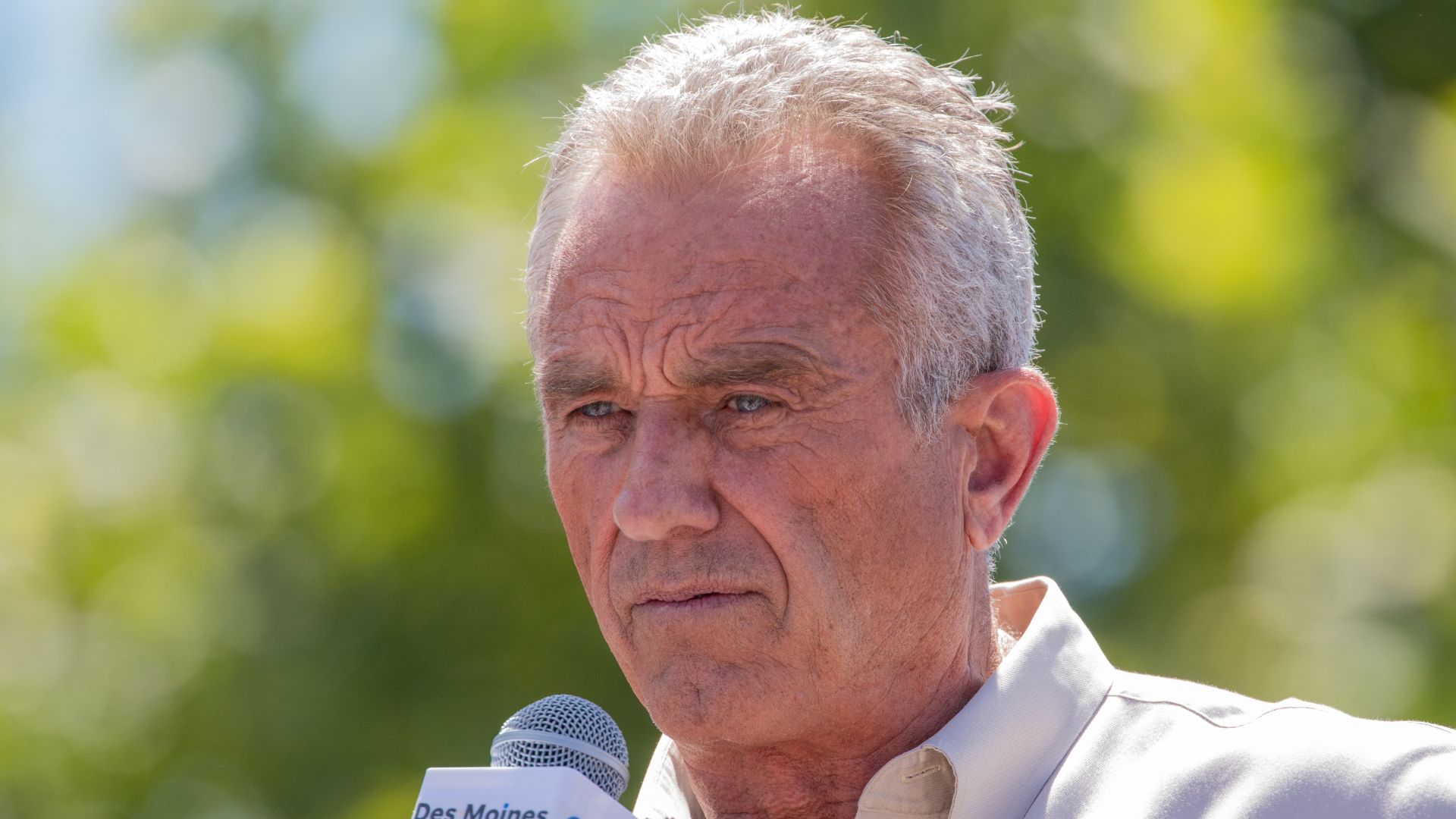
Health and Human Services Secretary Robert F. Kennedy Jr. suffered a legal setback during the holiday season after an Obama-appointed federal judge blocked a West Virginia law aimed at banning artificial food dyes and additives, a key component of Kennedy’s “Make America Healthy Again” initiative during President Donald Trump’s second administration, as reported by Fox News.
The ruling came from Judge Irene Berger of the U.S. District Court for the Southern District of West Virginia, who issued a preliminary injunction halting enforcement of House Bill 2354.
MAHA: An Obama-appointed judge just blocked West Virginia’s ban on synthetic food dyes like Red 40. Europe banned them years ago over child health risks. US courts side with additives. The measure was inspired by Robert F. Kennedy Jr. & research including a 2007 Lancet review of… pic.twitter.com/5aYVDb5B8d
— @amuse (@amuse) December 26, 2025
The law was championed by Gov. Patrick Morrisey and drafted by Del. Adam Burkhammer, R-Upshur.
HB 2354 would have banned foods and pharmaceuticals deemed “adulterated” with artificial additives including butylated hydroxyanisole, Red 3, Red 40, Yellow 5, Yellow 6, Blue 1, Blue 2, and Green 3. Under the law, knowingly contaminating food with the listed substances could have resulted in misdemeanor charges and a $500 fine.
Kennedy highlighted the proposed ban during his first official trip as HHS secretary in March, appearing in Martinsburg, West Virginia, alongside Morrisey.
This Could Be the Most Important Video Gun Owners Watch All Year
At the time, Morrisey said the visit demonstrated that the MAHA movement “begins right here in West Virginia.”
The case challenging the law was brought by the International Association of Color Manufacturers, a Washington-based trade organization representing food dye producers.
NEW: U.S. District Judge Irene Berger (Obama appointed) has issued a preliminary injunction BLOCKING a new West Virginia law banning certain food dyes and additives in food from going into effect until it moves through the court system.
Berger said the law, which deemed some… pic.twitter.com/oeCNyvc9XQ
— RedWave Press (@RedWave_Press) December 26, 2025
The group argued the law would cause economic harm to its members, improperly allow the state to “usurp” federal authority over food safety, and interfere with interstate commerce.
“The statute arbitrarily and irrationally targets color additives no U.S. agency — state or federal — nor any court has ever found to be unsafe,” IACM said in a statement announcing the lawsuit, adding that the ban lacked “scientific evidence.”
Judge Berger’s 30-page ruling sided with IACM on those grounds, though she rejected the group’s claim that the law constituted an unlawful bill of attainder. In her opinion, Berger wrote that the law’s use of the phrase “poisonous and injurious” lacked clear standards, potentially exposing manufacturers to arbitrary enforcement.
“If a parent notifies [the West Virginia Department of Health] that they believe their child is sensitive to a color additive, is that a sufficient basis for a color additive to be deemed ‘poisonous and injurious,’ or must the WVDOH conduct a further investigation? It is far from clear,” Berger wrote, according to West Virginia MetroNews.
She also noted that because the law has not yet taken effect, blocking it would not immediately harm the state’s ability to protect public health.
Morrisey responded by saying he “respectfully disagree[s] with [the] ruling.”
“[W]e believe this decision is premature and incorrectly decided. West Virginia will continue to defend its authority to protect the health and well-being of our citizens, especially children,” Morrisey said.
“We are reviewing our legal options and will continue to press forward with our efforts to get harmful crap out of our food supply.”
Red 3, one of the dyes covered by the law, is already banned by the FDA in certain applications, following lab tests that linked it to thyroid problems and cancer in rats, according to NIH and HHS records.
Republican lawmakers criticized the ruling.
Del. David Elliott Pritt, R-Thurmond, said, “Imagine being so addicted to profit that you would go to court to fight for your company’s ability to willingly and knowingly continue to poison the kids of this state and nation because you refuse to alter your formulas,” calling that position “pretty evil.”
Some private-sector companies have moved independently of government action. Walmart has announced plans to remove synthetic dyes and certain artificial ingredients from its U.S. store-brand products by January, according to Fortune.
During his Martinsburg appearance, Kennedy said, “the crises we have in mental health, in suicide, in ADD, ADHD” are linked “particularly to the dyes,” adding, “It’s very clear the dyes that Governor Morrisey is banning … are linked in very strong studies to ADHD and to cancers.”
California, Virginia, Utah, and Arizona have since explored similar restrictions, primarily targeting school lunch programs.
The opinions expressed by contributors and/or content partners are their own and do not necessarily reflect the views of LifeZette. Contact us for guidelines on submitting your own commentary.
![Scott Bessent Explains The Big Picture Everyone is Missing During the Shutdown [WATCH]](https://www.right2024.com/wp-content/uploads/2025/11/Scott-Bessent-Explains-The-Big-Picture-Everyone-is-Missing-During-350x250.jpg)