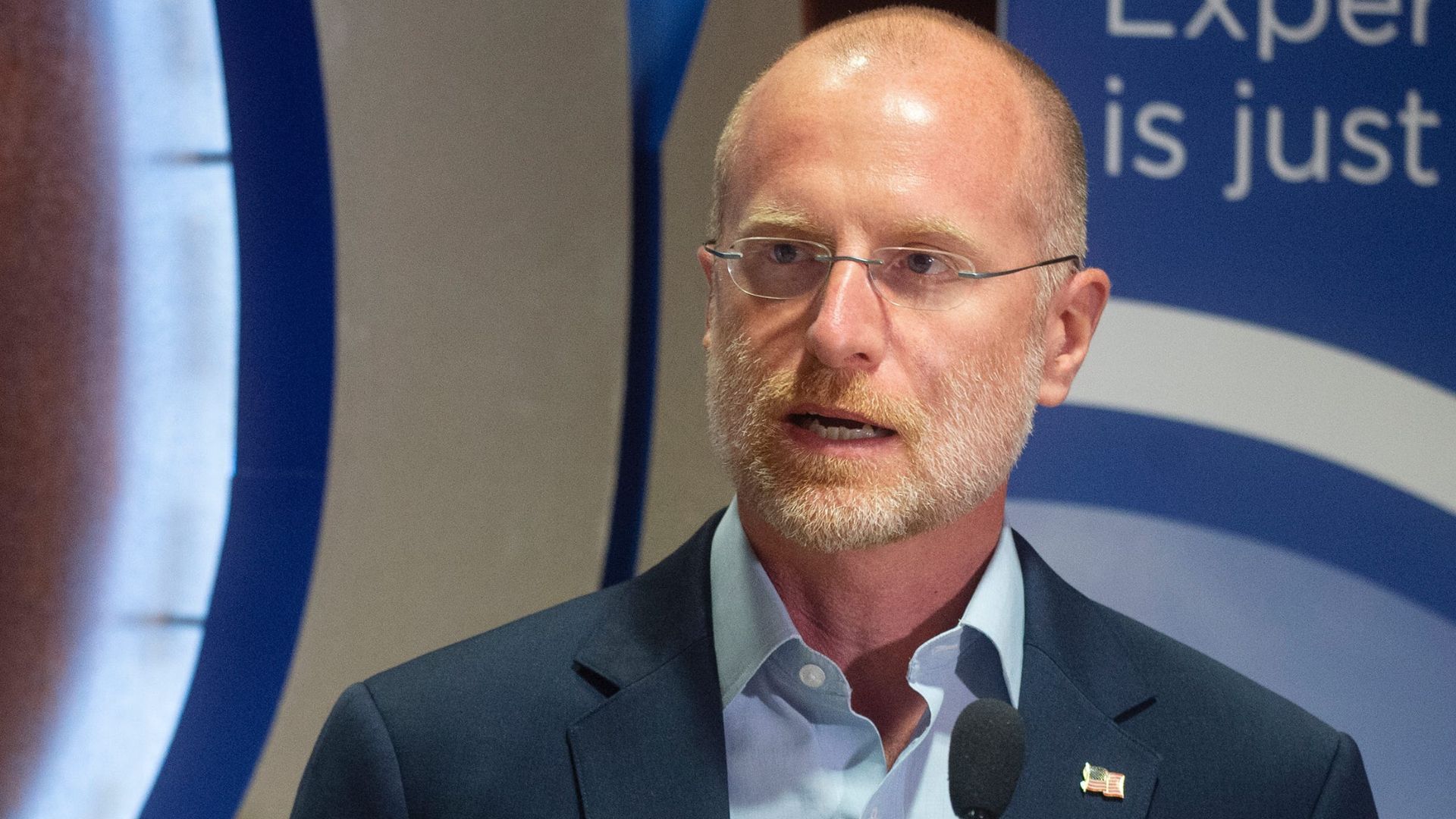
Sen. Ted Budd questioned Federal Communications Commission Chairman Brendan Carr about the growing problem of robocalls during a recent exchange, as both men addressed widespread public frustration and the increasing sophistication of phone-based scams affecting Americans nationwide.
Budd said robocalls are one of the most common complaints he hears from constituents across his state.
“At nearly every telephone town hall that I do, and including one last week, the folks always bring up robocalls,” Budd said.
“They feel overwhelmed by them. They feel that they perpetrate real harm. They give examples.”
He said concerns have intensified as new technology has made scams more convincing and easier to deploy.
“As I’m around the state, people talk about robocalls huge concerns, especially as we have things like aI generated personalized voices, and the scans become more and more sophisticated and easier to carry out,” Budd said.
He then asked Carr directly what actions the FCC can take.
“So chairman, again, thank you all for being here. Chairman, what can the FCC do to proactively protect folks, and how can you stay ahead of the curve with these changing criminal tactics?”
This Could Be the Most Important Video Gun Owners Watch All Year
Carr responded that robocalls are the top consumer complaint received by the FCC and acknowledged that past enforcement efforts often struggled to keep pace with evolving tactics.
“This is the number one consumer complaint we get at the FCC,” Carr said.
“Historically, it felt like a game of whack, a mole. We put a technology solution in place. We’d go after a single bad actor, but this would just pop up in another way.”
Carr said the agency has shifted to a more comprehensive strategy designed to disrupt robocalls at multiple stages.
“What we’re doing right now is we’re taking an approach. We’re tackling illegal robocalls at every single portion of the call life cycle,” he said.
According to Carr, that includes restricting access to phone numbers and making it more difficult for foreign robocalls to reach U.S. consumers.
“We’re making it harder to get access to telephone numbers, we’re making it more difficult for foreign robocalls to enter the US,” he said.
Carr also described efforts to close regulatory gaps.
“We’re looking at potential loopholes, including ones for non IP networks,” he said.
One initiative under review involves how overseas call centers are identified on caller ID.
“And one issue we’ve recently teed up is taking a look at any robocall, legal or otherwise, that originates from a call center overseas,” Carr said.
He explained that foreign calls can currently appear to originate domestically, misleading consumers.
“Right now, when that comes to your phone, it can show up with a US area code to fool you into thinking the call center or the call is here in America,” Carr said.
He said the FCC is considering requiring accurate disclosure of foreign origins.
“And so we’re looking at changing that so it would accurately display that’s a foreign call center.”
Carr added that transparency could also have broader economic effects.
“If United or any of the business wants to put a call center abroad, then they should be able to disclose that to the consumer,” he said.
“And if this helps with onshoring, then that might be a good thing as well.”
He noted that enforcement actions are already underway.
“We’re taking a real new approach, including kicking out over 1200 providers from our robocall mitigation database, which effectively cuts them off from the systems,” Carr said.
“We’re trying to really tackle this at every portion of the call.”
Budd then asked whether there were limits preventing the FCC from going further.
“Is there any specific limitations that prevent your agency from doing more in this area?” he said.
Carr replied that the FCC already has broad authority but must continue identifying weaknesses exploited by scammers.
“As of right now, we have a fair amount of legal authority in this area,” Carr said. He emphasized cooperation with other enforcement bodies.
“We’re working increasingly with state AGs on this. We are deepening our partnership and collaboration with FTC, the nation’s premier consumer protection agency, and we’re going to keep at this issue.”
WATCH:
North Carolinians, and most Americans, are inundated with billions of scam calls that threaten their security, privacy, and hard-earned dollars—many originating from foreign criminals. I’m glad to confirm that the FCC is taking steps to combat the illegal robocalls flooding our… pic.twitter.com/fGV86lVHZX
— Senator Ted Budd (@SenTedBuddNC) December 26, 2025






![Donald Trump Slams Chicago Leaders After Train Attack Leaves Woman Critically Burned [WATCH]](https://www.right2024.com/wp-content/uploads/2025/11/Trump-Torches-Powell-at-Investment-Forum-Presses-Scott-Bessent-to-350x250.jpg)