Seeking Wisdom: The Road to Prosperity
By Robert Luddy
Thales Press, 131 pages, $15
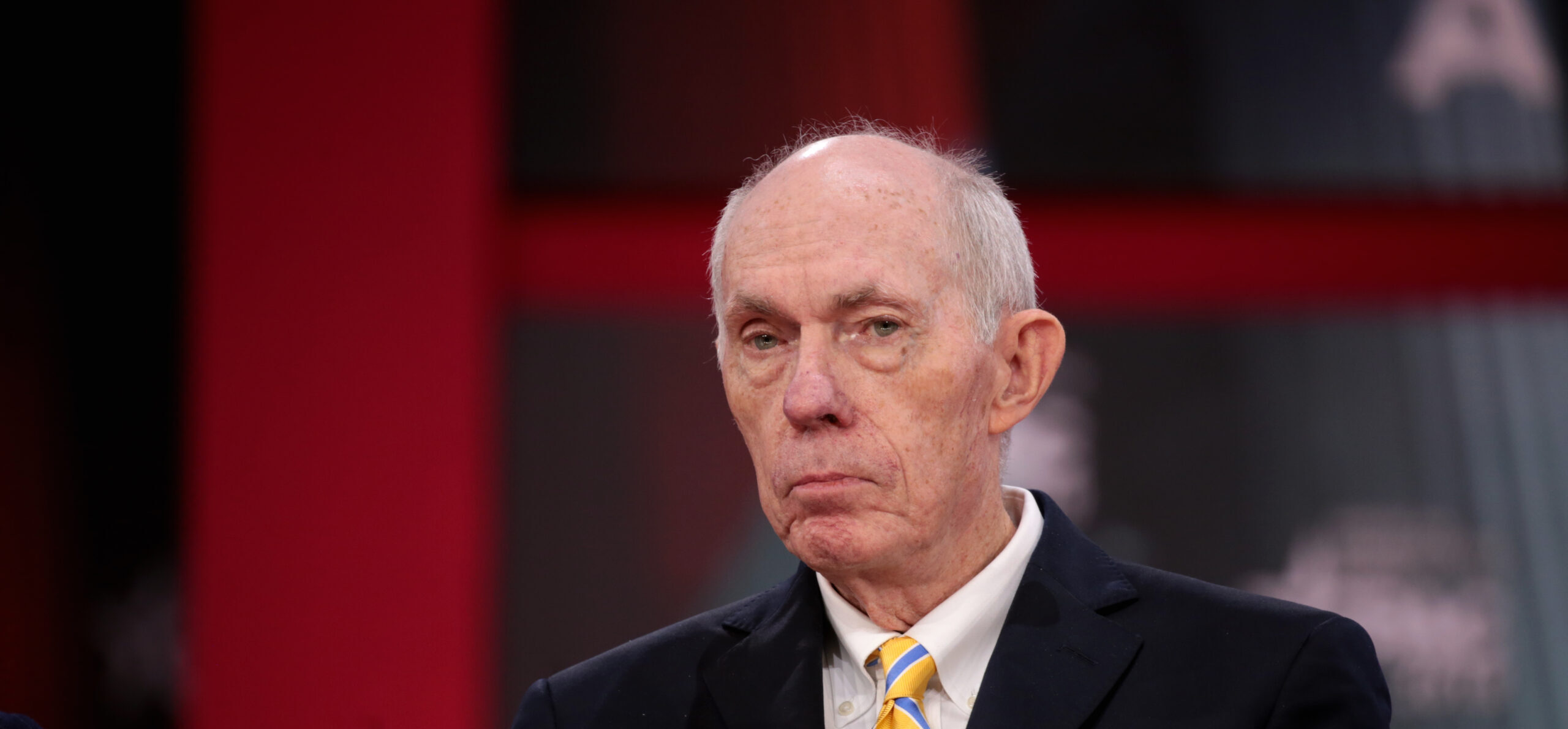
The best book that I read in 2025 was an unexpected gem — a nugget of wisdom. Lots of wisdom. It’s called Seeking Wisdom: The Road to Prosperity, by Robert L. Luddy, published by the recently established Thales Press.
Throughout his seven decades of life, Bob Luddy has collected, nurtured, and developed these nuggets of wisdom.
Luddy’s story is an inspiring one, and his long path to personal prosperity has generated a life of accumulated wisdom, which he has pulled together in this book. The word “prosperity” in the subtitle shouldn’t be narrowly interpreted. Luddy became a very successful businessman, founder of CaptiveAire Systems, a company specializing in commercial kitchen ventilation and HVAC systems. That fact might lead some to think this is a book about financial prosperity — the seeking of wealth. But that’s not the case. This book is about prosperity in the fuller, best sense of the word — that is, on how to prosper in life generally. And once one realizes what Luddy has done with his earned income, from his philanthropic work to founding not only companies but educational institutions such as Franklin Academy (public charter school, 1998), St. Thomas More Academy (Catholic prep school, 2002), Thales Academy (a network of classical schools, 2007), and Thales College (2022), one sees the larger gift of prosperity in Luddy’s life.
It’s a life that took him from Saint Francis of Assisi Elementary School and Bishop McDevitt High School near Harrisburg, Pennsylvania, to service in the U.S. Army in Vietnam, and onward to his many ventures in North Carolina. What Luddy learned in these schools, from those of his youth to the educational institutions he founded, is something he wants to pass along to students. These are lessons about what is most important in life.
To that end, this is a book about the formation of the individual, about freedom and discipline, morality, humility, building character, self-reliance, emotional intelligence, mentoring, leadership, citizenship, entrepreneurship, creativity, innovation, natural order, natural law, and virtues like courage and honesty. As Luddy puts it, it’s about “relentlessly seeking truth.” The volume delivers that and more in a tight 131 pages, packed with a wide array of quotes and aphorisms. The collection is remarkably eclectic, invoking Cicero, Galileo, Aquinas, St. Thomas More, Bishop Fulton Sheen, Ben Franklin, Thomas Jefferson, George Washington, Alexis de Tocqueville, Dale Carnegie, Karol Wojtyla (Pope John Paul II), Ronald Reagan, Julian Simon, Michael Novak, Prof. Adrian Bejan, Dr. William H. Peterson (a Luddy mentor), Alice and Dietrich von Hildebrand, and more.
From these individuals as well as Luddy’s own insights, I found myself highlighting, underlining, bending page corners, and making annotations. I also found myself sharing certain lessons with my kids, whether philosophical or practical. The latter includes advice as simple as “making your bed.” It might not sound like a big deal, but the practice of merely making your bed as the first thing to start each day brings discipline and order to your life. I’ve seen it with my own kids. The ones who don’t make their beds also don’t clean their rooms. The mess you make in your immediate sphere of living space is not un-symptomatic of the mess you can make in daily living beyond your bedroom.
Though this book is filled with practical tips for living, Luddy emphasizes that his goal was not to write a “self-help book” but rather to make a case for “continuous personal formation and growth” in order to pursue “the best version of ourselves.” Such is not a common goal among educators today. “Modern education teaches knowledge, skills, spreadsheets, and algorithms,” notes Luddy, “but falters on the teaching of wisdom.”
The ancient philosophers — Socrates, Plato, and Aristotle — as well as the Bible (particularly the Book of Proverbs) and the American founding fathers, extolled the necessity of knowledge that leads to wisdom. “Knowledge is important,” adds Luddy, “but without wisdom, knowledge is simply information.”
Thus, this book is filled with just that. The author’s entire presentation is directed at the singular objective of the overriding importance of seeking wisdom.
In that respect, there are too many good quotes to give an adequate sample here in this review, but I can’t resist sharing just a few:
Pope John Paul II: “Freedom consists not in doing what we like but in having the right to do what we ought.”
As John Paul II further put it, “The only true freedom, the only freedom that can truly satisfy, is the freedom to do what we ought as human beings created by God according to His plan.”
In western societies like America, we are blessed with freedom, a freedom that allows us to do almost anything we want. But we should not exploit that freedom to do what isn’t good — to do bad. Freedom must be used responsibly, for the best purposes of ourselves and others.
John Paul II often quoted the Parable of the Talents, as does Luddy. As Luddy notes, Jesus in that parable urges us to not squander the unique talents given to each of us. To bury the talents entrusted to us is a grave failure. It’s a failure to fully achieve our purposes. Or as Luddy puts it in his conclusion, “to fulfill the highest calling of our lives.”
Throughout his seven decades of life, Bob Luddy has collected, nurtured, and developed these nuggets of wisdom. Now, he has published them, sharing them with the larger world and especially with the future generations that badly need to learn them.
Get a copy of this book. Get it not only for yourself but for kids and grandkids and especially the young people in your life. They will prosper from the wisdom in this book.
READ MORE from Paul Kengor:
Sharing Hope at Christmas — Bob Hope
Foul, Potty-Mouthed, Woke Women
![Scott Bessent Explains The Big Picture Everyone is Missing During the Shutdown [WATCH]](https://www.right2024.com/wp-content/uploads/2025/11/Scott-Bessent-Explains-The-Big-Picture-Everyone-is-Missing-During-350x250.jpg)



![Virginia Democrat Candidate's Leaked Texts Are So Bad Even MSNBC Turns on Him [WATCH]](https://www.right2024.com/wp-content/uploads/2025/10/Virginia-Democrat-Candidates-Leaked-Texts-Are-So-Bad-Even-MSNBC-350x250.jpg)