![Marco Rubio Smashes Through Liberal Venezuela Narratives in Back-to-Back Media Appearances [WATCH]](https://www.right2024.com/wp-content/uploads/2026/01/1767571944_Marco-Rubio-Smashes-Through-Liberal-Venezuela-Narratives-in-Back-to-Back-Media.jpg)
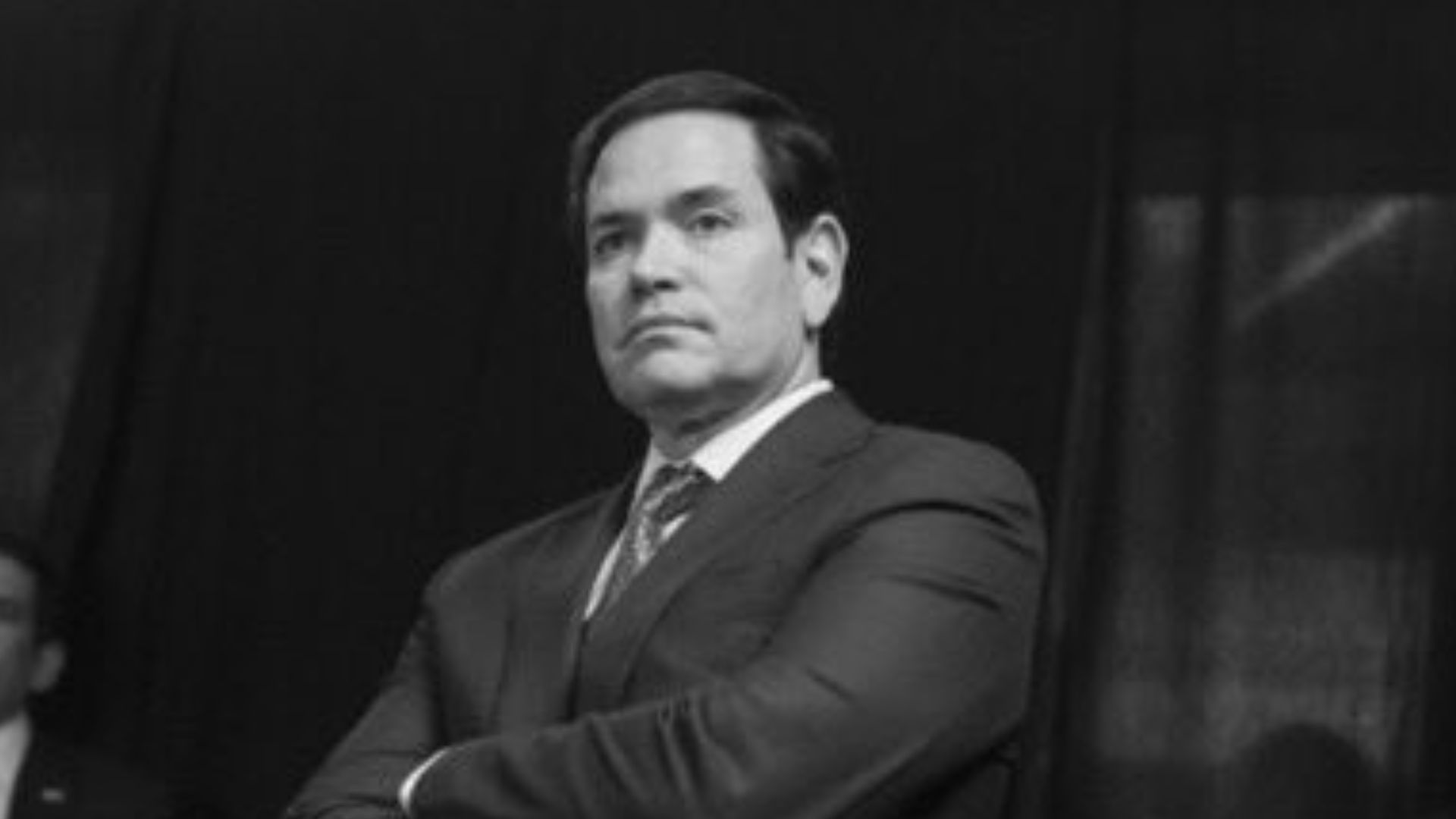
Secretary of State Marco Rubio said Venezuela’s newly sworn-in acting president, Delcy Rodríguez, is not the country’s legitimate leader and made clear that the United States will not support her remaining in power following the capture of Nicolás Maduro.
— Marco Rubio (@marcorubio) January 3, 2026
Rodríguez, who previously served as Venezuela’s vice president, was sworn in on Saturday after U.S. forces conducted a military operation that resulted in Maduro’s capture and transfer to the United States.
Maduro had ruled Venezuela since 2013 and has been under U.S. indictment on drug trafficking and narco-terrorism charges since 2020.
Rubio confirmed that he spoke directly with Rodríguez after the operation but emphasized that the Trump administration does not recognize her authority and is instead pushing for a transitional process leading to elections.
“This is not about the legitimate president. We don’t believe that this regime in place is legitimate via an election,” Rubio said during an appearance on ABC’s “This Week” on Sunday.
“And that’s not just us. It’s 60-something countries around the world that have taken that view as well.”
This Could Be the Most Important Video Gun Owners Watch All Year
He said the absence of internationally recognized elections remains the central obstacle to U.S. and international acceptance of any successor government tied to the Maduro regime.
“Ultimately, legitimacy for their system of government will come about through a period of transition and real elections,” Rubio said.
.@SecRubio: “Maduro is not just an indicted drug trafficker, he was an illegitimate president. He was not the head of state. I continue to see these media reports referring to him as ‘President Maduro’ and the ‘head of state.’ He was not the head of state.” pic.twitter.com/vSOKWHBpav
— Rapid Response 47 (@RapidResponse47) January 4, 2026
The comments followed Maduro’s removal after years of international condemnation over disputed elections, allegations of corruption, and ties to drug trafficking organizations.
The United States and dozens of other countries have long refused to recognize Maduro as Venezuela’s lawful president, citing election irregularities and repression of political opposition.
Rodríguez’s elevation to acting president immediately raised questions about whether the Maduro-era political structure would continue under new leadership.
Rubio’s statements made clear that Washington does not view her swearing-in as a resolution to Venezuela’s political crisis.
In addition to rejecting Rodríguez’s legitimacy, Rubio said the Trump administration plans to use economic pressure to force political reforms in Caracas.
He specifically pointed to the administration’s oil quarantine on Venezuela as a key tool to shape the country’s future.
“I cannot overstate how crippling this is for their future,” Rubio said, referring to the restrictions on Venezuela’s oil industry.
He added that the policy is intended to pressure Venezuelan authorities to move toward democratic reforms while also outlining a potential path forward.
“[And] that, on the other hand, there’s an alternative to that … an oil industry that actually benefits the people,” Rubio said.
🚨 HOLY SMOKES. In an incredible moment, Sec. Marco Rubio declares the Western Hemisphere is OURS, Russia, China and Iran must GET OUT
WELKER: Why does the US need Venezuelan oil?!
RUBIO: “Why does CHINA need their oil? Russia? Iran? This is the West, THIS IS WHERE WE LIVE.”🔥… pic.twitter.com/ZJU6L2BkNo
— Eric Daugherty (@EricLDaugh) January 4, 2026
Venezuela possesses some of the world’s largest proven oil reserves, but years of mismanagement, sanctions, and corruption have sharply reduced production and export capacity.
The Trump administration has argued that oil revenue under Maduro was diverted to regime insiders and criminal networks rather than benefiting the Venezuelan population.
Rubio indicated that any easing of U.S. restrictions would be contingent on concrete political changes, including a genuine transition process and internationally monitored elections.
The situation leaves Venezuela in a period of uncertainty as international attention shifts to how leadership will be determined in the aftermath of Maduro’s capture.
While Rodríguez currently holds the title of acting president, the Trump administration’s position signals that Washington will continue to treat Venezuela as a country in transition rather than one with a recognized head of state.
Rubio’s comments also reflect broader coordination with U.S. allies, many of whom have adopted similar positions regarding Venezuela’s leadership and electoral legitimacy.
If you don’t know, now you know 🦅 pic.twitter.com/XrIps1OzY4
— The White House (@WhiteHouse) January 3, 2026
The Secretary of State stressed that the U.S. stance is not isolated but shared by a wide coalition of nations that have rejected the outcomes of Maduro-era elections.
As Venezuela faces continued economic strain and political instability, Rubio said the administration’s objective remains a transition that leads to what he described as “real elections,” rather than the continuation of leadership drawn from the same governing apparatus that has dominated the country for more than a decade.




![Donald Trump Slams Chicago Leaders After Train Attack Leaves Woman Critically Burned [WATCH]](https://www.right2024.com/wp-content/uploads/2025/11/Trump-Torches-Powell-at-Investment-Forum-Presses-Scott-Bessent-to-350x250.jpg)
![Texas Trucker Busted with 23 Illegals Stuffed into the Cab of His Big Rig [WATCH]](https://www.right2024.com/wp-content/uploads/2025/12/Texas-Trucker-Busted-with-23-Illegals-Stuffed-into-the-Cab-350x250.jpg)