Miriam Cates is the former MP for Penistone and Stocksbridge.
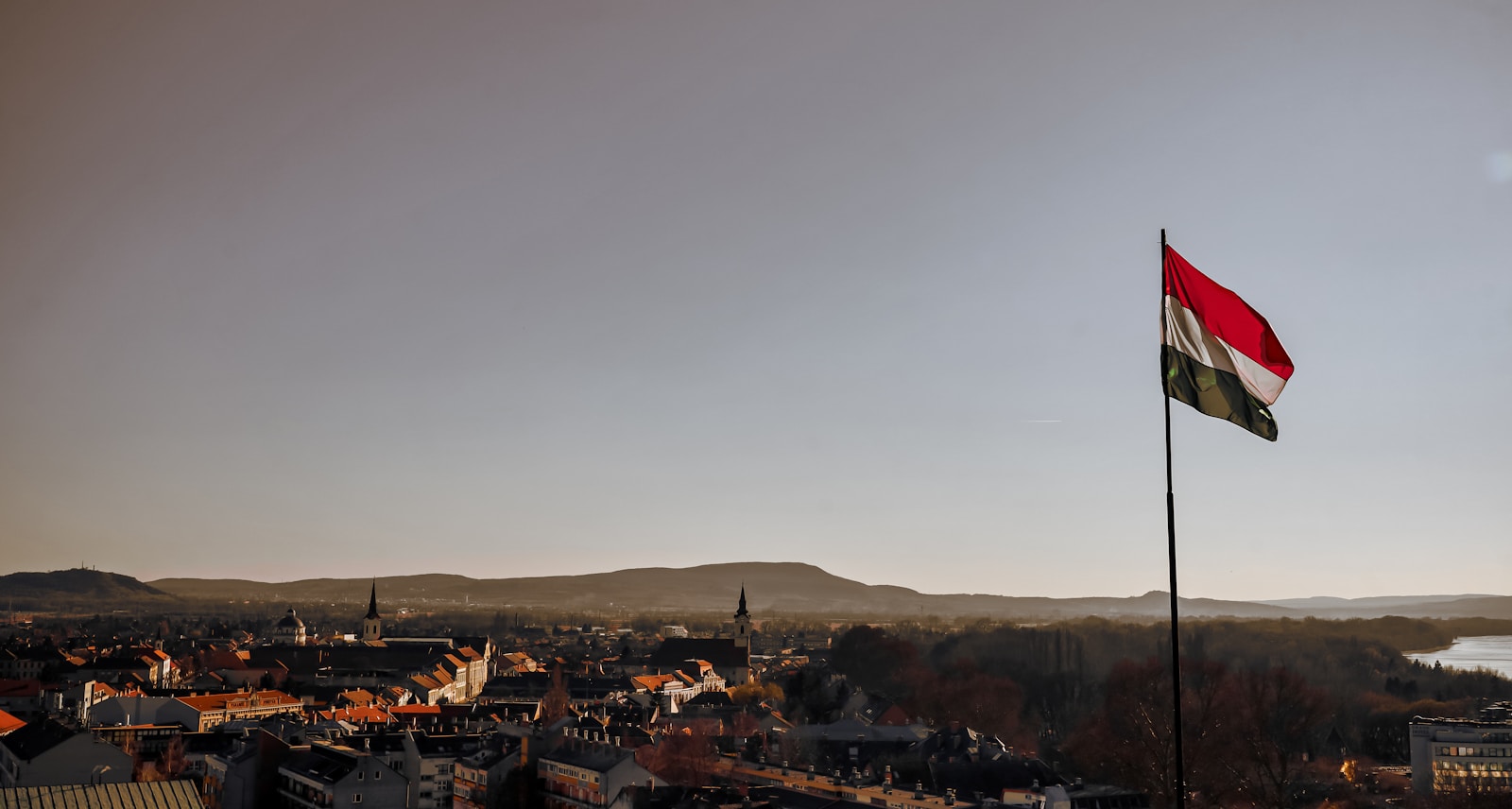
Sixteen years into Viktor Orbán’s second premiership, British conservatives are still frightened to be associated with the Hungarian prime minister and his patriotic Fidesz party. Perhaps this wariness was easy to explain back in the days of ‘peak woke’, especially after the Conservative Party issued a reprimand to then-MP Daniel Kawczynski in 2020 following his attendance at a conference in Rome, where Orbán was speaking.
In 2023, long before I had visited Hungary or indeed had personal contact with any Hungarian politicians, I was roundly criticised within the Conservative Party for drawing attention to the issue of falling birth rates. Much of this disapproval rested on the fact that this is an issue with which Orbán is closely associated.
On the British right it was – and still is – widely believed that Orbán is an authoritarian leader whose hardline policies on immigration, social issues, and foreign press interference are just too spicy for British Conservatives to swallow.
But times have changed. In 2026, some of the chief concerns of Britain’s two mainstream right wing parties echo those of the Hungarian government. On border control, gender ideology, national sovereignty, birth rates, and rejection of EU federalism, most Conservative and Reform politicians now find themselves aligned with Orbán’s Hungary. Far from distancing ourselves from a country that has reduced illegal immigration to zero, banned the teaching of gender theory in schools, and bravely stood up to Brussels, British conservatives should be leaning in to our Fidesz cousins.
Reader, I can already hear your sharp intake of breath. No doubt I will be admonished – as I already have been this week in this esteemed publication – for praising Orbán, as if in identifying the admirable qualities of a foreign prime minister I am somehow offering unquestioning support for everything that leader has or hasn’t achieved.
Of course Hungary has its challenges, especially economic ones, and inevitably, after four decades in frontline politics, there are rumours, scandals and failures associated with both Orban and Fidesz. Yet writing this article from a country likely soon to suffer its seventh prime minister in a decade, with over nine million people on out-of-work benefits, hundreds of thousands of illlegal immigrants, exploding national debt, plummeting native birth rates, and a rape gang scandal that has shocked the world, perhaps we should take the plank out of our own eye before fussing about the speck in Budapest’s.
Whatever the strengths and weaknesses of the Hungarian government, Orbán is undoubtedly one of the most important figures in the patriotic conservative movement sweeping Europe. On immigration, demographics, national identity, and the dangers of EU imperialism, he is the prophet in the wilderness whose warnings have, time and again, been proven true.
Recognising this, European national conservatives are lending their support to Fidesz as the party launches its campaign to win a fifth consecutive term in office. At the Fidesz congress in Budapest on Saturday, pre-recorded video messages from right wing leaders were played to an audience of thousands, each one backing Viktor Orbán to win when Hungarians go to the polls on April 12th.
The great and the good of European patriotic conservatism – Georgia Meloni, Mateusz Morawiecki, Marine Le Pen, and Alice Weidel, plus Israel’s Benjamin Netanyahu and Argentina’s Javier Milei – popped up between cabinet speeches to offer their best wishes to the Fidesz party faithful. There is much on which these leaders disagree, and yet they are united by a growing understanding that the answer to the failures of internationalism is a return to a world of strong nation states.
But there was one country notably unrepresented among the well wishers: our own United Kingdom.
Perhaps it is unsurprising that there is not (yet) any strong relationship between Kemi Badenoch and Orbán. Although the politics of the Tory party is increasingly patriotic, before the last election at least, the British Conservatives were well to the left of Fidesz on social issues.
But why no message of support from Nigel Farage? The Reform UK leader has become the figurehead of national conservatism in the UK. Like Orbán, he wants to clamp down on migration. As the original Brexiteer, Farage surely must admire the success of the Hungarian government in resisting the might of Brussels, and the Reform leader is increasingly willing to speak about natalism and even marriage.
If Orbán loses the Hungarian general election this spring, it will be a huge blow to the entire European nationalist movement. So why is the British right still so reluctant to show its support?
While the Conservatives and Reform find themselves increasingly singing from the same hymn sheet as the European patriots, there remains one major area of divergence: Ukraine. Since the beginning of the war, Orbán has refused to send arms or money to Kyiv, arguing that, since NATO will not put boots on the ground, Volodymyr Zelenskyy cannot win. Orbán has labelled the Brusselian elite ‘war mongers’ for prolonging the conflict, causing Western liberal media to accuse him of appeasing the Kremlin.
In contrast, Boris Johnson led the charge to support Ukraine financially, and his successors as party leaders have maintained a position of unwavering support. Last week Badenoch told me on GB News that continuing to fund Ukraine’s war effort is “absolutely the right thing to do” to.
Farage was initially more nuanced in his response to the war, a position for which he paid – and perhaps is still paying – a political price. Whatever he believes personally about the conflict, he will be aware that polling shows support for Ukraine remains one of the least divisive issues in domestic politics, with nearly 60 per cent of Brits still approving of the UK’s stance.
At some point, this simplistic approach will become unsustainable for the Conservative and Reform leadership, who must surely eventually acknowledge that, having never intended to enter the war militarily, European nations have done little more than prolong the agony of the Ukrainian people. Nevertheless, for now at least, fear of being labelled as ‘Putin apologists’ goes some way to explaining why Farage and Badenoch may be reluctant to dip their toes in the Fidesz water.
Yet I suspect that this reticence is not solely due to differences over Ukraine. There is also an element of good old British snobbery in the failure to lend support to our conservative allies in Hungary. For centuries, the British Conservative Party was the world’s most successful political party, and until the Second World War, Britain was a significant global power. Despite our current decline and malaise, we remain the world’s sixth-largest economy and home of the only truly international language.
Could it be that we are just too proud to admit that we may have something to learn from a small central European country that, in living memory, has been occupied by both fascists and communists, forced to give up two thirds of its territory and population and suffered numerous fiscal crises? Hungary is a nation that has long looked up to Britain – even its parliament building in Budapest is modelled on ours. What could we possibly have to learn from them?
Having spent most of last week in Budapest with GB News, I am convinced that the answer is ‘a lot’. From a policy perspective, we should be paying attention to Hungarian ideas on increasing marriage and birth rates, energy sovereignty, and border security. But even more importantly, British conservatives would do well to aspire to emulate the courage, seriousness and intellectual depth of Hungary’s leaders.
On numerous occasions during last week’s press tour, we heard Hungarian politicians speak fluently (in English) about Hungarian and European history, the philosophical roots of today’s challenges, and the moral and legal justification for championing their national interest. There are few (if any) British politicians who are able or comfortable to speak like this, even in their first language.
It was particularly notable that, in contrast to their British counterparts, Hungarian politicians do not continually resort to emotional arguments or universalism to make their case. During a fascinating and wide ranging forty-minute interview with GB News’ Charlie Peters, Political Director Balázs Orbán said that he did not “want to mix emotions with real politics. We Hungarians don’t want to save the world.”
In his closing address to the Fidesz conference, Orbán told delegates:
“Our world is one of straightforward speech, factual argumentation, and objective reasoning… Only honest, serious discourse can provide the confidence necessary for calm and composed governance.”
Perhaps the British electorate would have more respect for their politicians – and be more willing to vote for the kinds of radical policies that we need to get Britain back on track – if our leaders moved on from sound bites and simplistic arguments. If British conservatives had taken Orbán more seriously a decade ago, our country might have avoided some of the serious challenges we now face. It’s time the British right woke up and lent its support to Fidesz, before it’s too late.

![Florida Officer Shot Twice in the Face During Service Call; Suspect Killed [WATCH]](https://www.right2024.com/wp-content/uploads/2025/12/Inmate-Escapes-Atlanta-Hospital-After-Suicide-Attempt-Steals-SUV-Handgun-350x250.jpg)

![Keith Ellison Caught Promising to Fight State Agencies for Somali Fraudsters [WATCH]](https://www.right2024.com/wp-content/uploads/2026/01/Keith-Ellison-Caught-Promising-to-Fight-State-Agencies-for-Somali-350x250.jpg)