Cllr Nick Adams-King is the Leader of Hampshire County Council.
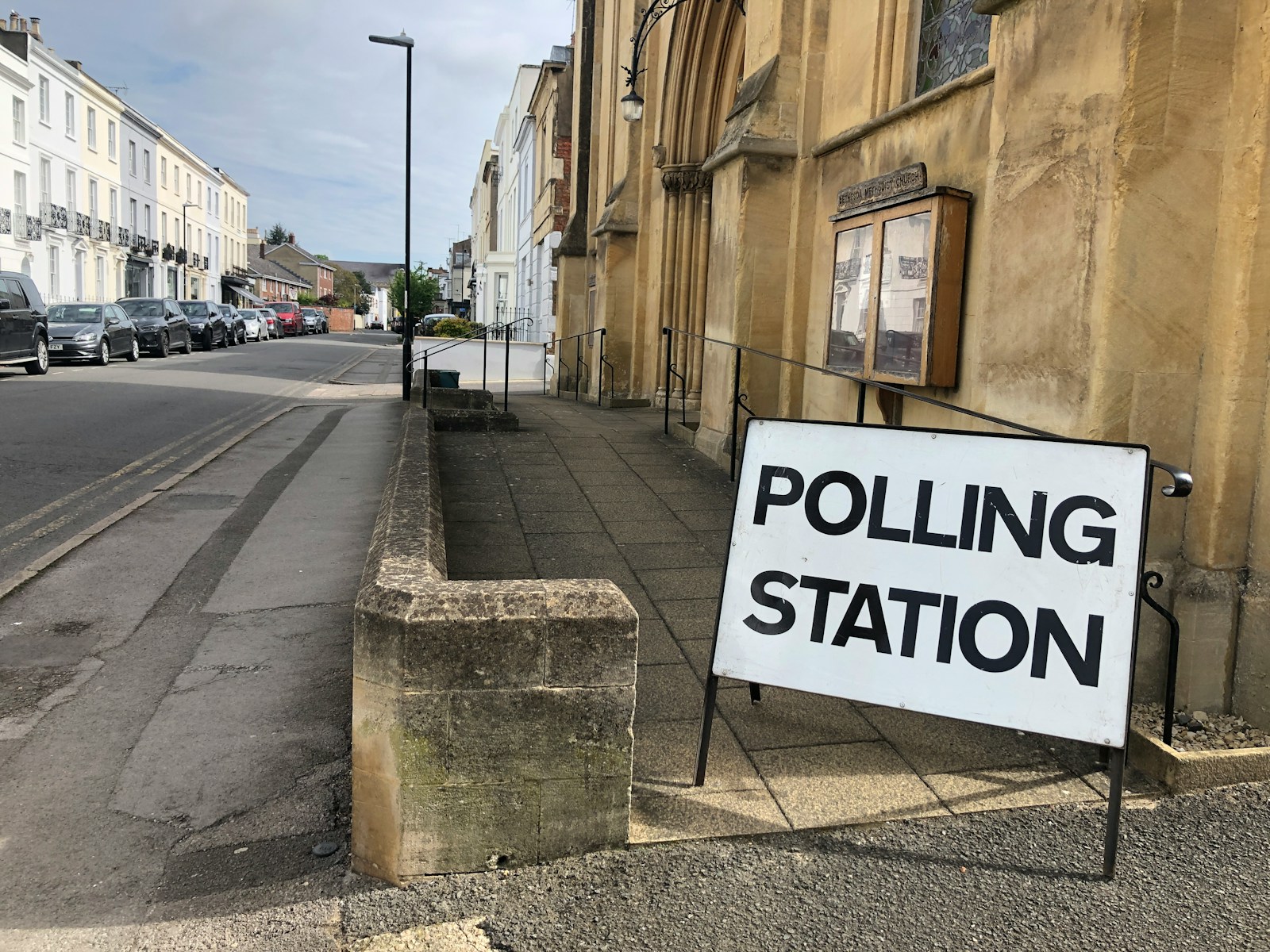
As Leader of Hampshire County Council, I have always believed that democratic accountability is not an inconvenience to be managed but a responsibility to be honoured. That principle has guided my approach throughout the ongoing discussions about local government reorganisation and the Government’s suggestion that councils may request a postponement of the May 2026 local elections. Today, I want to set out clearly why I will not be asking for such a delay, why this matters for Hampshire, and how I have communicated this position publicly.
In recent weeks, the Government has written to 63 local authorities across England, including Hampshire, asking for their views on whether the 2026 elections should be deferred. The rationale offered is that councils undergoing potential structural reform may struggle to manage both reorganisation and the administration of elections simultaneously.
We should be clear. This is an attempt by a chaotic, unprincipled Government, running scared of the electorate to avoid a result they fear.
From the moment this proposal surfaced, my position has been unambiguous: Hampshire County Council should not seek to delay the 2026 elections.
I set out four reasons why this should be our position:
1. Democratic legitimacy cannot be put on hold
Elections are the mechanism through which residents choose who represents them. Delaying them — especially for administrative convenience — risks undermining public trust. Hampshire residents deserve the opportunity to have their say at the promised time, not later because it suits a bureaucratic timetable.
2. Hampshire has already experienced one postponement
The 2025 elections were postponed to allow the Government’s fast‑track devolution process to proceed. This process has now been substantially completed, bringing an investment pot of £1.4 billion to Hampshire and the Solent, £100millions more in skills and employment funding and a range of powers for the Mayor once they are elected, despite their election also now being delayed to 2028.
Asking residents to accept a second delay would be unreasonable and, in my view, unjustifiable. Democracy should not be paused repeatedly while national policy shifts around us.
3. Hampshire can manage both reorganisation and elections
The suggestion that councils cannot handle both tasks underestimates the capability and professionalism of our officers. Hampshire has a long track record of delivering complex programmes while maintaining high‑quality services. Preparing for elections is a statutory duty — and one we are fully capable of fulfilling.
4. Residents expect stability, not uncertainty
Local government reorganisation is already creating understandable concern among residents and staff. Delaying elections would add another layer of uncertainty. Holding elections on time provides continuity, clarity, and confidence.
The Government’s consultation on delaying elections is part of a broader conversation about local government reorganisation. Ministers have argued that postponement may be necessary to allow councils to focus on structural reform. Their question has been whether delaying elections further would allow extra capacity to deliver reorganisation effectively and safely.
It’s self-evident that choosing not to proceed with one task means there is more capacity to deal with another. Democracy should not and cannot be a binary choice. Capacity challenges are not a reason to delay elections, though they might be a reason to delay reorganisation.
That is the view I put forward in an Extraordinary Council meeting earlier this week where my view was supported by the overwhelming majority of my colleagues from all parties.
The reality is that reorganisation — if it proceeds — will take years, not months. Elections are not an obstacle to reform; they are an essential part of it. Any new structure must be built on a foundation of democratic legitimacy, not on the extension of existing mandates beyond their intended term.
Throughout this process, I have been clear that Hampshire residents deserve honesty and clarity. That is why I have spoken openly in the press, on social media, and in council discussions. Whatever the Government ultimately decides, Hampshire’s position is principled and consistent: we will not ask for a delay.
I love my role as Leader of Hampshire County Council. I believe it is genuinely one of the best jobs in local government. It may well be that the people of Hampshire do not love me and my colleagues, and they should be able to choose accordingly.
I also love being a county councillor, the electors of Romsey Rural may conclude they do not love me as their representative and choose to elect someone else. That is absolutely their right.
Democracy is rarely convenient, and it doesn’t always deliver the outcome you hope for. But that is its strength, not its weakness. It ensures that power rests with the people, not with those in office. Especially in times of uncertainty or change, protecting the democratic process is non-negotiable. It is the foundation of trust, legitimacy, and accountability—and it must be respected, no matter the circumstances.



![Donald Trump Slams Chicago Leaders After Train Attack Leaves Woman Critically Burned [WATCH]](https://www.right2024.com/wp-content/uploads/2025/11/Trump-Torches-Powell-at-Investment-Forum-Presses-Scott-Bessent-to-350x250.jpg)


![Kamala Comes Unglued, Makes Bogus Claim About Her Landslide Loss to Trump [WATCH]](https://www.right2024.com/wp-content/uploads/2025/10/Kamala-Comes-Unglued-Makes-Bogus-Claim-About-Her-Landslide-Loss-350x250.jpg)