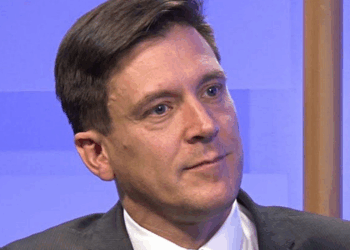
Andrew Gilligan is a writer and former No10 adviser.
Here is a good rule for government: never, ever, do legislation named after a victim or a tragedy. Like “Martyn’s Law,” christened for a young man killed in the Manchester Arena attack, which will shortly require village flower shows to draw up counter-terrorism plans.
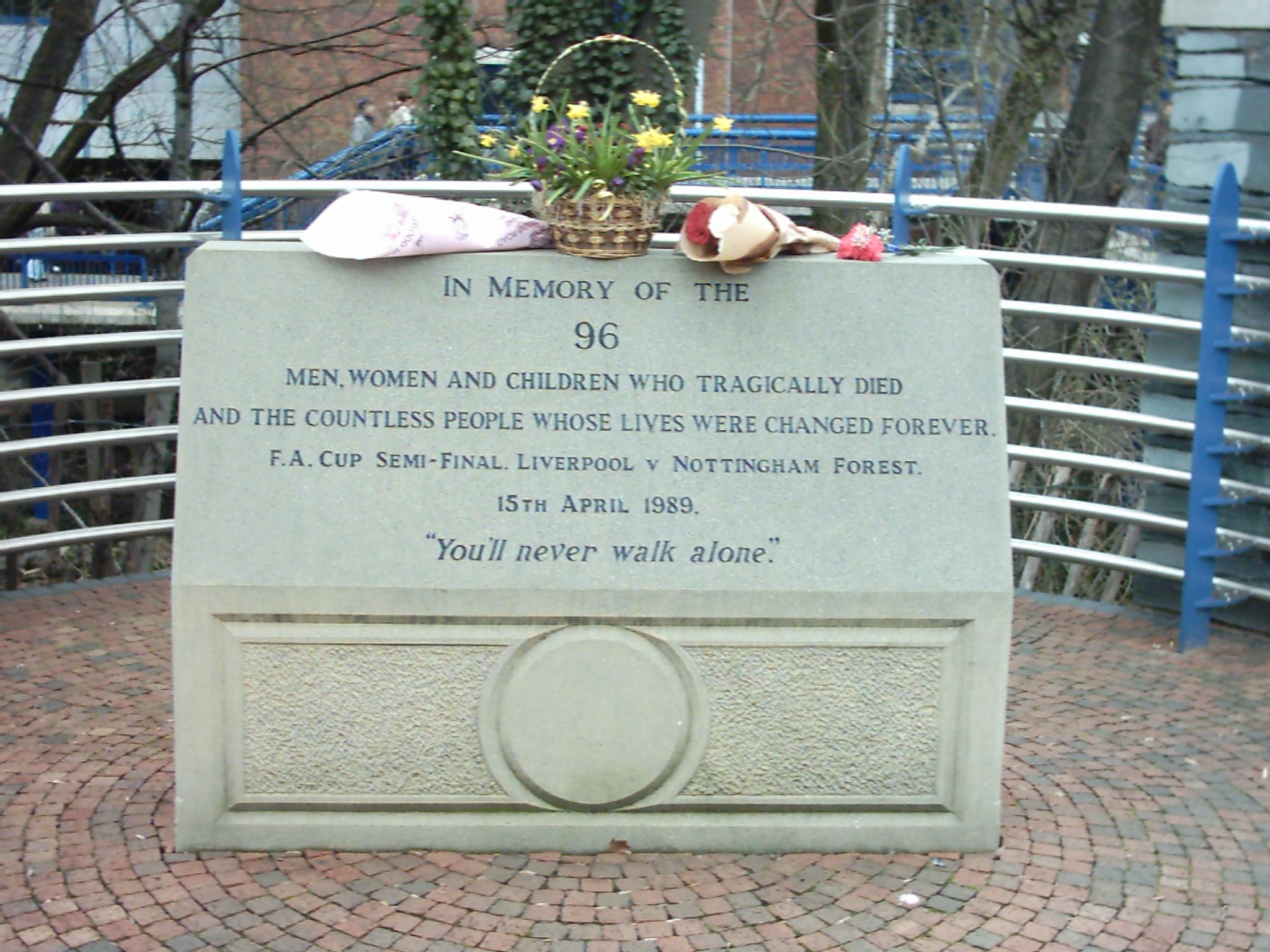
And, more topically, the new “Hillsborough Law,” beloved of thousands of activists, centrepiece of Keir Starmer’s last conference speech, whose third reading has just been pulled as the Government half-realises what a disaster it is.
No-one in politics dares say that, of course – the emotional power of the Hillsborough families’ suffering is too great. What brute could seek to deny future victims justice? Who could deny that public officials should be made to tell the truth?
But even as everyone agrees it’s too hard to get things done in Britain, that the administrative state is too powerful and the vetocracy too choking, this law will make all those problems much worse.
The bill, as amended in committee, includes a personal duty for ministers and officials to “prevent a risk of another person suffering critical harm.” It will be a crime, punishable by a fine or imprisonment, to “intentionally cause” such a risk, defined as death or serious injury. Officials could use this to block any policy which they say increases the chance that someone will be harmed – reducing health and safety regulation, for instance, scaling back the excesses of Martyn’s Law, or welfare cuts which might make people homeless.
Even if ministers are willing to risk ending up in the dock, no official will be, since they are mostly cautious and probably won’t believe in the policy anyway. It also, of course, opens up a whole new front for activist lawfare. Even Jolyon Maugham might start to win a few cases.
The bill makes it a crime, again punishable by jail, for any official or minister to “act with the intention of misleading the public” if the misleading is “significant” and involves “matters of significant concern to the public.” What’s wrong with that? Surely lying is always wrong? Actually, no: if, say, a journalist asked the night before a police counter-terrorism raid whether it was about to happen, it would be wrong not to lie to them.
What constitutes “misleading” is widely defined. It can be by “falsehood, concealment, obfuscation or otherwise.” It will be endlessly litigated in court. Ministers or officials who’ve said anything someone dislikes could be accused, with clear implications for freedom of debate and speech. I think it’s intentionally misleading for Scottish ministers to say that transgender women are women – but it shouldn’t be criminal for them to say it. On certain subjects, it may become too risky for any public servant to say anything at all.
The bill says its purpose is to ensure that “public officials at all times perform their functions… in the public interest.” Who could object to that? But the “public interest” is not defined. This section has been improved in committee from the bill first tabled, which gave ministers and officials an explicit personal duty to act “at all times…in the public interest.” But it could still empower civil servants to block a policy they dislike, simply by asserting that it’s “not in the public interest,” or claiming that the courts may rule it to be so.
The real cause of most public discontent with government is not a lack of “accountability.” Has the arrival of the Office of Rail and Road made us any happier with the railways? Do we like the NHS better for the efforts of the Care Quality Commission? Has our obsession with public inquiries (which this bill will make even more endless) fixed very much, if anything?
It’s not government’s actions, but its inability to act – its inability to fix problems – that most people mind more. But this law makes it even harder for governments to act.
And the true judges of the public interest are, of course, the voters. In a democracy, it is they, not unelected officials, activists, quangos or courts, who must hold power accountable and decide whether actions and words are right or wrong. Even as we say that power has been removed from elected politicians and must be restored, those same politicians are doing the opposite, willingly passing more power away, willingly fitting themselves with new muzzles and handcuffs.
As with other stupid policies – such as the Islamophobia definition, lately rebranded “anti-Muslim hostility” – the government has embraced activist demands without thinking them through. But the reason I said they’d only half-realised their mistake is that the backpedal, so far, is limited to protecting the security services. This bill risks making most of Whitehall ungovernable. Nor is there any good outcome for Starmer – even the concessions he wants to make are opposed by leftwing backbenchers and the law’s other prime mover, Andy Burnham (another good rule of politics, by the way, is that anything Burnham advocates is wrong – see also “we’ve got to get beyond being in hock to the bond markets,” and the idiotic “Northern Powerhouse Rail.”)
And as with other stupid policies, such as digital ID, the Conservative Party has been slow and timid. Presumably fearing charges of heartlessness, we did not vote against the bill on second reading. No-one did – there wasn’t even a division, a classic example of the political herd instinct. The frontbench spokesman, Kieran Mullan, did make some mild objections along the lines set out above, but added: “That is not to say that we cannot make the Bill work.”
But as with digital ID, there’s still time to make up ground. If we are to be the party of hard truths, we have to start telling them about this, too.

![Donald Trump Slams Chicago Leaders After Train Attack Leaves Woman Critically Burned [WATCH]](https://www.right2024.com/wp-content/uploads/2025/11/Trump-Torches-Powell-at-Investment-Forum-Presses-Scott-Bessent-to-350x250.jpg)
![James Carville Admits Democrats Had No Shutdown Endgame, Mishandled Strategy [WATCH]](https://www.right2024.com/wp-content/uploads/2025/11/1763070634_James-Carville-Admits-Democrats-Had-No-Shutdown-Endgame-Mishandled-Strategy-350x250.jpg)