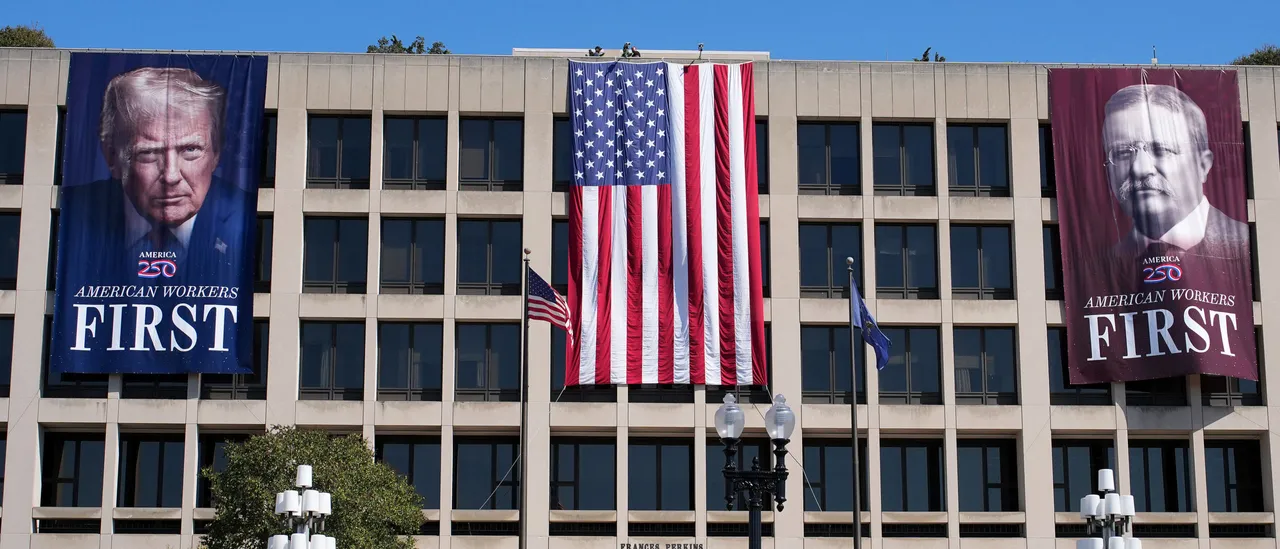
It’s been one year since Donald Trump was sworn in as our 47th president. Since then, this administration has worked at an unprecedented pace to deliver results for the American people. As Deputy Secretary of Labor, I’ve had a front row seat to the action. Twelve months later, I’m proud to say that we are delivering on President Trump’s promise to put American workers first.
One of the highlights of my job has been meeting with hardworking Americans all over the country in a variety of industries. I’ve visited Hoover Dam and chatted with electrical, hydro-electrical, and operations apprentices. I’ve toured everywhere from NASCAR shops to biopharmaceutical companies and learned about their unique lines of work. I’ve met students who are receiving career training in high school for jobs right after graduation. And I’ve talked with military personnel in San Diego and learned how they’re preparing veterans for life after the military. Each of these experiences has given me invaluable insight not only into how our policies are affecting real people but also the hurdles they face. (RELATED: EXCLUSIVE: Trump Admin Teams Up With Two States To ‘Make America Skilled Again’)
One of those challenges is the skills gap. For too long, there’s been a persistent mismatch between the training that workers receive and the skills employers are seeking. In fact, the data for some states suggests that only 34% of participants in workforce training programs end up working in the occupation for which they trained.
The Department of Labor is changing that. Last year, we launched America’s Talent Strategy, a detailed plan to completely overhaul how the federal government approaches workforce development. A core part of this strategy has been to move beyond the traditional approach where workforce training programs operate independently of employer needs, leaving workers to simply hope their training will lead to good jobs. Instead, we’re setting a new standard that puts employers and industry at the center of every stage of the training process. That’s why we’ve set out to secure one million new apprenticeships. We believe apprenticeships are one of the most powerful tools to build real talent for the jobs of the future. They’re a faster, debt-free alternative to college and offer on-the-job experience that matches employers’ needs.
To deliver on this goal, the Department of Labor has taken aggressive steps to modernize our apprenticeships system by cutting red tape and making the model more flexible for new industries. We’re also breaking down the silos that have hampered how America prepares its workforce. Last year, the Department of Labor signed an historic partnership agreement with the Department of Education. Under this restructuring, the Department of Labor now administers a broader set of workforce programs that had previously been spread across federal agencies. That means cutting duplicative efforts, shrinking bloated bureaucracy, and giving more flexibility to states. The result? Better outcomes for both workers and businesses.
Another challenge on Americans’ minds is the rise of artificial intelligence and its transformation of the labor market. Our mission is to help American workers understand the potential of AI and empower them to embrace it as a steppingstone to high-paying jobs, improved levels of productivity, and a greater sense of fulfillment. In July, we introduced the AI Action Plan, which laid out how America will secure global dominance in AI. Through it, we’re helping equip workers for the AI revolution by expanding their skillset, piloting new innovations to rapidly upskill workers, and evaluating AI’s impact on the labor market. While we can’t predict exactly how AI’s capabilities will evolve in the years to come, we can prepare ourselves with the agility needed to navigate the changing landscape. (RELATED: Daily Caller’s ‘America First AI’ Event Drills Into 6G, China, And How To Police The Next Computing Revolution)
Finally, we’re bolstering our work with veterans and helping them reach their full potential in the workplace. In addition to our transition and integration programs that help make the military-to-civilian adjustment as smooth as possible, I’m particularly excited about the Veterans Accommodations Toolkit we recently launched. The toolkit offers tips and strategies to better recruit, hire, train, and retain disabled American veterans. We’ve also joined forces with the Small Business Administration in a deal that would make it easier to recruit veterans, servicemembers, and military spouses specifically in the manufacturing industry. Through both avenues, we’re working hard to ensure that those in our armed forces have the skills they need to thrive in a rapidly-evolving economy.
As we prepare to commemorate America’s 250th birthday this July, I’m proud of the progress the Labor Department has made under the Trump Administration: investing in our workforce, growing our economy, keeping jobs in America, and slashing bureaucracy. But I’m also incredibly proud of our people. While policies and regulations can help, it’s ultimately the talent, ingenuity, and industriousness of individual Americans like those I’ve met on the road that makes our nation the powerhouse that it is. And it’s those same qualities that will ensure our success for years to come.
That’s something truly worth celebrating.
Keith Sonderling is the deputy secretary of labor for the Trump administration.
The views and opinions expressed in this commentary are those of the author and do not reflect the official position of the Daily Caller.





![Donald Trump Slams Chicago Leaders After Train Attack Leaves Woman Critically Burned [WATCH]](https://www.right2024.com/wp-content/uploads/2025/11/Trump-Torches-Powell-at-Investment-Forum-Presses-Scott-Bessent-to-350x250.jpg)