K Harvey Proctor was MP for Basildon from 1979 to 1983 and for Billericay from 1983 to 1987.
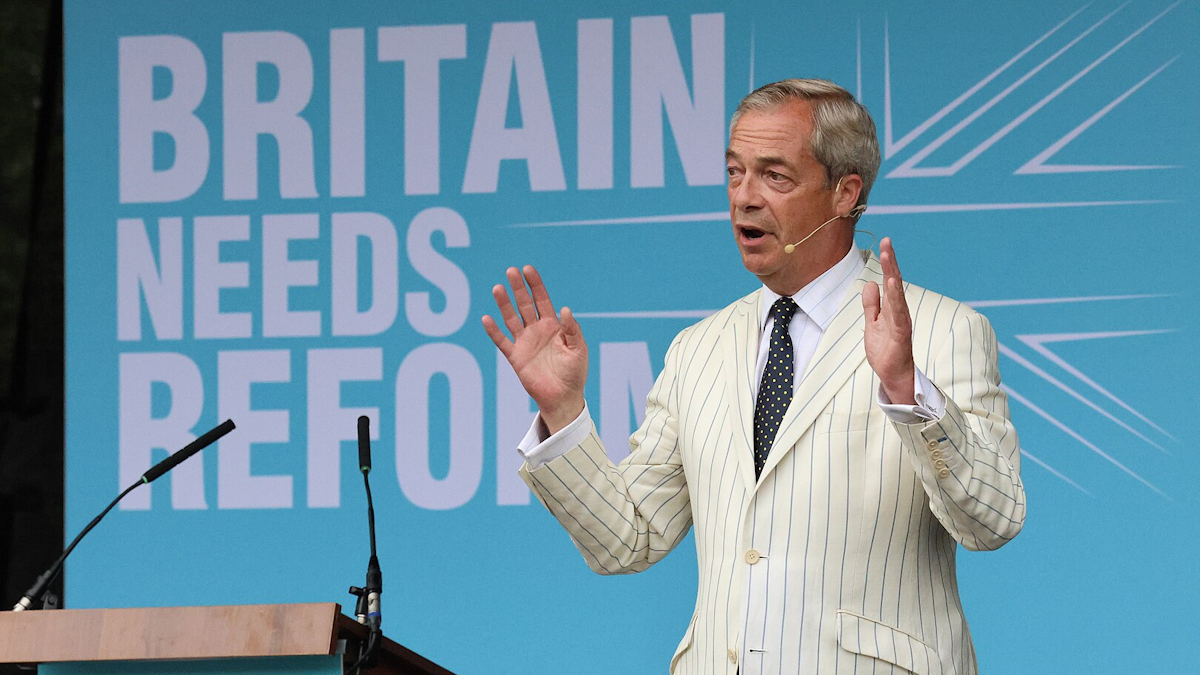
Nigel Farage is nothing if not a master of political theatre. His recent assertion that “the Tories broke Britain” is a line calculated to resonate with a disillusioned electorate.
Yet it sits uneasily alongside the reality that Reform UK is now actively courting – and welcoming – many of the very Conservative figures who were in government when that “broken Britain” was created.
This contradiction goes deeper than political opportunism. It strikes at a fundamental question of democratic integrity.
When Farage led UKIP – his party du jour – his position on defections was unequivocal. He argued that any member of parliament switching parties should resign and trigger a by-election. To do otherwise, he said, was “dishonourable” and an “insult to voters.” His rationale was clear: most people vote for a party and its leader, not simply for an individual candidate. Change the party, and you have changed the mandate.
That principle was sound then. It remains sound now. So what has changed? Not the democratic logic – only the political convenience.
This question becomes starker in light of Farage’s own recent comments about Robert Jenrick. Far from welcoming him as an ally, Farage has previously branded him unfit for office; when Jenrick was immigration minister, Farage tweeted that he “grew the number of illegal migrants living in free hotels to 56,000” and declared: “He is no friend of Epping.” He went further still, accusing Jenrick of hypocrisy over long-term Channel migrant contracts, warning voters: “Don’t believe a word that he says on anything.” In another post, he dismissed him outright: “Jenrick is a fraud. I’ve always thought so.”
These are not minor quibbles; they are damning judgements. Yet Reform now appears willing to overlook such condemnations when it suits its expansionist ambitions.
Nor is Jenrick’s record one of ideological steadiness. Like Lee Anderson, he has wandered across much of the political spectrum, guided less by settled conviction than by what appears to be an insatiable appetite for advancement.
As Matthew Parris observed, if you were to remove ambition from the core of Robert Jenrick, he would collapse like a boneless chicken. Moreover, Parris aptly warned in the Times, Jenrick might be an “asset” to Reform in parliamentary terms, but he would also make Farage’s party look like a “ragbag” of ex-Tories rather than a genuine political alternative.
If Reform UK truly believes it represents a fresh start, a break from the failures of the past, it cannot build itself on the backs of defectors seeking refuge rather than redemption. You cannot denounce a record and simultaneously recruit its authors without inviting charges of hypocrisy.
There is a serious constitutional issue at stake. Conservative MPs elected on a Conservative manifesto do not possess a free-floating personal mandate to sit under a different banner. If they wish to represent Reform, the honourable course is to seek a new mandate from the people who elected them. Resignation and a by-election are not an inconvenience, they are the democratic minimum.
Farage once understood this. His past words remain on the record. If he no longer stands by them, he owes the electorate an explanation.
Politics is not merely about slogans or showmanship. It is about consistency, accountability, and respect for the voters. On this issue, Reform UK must decide whether it stands for principle – or just power, political expediency and populism.

![Donald Trump Slams Chicago Leaders After Train Attack Leaves Woman Critically Burned [WATCH]](https://www.right2024.com/wp-content/uploads/2025/11/Trump-Torches-Powell-at-Investment-Forum-Presses-Scott-Bessent-to-350x250.jpg)