Calum Davies is a Conservative councillor in Cardiff and a candidate for the Senedd next year.
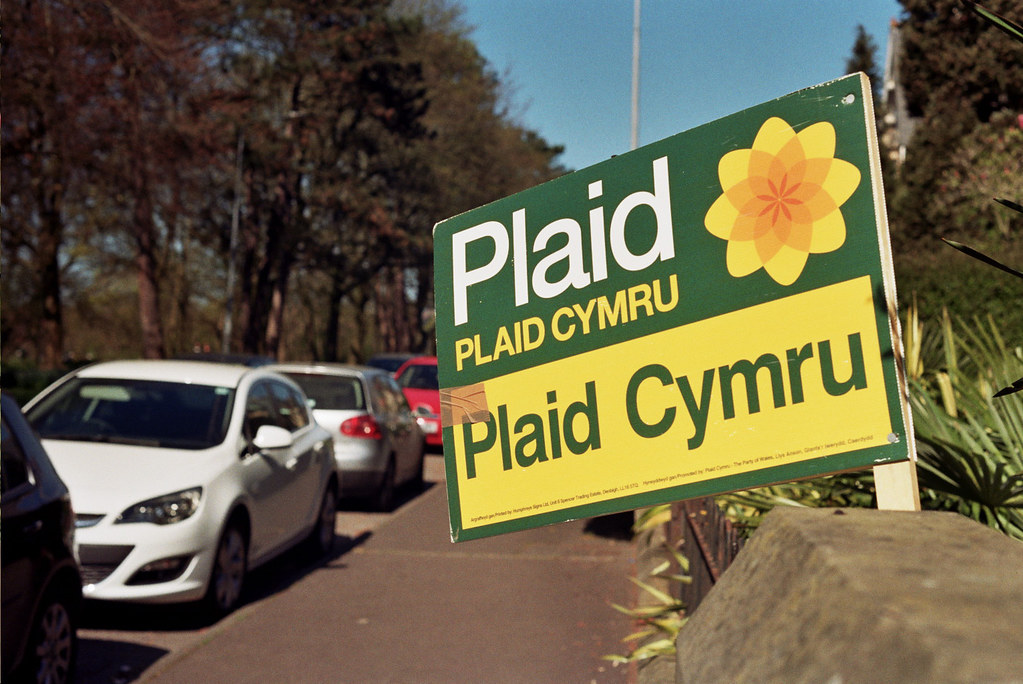
It is becoming increasingly clear that 2026 is going to be Plaid Cymru’s year.
It remains to be seen whether they or Reform will take the largest share of the vote in May’s Senedd election, but the separatists can approach the poll in full knowledge that they are certain to come first or a close second unless something significant shifts the public mood dramatically.
Of course, this is of great concern to right-leaning unionists. We are soon to see a hard-left, Welsh nationalist party achieve its highest-ever share of the vote and seats in Cardiff Bay. Regardless of whether Plaid or Reform come first, the prospect of a government led by the former is becoming a practical certainty.
The new Senedd electoral system was brought in as part of an undemocratic, mandate-less bargain between a partisan Presiding Officer (who will likely be a Plaid minister in six months’ time) and the nationalistic, then-First Minister Mark Drakeford. The former Welsh Labour leader wanted to commit Wales to a perma-coalition of the two leftist parties, cementing a British-sceptic majority in the Senedd for decades to come. Only, at the time, Labour thought they’d always be running the show.
However, a year and a half of incompetence and directionless government under Sir Keir Starmer and the sudden rise of Reform has meant coming first in the Senedd election is no longer a guarantee for Labour. A YouGov poll in December but their support at little over 10 per cent, the same as the Welsh Conservatives – the opposite of a highwater mark for us too.
So not only is Labour’s downfall a result of its collusion with nationalists, but the driver behind Plaid’s growth in support too. For years, we were told that Labour was playing a brilliant game by “parking their tanks on Plaid Cymru’s lawn” by engaging in a detached and, at times, unashamedly confrontational approach with the British state. This was portrayed as genius political strategy that ensured Labour dominance in Wales.
Doing this helped Labour in the short-term but was a time-bomb for both their party and Unionism. Labour’s support is collapsing because they spent 14 years saying the only reason everything is going terribly – from the worst-performing NHS in Britain, the lowest school standards in the UK, and no improvement in relative economic performance – is because of the Tories. This is despite health, education, and economic development all being devolved.
With no Conservative government left to blame, they’ve been exposed. Meanwhile, Labour has abandoned all pretence of British national feeling, with Drakeford enthusiastically describing his loyalty to this country as purely transactional, which is probably worse than being a full-blown nat. Misguided the separatists may be, but at least they’re principled.
The truth is, Plaid had Labour exactly where they wanted them.
Sure, it has taken until now for Plaid to make progress in the opinion polls and see their support finally stretch out of their West Walian heartlands, but – even better – they got others to do their dirty work for them. They have had the dominant party in Welsh politics undermining Unionism, stridently diverting from our shared laws with our British brethren. Folding Plaid into the Welsh Government structure, as Labour has done in various forms over the last two decades, has meant the separatists could push laws through the Senedd and influence Labour policy without any of the resulting backlash for when it goes wrong or proves unpopular. This parasitic approach has made it difficult for Labour to campaign against Plaid now that the tables have turned in the polling.
Simply, Plaid did not have to win elections for their agenda to be implemented. Indeed, they had a supposedly unionist part doing it on their behalf. More disappointingly, Labour still have not learnt their lesson, with the nationalist wing of its Senedd group firing a bizarre warning shot to the British Government.
Back in December, a cabal of Labour Senedd members wrote to the Prime Minister to complain that the British Government was investing in Wales. Yes, you read that correctly. They were enraged by funding for their communities coming from London rather than Cardiff. Not only that, but they also stated that were the Conservatives doing this, the Welsh Government would have judicially reviewed them.
With their party collapsing in the polls, facing the prospect of losing Wales for the first time in over a century (the last two European elections excluded), a group of Labour politicians are, firstly, complaining about community investment from their own party on the basis of constitutional impropriety; secondly, doing so hypocritically after spending years without complaint wasting taxpayer money in areas that aren’t devolved; thirdly, regurgitating nationalist talking points as the separatists take their voters; and finally, thinking that this open letter makes them look good rather than petulant and self-indulgent.
This follows months of Eluned Morgan trying to distance herself from the Starmer government. This is understandable, but it is still falling into the same old separatist-friendly pitfalls. Her “Welsh Red Way” is comprised of demands for more money and more power for the Senedd, including the devolution of the Crown Estate and the justice system, two issues that – and I cannot stress this enough – never come up as an issue while knocking doors in my patch.
There’s a record, quarter of a century-long, that shows neither of these improves anything. For as long as Welsh ministers do their very best to indulge their wildest academic fantasies in social engineering rather than improving public services and economic growth, then three million people are condemned to being lab rats in a demonstrably failed experiment.
It is a lesson too for other parties. Plaid is driven by their fundamental desire for Welsh independence. Despite never having more than five Members of Parliament at any one time, they have won two devolution referendums, secured more powers under multiple Wales Acts, and pushed the prospect of independence closer to reality than ever before.
They achieved this because of the indulgence of parties that do not support their cause because they thought they could contain them. One cannot outmanoeuvre the zealot. They are patient and are happy not to interrupt their opponents when they are making a mistake.
However, there is still time for people to see the real Plaid Cymru and realise they must be stopped.
This is the first of two columns focussing on the fall of Welsh Labour and the rise of Plaid Cymru. Calum will have more in his colum next month.





![Donald Trump Slams Chicago Leaders After Train Attack Leaves Woman Critically Burned [WATCH]](https://www.right2024.com/wp-content/uploads/2025/11/Trump-Torches-Powell-at-Investment-Forum-Presses-Scott-Bessent-to-350x250.jpg)



![Kamala Comes Unglued, Makes Bogus Claim About Her Landslide Loss to Trump [WATCH]](https://www.right2024.com/wp-content/uploads/2025/10/Kamala-Comes-Unglued-Makes-Bogus-Claim-About-Her-Landslide-Loss-350x250.jpg)