Aphra Brandreth is member of Parliament for Chester South and Eddisbury.
Each year, on 27 January, we commemorate Holocaust Memorial Day.
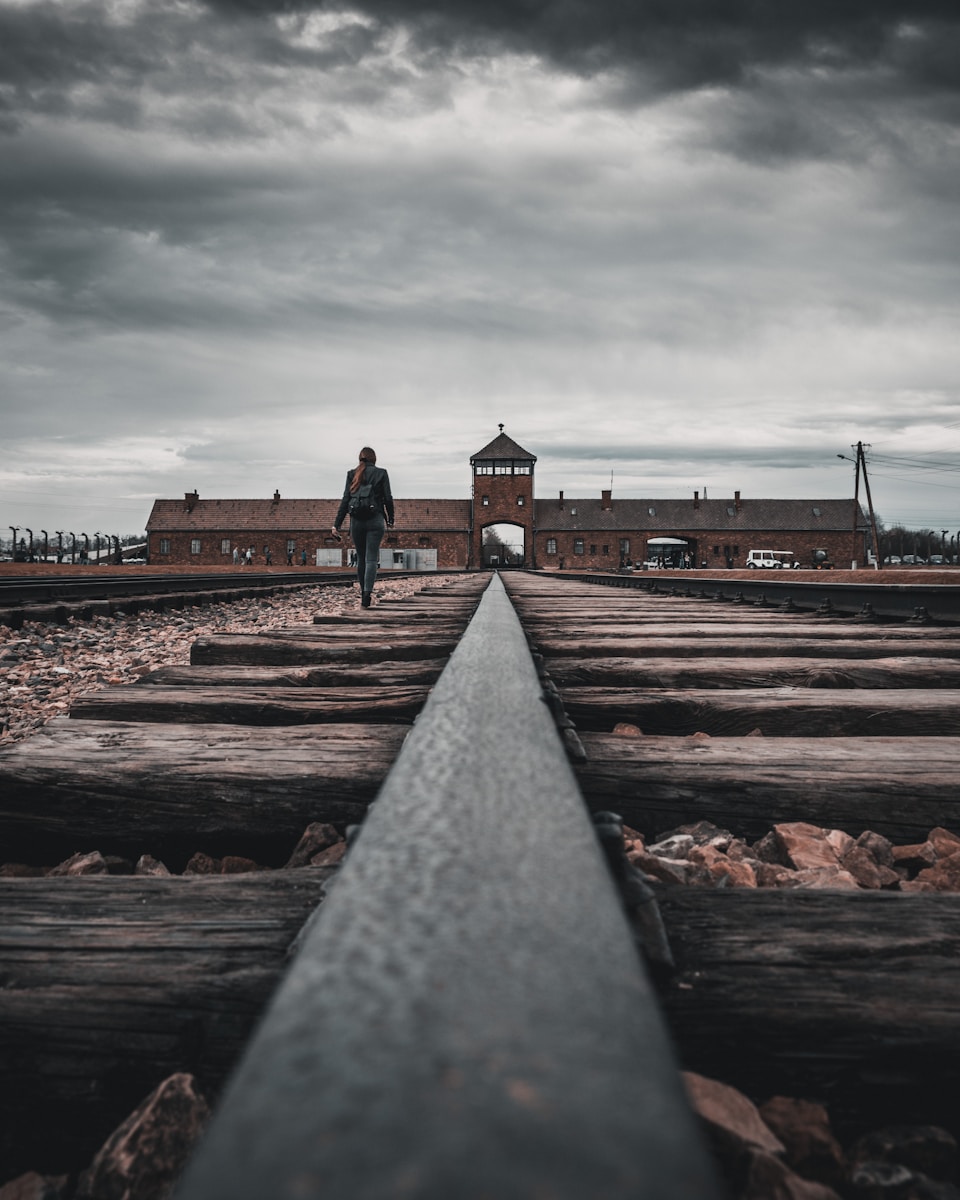
Today marks 81 years since the liberation of Auschwitz-Birkenau, Nazi Germany’s largest extermination camp, where it is estimated that one million Jews — men, women and children — were murdered in gas chambers.
Although a crucial act of remembrance, Holocaust Memorial Day has never been only about the past. It has always been about the future, and about the kind of world we choose to build when we know, beyond doubt, where hatred and dehumanisation can lead.
In 2026, we are fast approaching a turning point as the Holocaust increasingly fades from living memory. The generation who survived the camps, who hid children, who resisted, and who bore witness is almost gone. As those voices fall silent, responsibility does not disappear; it transfers to us. We must ensure that the horrors of the Holocaust are never forgotten, so that we never go back.
As we assume responsibility for remembrance beyond those who experienced the Holocaust firsthand, we do so in an age where information is ubiquitous and easily accessible. This brings both opportunity and risk. Technology can help preserve memory and testimony, yet misinformation and disinformation now spread rapidly across media platforms, often amplified by conspiracy theories that travel further than evidence or lived experience. Holocaust denial and antisemitism, once relegated to the margins, have become disturbingly commonplace, cloaked in the language of “alternative facts” and “just asking questions.”
Among the most transformative of these technologies is artificial intelligence. Used well, AI can be extraordinary. It can translate survivor testimony into dozens of languages; archive, search and connect millions of records across museums and memorials; and create interactive educational tools that allow young people to explore history deeply and personally. It can preserve voices, faces and stories for generations yet to come.
But AI also has a darker side. The same tools that can preserve truth can also fabricate it. Deepfakes, fake documents, manipulated videos and automated misinformation campaigns are already being used to distort history. When falsehoods can be generated at scale, the danger is not simply confusion, but the erosion of trust itself.
That is why Holocaust education can no longer be about remembrance alone. It must also equip young people with digital literacy, critical thinking skills, and the confidence to question what they see and hear.
It is both tragic and dangerous that we are increasingly failing to do so.
The most alarming reality is that the number of schools across the UK marking Holocaust Memorial Day has halved over the past two years. I said earlier that we must now assume responsibility for ensuring the memory of the Holocaust and its victims endures, yet by neglecting to educate our children and to teach them how to discern credible information, we are failing in that duty. At a time when antisemitism is rising, misinformation is rampant and living memory is disappearing, fewer children are being taught to remember.
My constituency of Chester South and Eddisbury is not far from Manchester, a city with a large Jewish community that was rocked by an antisemitic terrorist attack in October last year which took the lives of three people, injured three more, and psychologically damaged many others. Yet the impact extended far beyond that community.
Jews across our country no longer feel safe, and that is unacceptable. The Jewish community rightly demands action, not words, and that is what I and my Conservative colleagues want to see from the Government. Ensuring that children and young people are taught about the horrors of the Holocaust and the scourge of antisemitism would be one tangible action Ministers could take, working alongside organisations such as the Holocaust Educational Trust.
A lack of knowledge creates a vacuum, and history shows us that hatred is always waiting to fill it. Remembrance is not about guilt; it is about responsibility.
So today, on Holocaust Memorial Day, as we remember the evil that took place 81 years ago, we must confront the choice before us. As survivors’ voices fade from living memory, the question is no longer, “Do you remember?” It is, “Will you choose to remember?” The promise of “Never again” depends on whether we are willing to carry that responsibility — now, and into the future.




![Donald Trump Slams Chicago Leaders After Train Attack Leaves Woman Critically Burned [WATCH]](https://www.right2024.com/wp-content/uploads/2025/11/Trump-Torches-Powell-at-Investment-Forum-Presses-Scott-Bessent-to-350x250.jpg)