Neil Datson is a farmer and historian. He read Modern History at Oxford, and is the author of The British Air Power Delusion 1906-1941 and occasionally publishes historical essays on his website.
More or less everybody who follows politics sees the MPs of the modern age – of say, the last ten years – as being just about the most dismal bunch our country has ever been burdened with. Regardless of party.
Of course there’s nothing new about that.
Men and women have been saying as much since the invention of the franchise.
As people get older, they tend to see everything about the modern age as being worse than the days of their youth. Yet despite my distrust of everything that smacks of nostalgia it’s an opinion that I share. There’s scarcely a member of the house that I would vote for on a personal basis, who I could feel was really worth voting for, even if I didn’t agree with his or her politics.
So what makes a good MP?
The ideal to which all members, regardless of party, should aspire? It’s easily summarised. Somebody who speaks for the interests of his or her constituents, within the framework of an overriding concern for the Common Weal. In shorthand, one who puts the national interest first. We should have no time for MPs who appear to take their orders from the UN or the WEF, or who declare themselves to be ‘the member for Gaza’. Or for Israel, for that matter. Obviously, we might, and likely will, disagree over the detail of how to go about furthering the national interest but we have to agree that it comes first. Timeservers, whose loyalty is to party before country, or whose sole priority is to ensure their re-election next time round, need not apply.
While the merits and demerits of our MPs are important, they are also, crucially, the raw material from which government is crafted. Its recent failings have been plain for all to see. A seemingly endless churn of men and women has enjoyed the perks of ministerial office without noticeably advancing anybody’s interests but their own. The talent pool is disturbingly shallow.
Whether or not the general standard really has declined in recent years, that we should always seek to improve it must surely meet with universal agreement. How can that be done? In the first place better and more suitable men and women need to stand for election. To make the whole business more competitive, even in the ‘rotten boroughs’ where the joke is that one candidate’s vote might as well be weighed, it’s so much greater than any other’s.
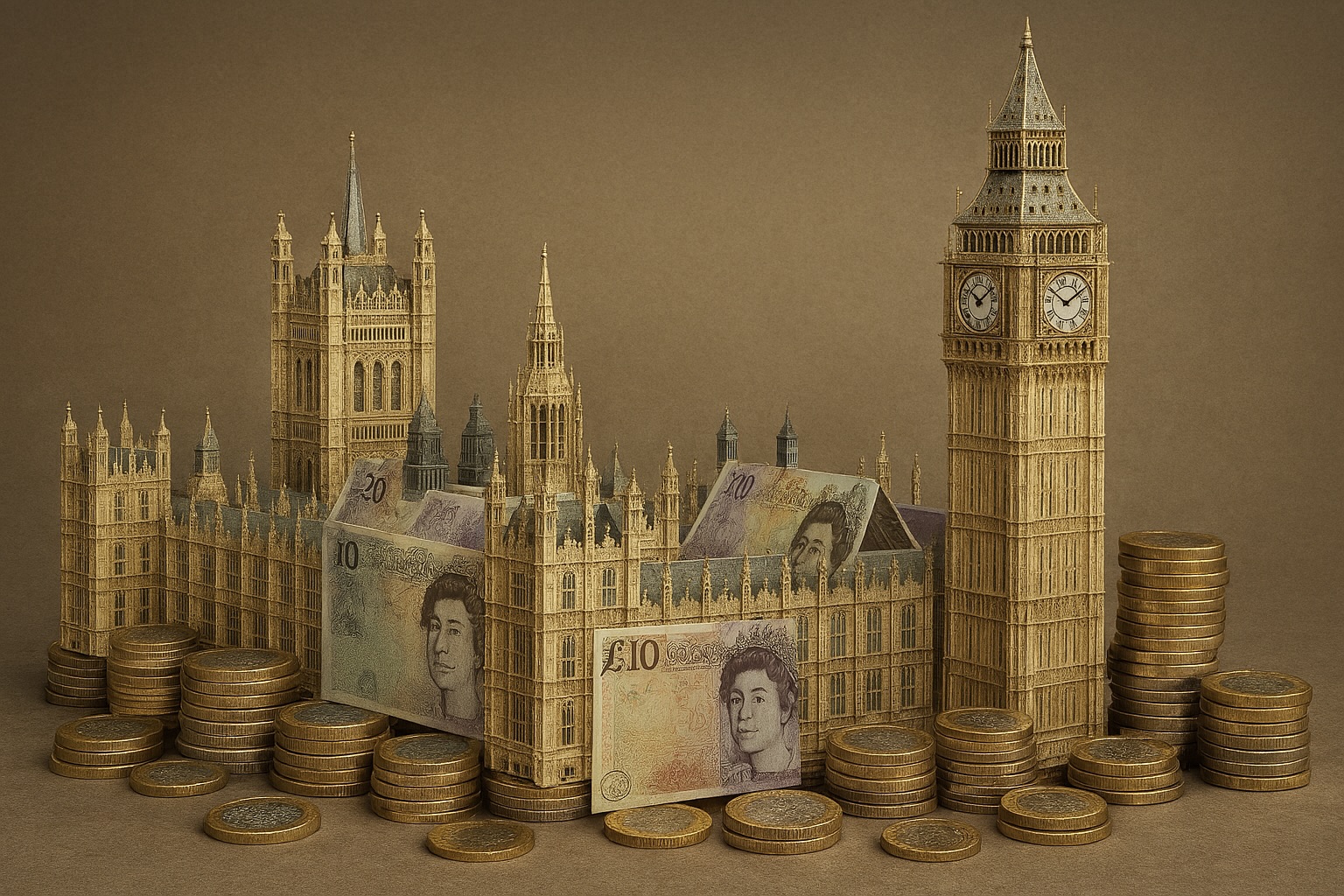
There are several reforms that could be brought in but the first, the most essential, is to reverse the main change wrought by the Parliamentary Standards Act 2009, and restore to MPs the power to regulate their own salaries.
Before readers choke on their cornflakes they should hear me out.
As a basic principle, it is an absurdity, a constitutional nonsense, that MPs are paid according to a scale determined by IPSA, the Independent Parliamentary Standards Authority. The first thing to be asked of this august body is: What, in context, does ‘independent’ mean? As so often in the machinery of modern government it is a weasel word. If it was truly independent it would have to be above parliament, which it isn’t. Okay, you may object, MPs need somebody or something to restrain them, as they’re all greedy so-and-so’s. Well, maybe they are. But if so, shouldn’t we at least be able to see how greedy?
And, as it happens, I don’t believe that they are especially greedy, not when compared with the general run of men and women. There’s no shortage of greed in the world and the House of Commons certainly has its share but many men and women can, and do, both enjoy their work and do it for money. MPs are unique in our society. Theirs is not so much a job as a calling. It’s hardly the sort of career that anybody is going to be drawn to by the thought of the money alone.
IPSA links MP’s salaries ‘to changes in average earnings in the public sector using Office for National Statistics (ONS) figures’. That’s straightforward enough and so hardly something that they couldn’t come up with themselves, without outside help. That, at least, would immediately save a bit of cash by cutting a few pointless jobs. Many might think it fair, too, although I couldn’t agree.
Cutting out all reference to the private sector is just another small, but insidious, way in which it is pushed out of parliament’s collective consciousness. Getting the right people into the Commons means not filling it with a bunch of quangocrats, whose idea of career progression is moving up the ladder from deputy filing clerk to assistant head of paperclips. There should be nothing structured, or certain, about life as a tribune of the plebs, most especially for those who break through into ministerial office or even just chair committees.
At the same time as MPs are once again given the right to set their own salaries there are a few other changes that need to be made. Most are pretty obvious. Expenses clarified and simplified. Public sector pensions removed altogether in favour of self-employed status, to force their minds back to the Common Weal, the plight of the downtrodden plebs. The simplest one, however, would be to make general a principle that was apparently held by that brilliant but flawed man, Enoch Powell.
Powell never took a salary increase between elections.
So when he stood before his constituents on election day, he was actually saying to them: ‘Vote for me now and I will draw the same daily stipend right up until the last day that I represent you.’ That wouldn’t mean that there couldn’t be annual salary increases, only that they would only be awarded to any new members who’ve won recent by-elections. It would also create a curious but remarkably efficient paradox. In practice, MPs wouldn’t have the power to determine their own salaries, only those of their successors. It would surely help to focus their minds on something that mattered to Powell, and certainly matters to the rest of us, even while it’s hardly a priority for our permanently indebted government. Maintaining the value of the currency.
There is another, overriding, argument that makes MPs having control of their salaries attractive.
Who, if anyone, loses by it?
Certainly not the Exchequer, for which the amount of money involved wouldn’t even qualify as a rounding error, even if they were to become much better paid. The one interest that would lose are the political parties. In a modern democracy political parties are a necessary evil. Absolutely necessary, parliamentary government couldn’t function without them, but an evil nonetheless. In recent years the parties have become more and more sclerotic, less and less attentive to popular opinion, interested only in their self-perpetuation.
It is really the party managers, who want lobby fodder, rather than the public, who need representatives, who would lose by the Commons gaining more MPs who think for themselves. And that, regardless of party, we should all welcome.


![Donald Trump Slams Chicago Leaders After Train Attack Leaves Woman Critically Burned [WATCH]](https://www.right2024.com/wp-content/uploads/2025/11/Trump-Torches-Powell-at-Investment-Forum-Presses-Scott-Bessent-to-350x250.jpg)


![CNN's Kaitlan Collins Fact-Checks Rep. Jasmine Crockett Over False Trump Ballroom Claim [WATCH]](https://www.right2024.com/wp-content/uploads/2025/10/1761954330_CNNs-Kaitlan-Collins-Fact-Checks-Rep-Jasmine-Crockett-Over-False-Trump-350x250.jpg)