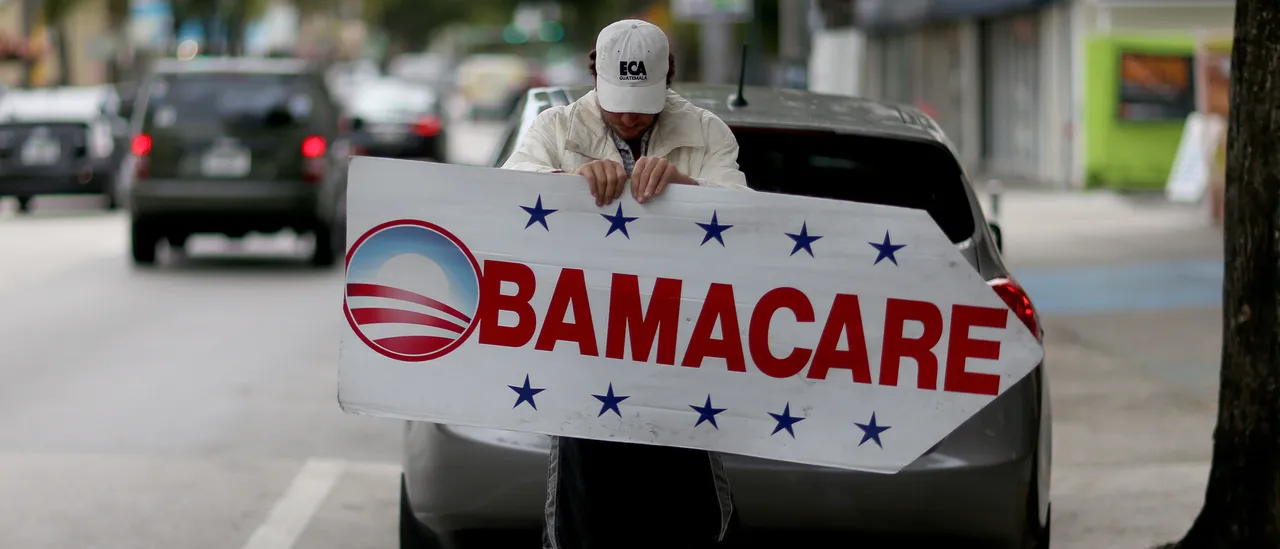
Health care costs are escalating and taking health insurance premiums along for the ride.
A report at Healthcare Brew points to a variety of factors for the increases, such as specialty drugs and upcoding by providers, while other reports point to the Affordable Care Act’s continuing impact on health insurance prices and policies. (RELATED: 17 House Republicans Vote To Pass Democrat Obamacare Proposal)
There’s no denying that spending and costs are up. Since the ACA’s implementation:
• Health insurance premium costs have increased by more than 75 percent.
• Per capita costs rose from $9,000 in 2013 to $14,570 per person in 2023.
• Employer-sponsored plan premiums increased another 7 percent in 2024 after a similar increase in 2023.
The impact on health insurance has been profound.
• ACA marketplace benchmark premiums for single coverage increased 75 percent between 2014 and 2024.
• Deductibles in ACA silver-tier plans have increased by as much as 100 percent in the same time span.
The future isn’t looking much brighter. ACA rule changes will increase the cost of marketplace policies as well as deductibles.
“Premiums will rise in 2026 for most of the 22 million people who receive premium tax credits (PTCs) to help them buy coverage in the ACA marketplaces in 2025,”reports the Center on Budget and Policy Priorities, referring to proposed rules changes.
That doesn’t even take into account the potential removal of pandemic-related tax credits for ACA enrollees. Those enhanced tax credits cost Americans $92 billion in 2023 and an estimated $138 billion in 2025 (figures for 2023 and 2024 were unclear). Extending the subsidies would cost half a trillion dollars over the next 10 years.
ACA-Driven Cost Increases
David Foucachon blames much of the increase in health insurance overall on an ACA provision that allows health insurance companies to make more money the higher the cost of care is.
“One of the provisions was the medical-loss ratio stipulation, which says that the carriers have to spend 80 to 85 cents of the premium dollar on paying for claims,” said Foucachon, CEO and co-founder of the Moscow, Idaho-based Veritas Surgery and a Samaritan Ministries International board member. “That has created the perverse incentive (for insurance companies) to increase profit by increasing the cost of care. The higher the cost of care, the more the insurance carrier makes in profit. Until you remove those conflicts of interest, there’s no reason costs would start coming down.”
Employee-sponsored insurance plans have also been impacted:
• Employer-sponsored plan premiums have increased to an annual average of $26,993 for family coverage and $9,325 for single coverage in 2025.
• Employer-sponsored plan deductibles increased, too, rising to $1,886 for annual single coverage, a 43 percent increase in the past decade.
And that’s only looking at the cost of health insurance, not considering the quality. For example, customers of health insurance plans don’t always get to choose their doctor or care provider; rather, they need to choose an “in-network doctor” or risk incurring even more expense.
Health Care Sharing As A Choice
While still being affected by health care inflation, more than a million American Christians have found refuge in health care sharing ministries. It’s a solution I use for my family. We are members of Samaritan Ministries, a ministry that has been successfully operating for over 30 years.
The basic mechanics are similar among the major health care sharing ministries (HCSMs):
• Members incur a medical bill.
• The bill is submitted to the Health Care Sharing Ministry.
• The ministry then assigns members to reimburse that original member with the bill, with fixed unshareable amounts deducted.
There are some restrictions on the type of medical procedures shared, but prospective members are told about them up front through ministry guidelines.
But the advantages of an HCSM are significant; members of most health care sharing ministries are free to use the medical provider of their choice with no network restrictions. They get to exercise health care freedom.
Better yet, they don’t deal with a faceless insurance bureaucracy, but instead are able to call ministry representatives directly with questions and appeals. They get personal attention and are prayed for by staff and fellow members as they navigate their family’s health care. And, most times, HCSMs are also a great choice based on convenience and affordability.
Samaritan Ministries, for example, has recently introduced REDEEM™ Healthshare, which leverages a modern technology platform to enable automatic bill submission, a fully digital interface and electronic transfer of funds.
And HCSMs can far outpace the affordability of health insurance. For example, an average unsubsidized benchmark insurance plan for a typical 40-year-old with a family of four in 2025 is $1,606 per month, with a $3,000 deductible. REDEEM™ Essential for that same family is $905 per month with a $3,000 annual unshareable amount, a savings of about 40%.
Because HCSMs are not insurance, they provide a way for members to have their medical needs met through sharing with other members, a more affordable and fulfilling way of managing health care.
While health care sharing organizations may not be the answer for all consumers, they are a viable alternative that many should at least consider when evaluating the best options for their family.
Tim Van Hoof is Vice President of Marketing and Member Development for Samaritan Ministries International, joining the ministry in 2023. Before his current role, he spent over 20 years in the Insurance and Financial Services sector with State Farm and Country Financial. Michael Miller is editor of the Samaritan Ministries newsletter and blog.
The views and opinions expressed in this commentary are those of the author and do not reflect the official position of the Daily Caller News Foundation.
All content created by the Daily Caller News Foundation, an independent and nonpartisan newswire service, is available without charge to any legitimate news publisher that can provide a large audience. All republished articles must include our logo, our reporter’s byline and their DCNF affiliation. For any questions about our guidelines or partnering with us, please contact licensing@dailycallernewsfoundation.org.





![Donald Trump Slams Chicago Leaders After Train Attack Leaves Woman Critically Burned [WATCH]](https://www.right2024.com/wp-content/uploads/2025/11/Trump-Torches-Powell-at-Investment-Forum-Presses-Scott-Bessent-to-350x250.jpg)


![Kamala Comes Unglued, Makes Bogus Claim About Her Landslide Loss to Trump [WATCH]](https://www.right2024.com/wp-content/uploads/2025/10/Kamala-Comes-Unglued-Makes-Bogus-Claim-About-Her-Landslide-Loss-350x250.jpg)