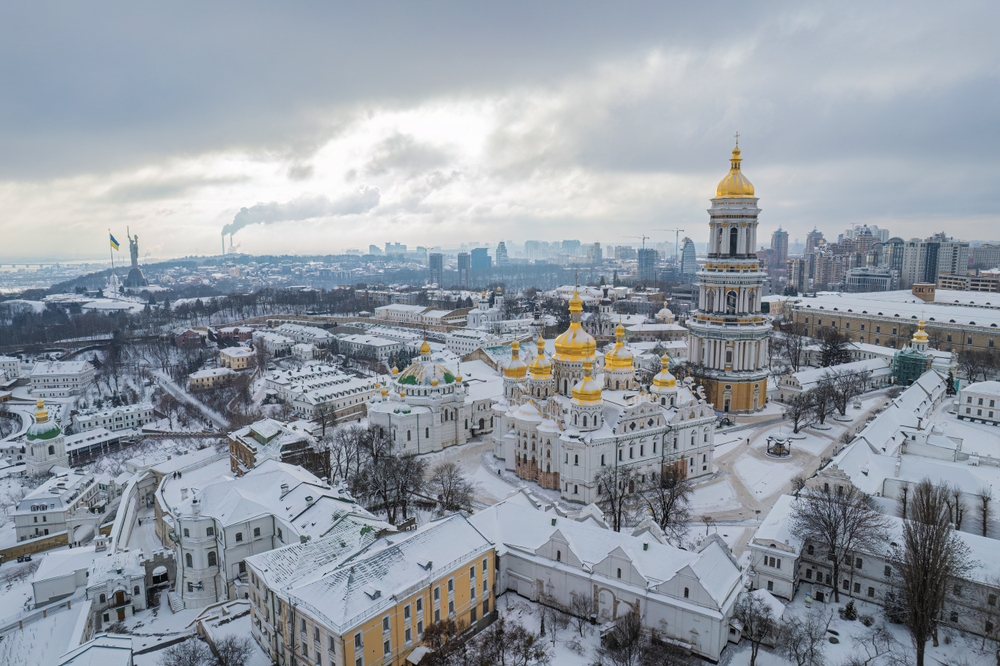
With millions of Ukrainians lacking access to water and heat in a frigid winter, following attacks on the energy infrastructure, conditions in Ukraine four years after Russia’s invasion have not improved, a Catholic priest and TV director said.
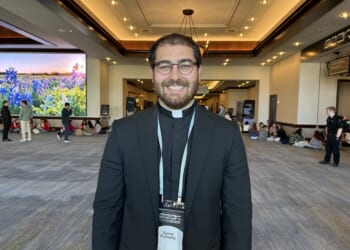
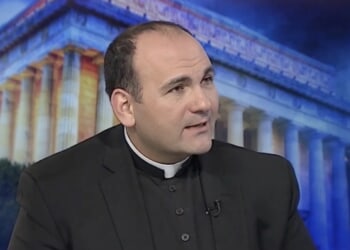
“It was hard and it is still hard,” said Father Serhiy Zakharchenko, OMI, director of EWTN Ukraine.
The lack of reliable heat and electricity — amid ongoing staffing challenges — have also put pressure on the priest and his collaborators’ work running a 24-hour television channel.
Even in a war, they continue their work “with the same pace,” Zakharchenko said.
“Because we understand that the prayers, the holy Mass, the programs … is what really people want in order to back them up in this difficult time. So we do not plan to stop,” he said.
Heating crisis
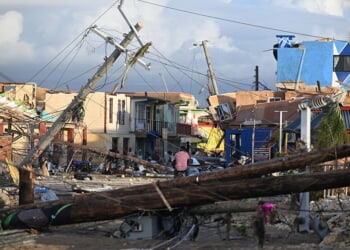
According to the United Nations Monitoring Mission in Ukraine, Russia’s repeated attacks on Ukraine’s energy infrastructure in January created “extreme hardship for the civilian population.”
“The attacks, which continued in February, have caused extensive disruptions to electricity, heating, and water across the country, affecting millions, as temperatures consistently remained below freezing,” HRMMU reported on Feb. 13.
Missile and drone attacks, including five large-scale attacks, damaged or destroyed important parts of the energy system around Ukraine and in Kyiv city.
The director of EWTN Ukraine said he and the two priests who work with him in Kyiv do not have adequate heat at home, while temperatures frequently fall below zero degrees Fahrenheit.
“The good point is that in the office at least we have a really good temperature, enough to work, enough to do our job,” he said.
On the other hand, he explained, they have to always be prepared for the electric current to “just disappear from your socket. And then you have to be prepared quickly to do something or ignite a generator or to be prepared with a huge battery in order to keep on with the TV.”
‘Life is still going on’
Amid the challenges, Zakharchenko said “life is still going on and it is possible, although it’s hard.”
He recalled psychologist Victor Frankl’s analysis of which inmates survived the Nazi concentration camp where he was a prisoner during World War II.
“Those who actually concentrated their mind, strength, skills on what is important, and continued to work and live, they survived,” the priest said, explaining why, he said, “I choose to build plans. I choose to continue my work, my obligations.”
“Every night you can be buried under your flat because of a missile, because of a drone,” he continued. “But whether I’ll be hit or not, I build plans and I continue what I do.”
He added that working gives him a chance “to not think about disaster, but to think about what is possible to do, and if it’s possible, make it be good.”