The Apostolic Vicariate of Southern Arabia’s celebration of the jubilee year dedicated to St. Francis of Assisi, proclaimed by Pope Leo XIV at the beginning of the year and running until Jan. 10, 2027, is marked by the presence of a distinctive relic — a stone from the altar of the Church of the Portiuncula, a place central to Franciscan spirituality.
ACI MENA, the Arabic-language sister service of EWTN News, interviewed Bishop Paolo Martinelli, apostolic vicar of Southern Arabia and a Franciscan Capuchin, about the vicariate’s particular way of observing this jubilee year and the symbolism of receiving a relic from a site so closely linked to St. Francis and its deeper meaning.
Martinelli described the reception of the relic as an expression of fraternity among the various Franciscan communities and a sign of communion between the Church of Assisi and his apostolic vicariate, especially since many of the priests serving in the Gulf belong to the Capuchin family.
He emphasized that the gift of this relic, offered by the Friars Minor of the Seraphic Province of Umbria and Sardinia, coincides with the celebration of the 800th anniversary of St. Francis’ death and reflects the shared Franciscan heritage that shapes the life of the apostolic vicariate.
“The pastoral history of the vicariate is closely linked to the Franciscan tradition, particularly through the service of Capuchin missionaries who came from France and Tuscany, and later from different parts of the world,” he said. “On a personal level, I have close relationships with the Friars Minor in Assisi, as I worked with them in academic and pastoral fields.”
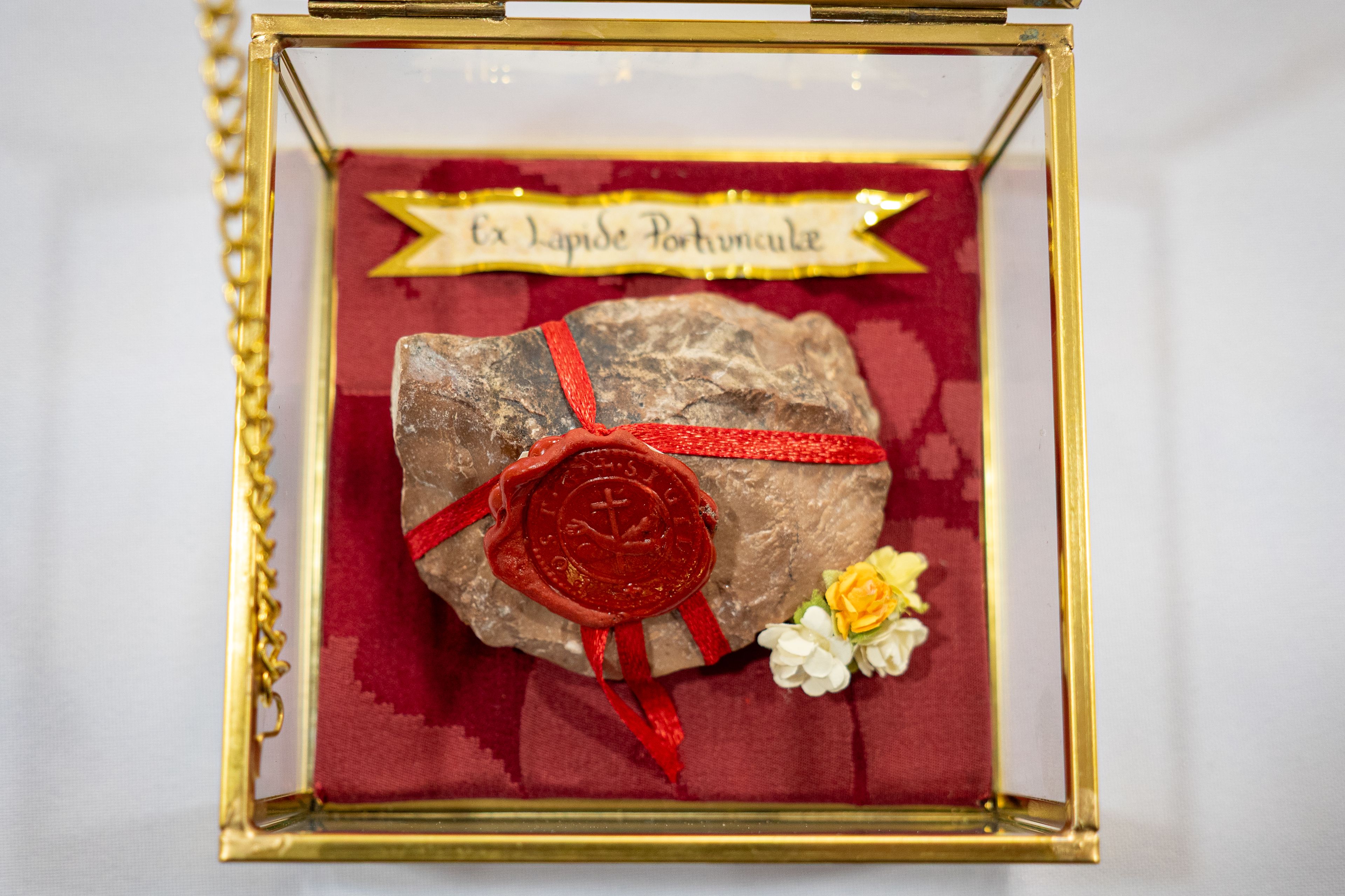
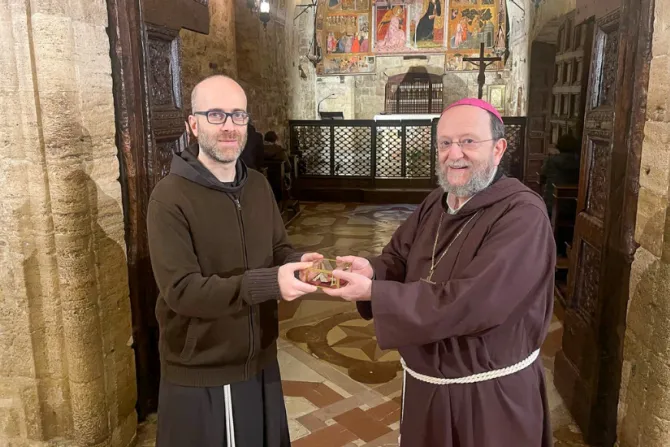
A sacred relic marks the beginning of its pilgrimage across the Apostolic Vicariate of Southern Arabia, as it begins its journey among the faithful of the vicariate. | Credit: Photo courtesy of the Apostolic Vicariate of Southern Arabia/AVOSA
Martinelli also noted that the vicariate had begun early preparations to mark the 800th anniversary of St. Francis’ death even before receiving the relic. He said the Holy See’s decision to proclaim a jubilee year dedicated to the saint was an important moment that expanded the celebration beyond the Franciscan world to include the entire Church, encouraging Catholics to rediscover St. Francis’ spirituality and his witness to freedom, peace, fraternity, and love for creation.
A spiritual pilgrimage
Martinelli said the apostolic vicariate has prepared pastoral initiatives, catechetical programs, and publications to help the faithful deepen their knowledge of St. Francis and pray according to his spirituality.
He announced that St. Francis Church in Jebel Ali, the St. Francis Church at the Abrahamic Family House in Abu Dhabi, and St. Anthony Church in Ras Al Khaimah will serve as dedicated centers for celebration and pilgrimage, while parishes in Oman will also be encouraged to organize similar initiatives.
He highlighted key feasts associated with St. Francis that will be celebrated during the jubilee year, including: the feast of the Pardon of Assisi (Aug. 2), the feast of the Stigmata of St. Francis (Sept. 17), the anniversary of his death (Oct. 3), and his feast day (Oct. 4). He added that the jubilee year’s continuation through the Christmas season will offer an opportunity to contemplate the mystery of the Incarnation through Franciscan spirituality.
The relic does not appear likely to travel to the countries of the Apostolic Vicariate of Northern Arabia, as “each apostolic vicariate has its own organization for pastoral initiatives, though cooperation is always possible,” Martinelli said. However, it will accompany him during his pastoral visits to all parishes in the United Arab Emirates and the Sultanate of Oman.
“Each pastoral visit will be placed under the protection of St. Francis and illuminated by the guidance of his spirituality,” he said. “The relic’s journey is like a spiritual pilgrimage among the parishes of the apostolic vicariate.”
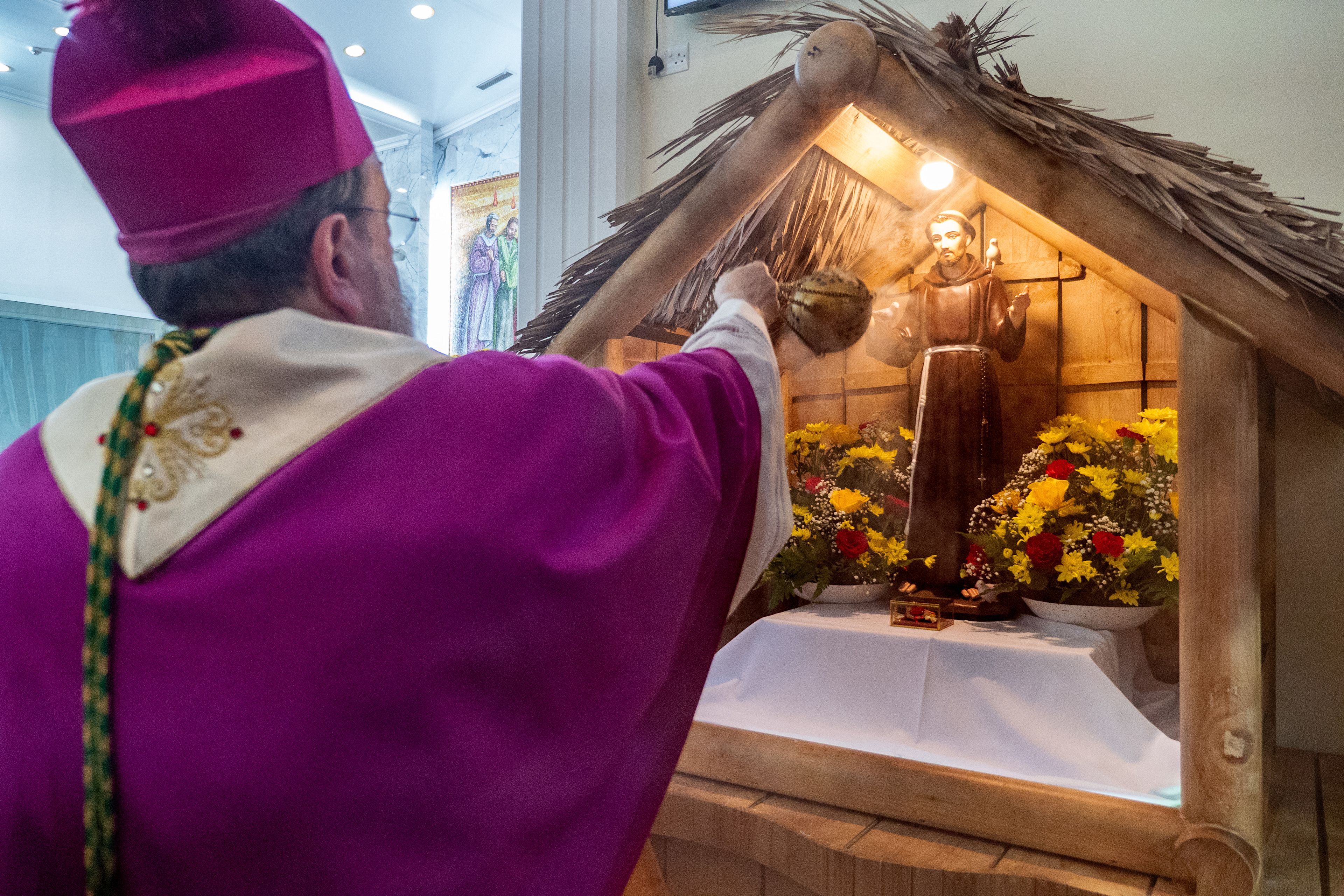
The relic is welcomed at Holy Spirit Parish in Muscat, Oman, marking the beginning of its pilgrimage across the vicariate, during the pastoral visit of Bishop Paolo Martinelli, apostolic vicar of Southern Arabia. | Credit: Photo courtesy of the Apostolic Vicariate of Southern Arabia/AVOSA
A man of peace
St. Francis has long been regarded as a man of peace and reconciliation. While the sources documenting his encounter with Sultan al-Kamil in Egypt come only from the Christian tradition, Martinelli said, “the meeting seems to have left a good memory that allowed the continued presence of Franciscan friars in Egypt, the Holy Land, and other places with Muslim majorities, and it has remained a powerful symbol of dialogue and mutual respect.”
Martinelli pointed to Pope Francis’ 2019 visit to the United Arab Emirates, linked to the 800th anniversary of that encounter. “We can understand the presence of a relic of St. Francis in countries with Muslim majorities as a reminder of this historical meeting and a sign that encourages interreligious dialogue,” he said.
The relic is one of the stones from the altar of the church that the Friars Minor collected during restoration work after an earthquake struck Assisi in 1997, preserving the stones as sacred relics. The Portiuncula is a principal spiritual reference point for Franciscans worldwide, “for there, everything began.”
There, St. Francis recognized his vocation as he listened to the Gospel reading about the Lord calling the apostles. There, together with the first friars, he began their annual gathering known as the “Chapter of Mats” (“Capitolo delle Stuoie”). And there, according to tradition, St. Francis died 800 years ago.
This story was first published by ACI MENA, the Arabic-language sister service of EWTN News. It has been translated and adapted by EWTN News English.