The Middle East has once again surged to the top of global headlines as renewed fighting spreads across multiple fronts, placing several countries at risk of continued strikes and retaliation, with no clear end in sight.
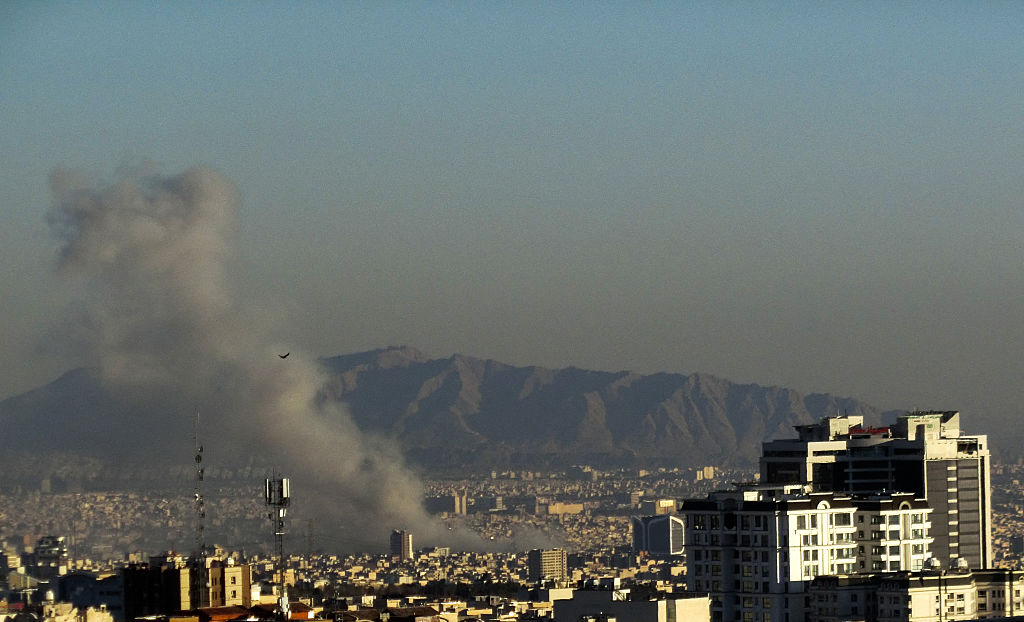
Airstrikes on the Iranian capital, Tehran, and other major cities have raised serious concerns about the country’s Christian communities.
Iran has already been grappling with instability following months of popular protests driven largely by economic hardship. Those demonstrations evolved into broader anti-government protests, during which many lives were lost.
In a previous report, Open Doors described Christians in Iran as consistently vulnerable, particularly converts to Christianity. The Islamic Republic officially recognizes only the Armenian Church (both Catholic and Orthodox branches) and the Assyrian and Chaldean Churches as recognized Christian communities with parliamentary representation.
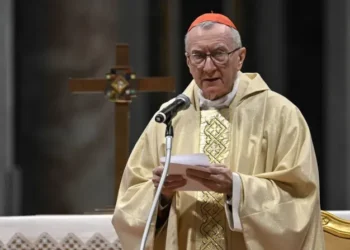
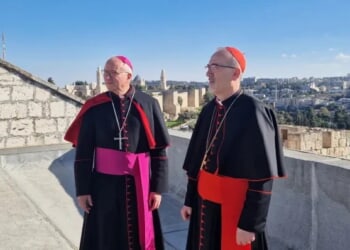
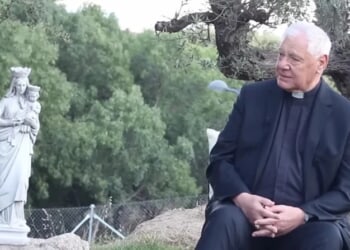
Aside from remarks given to ACI MENA, the Arabic-language sister service of EWTN News, by Cardinal Dominique Mathieu, the Latin archbishop of Tehran, no official statements have been issued by churches inside Iran regarding the war and its repercussions.
This silence comes amid near-total internet blackouts and widespread mobile network disruptions across the country.
Iraq feels the heat of war
Several areas across Iraq have come under attack from different directions, despite assurances from the Ministerial Council for National Security that Iraq remains committed to preventing escalation and to ensuring that its territory is not used for external or internal conflicts. The stated goal is to safeguard the country’s stability and its citizens.
Erbil has faced a series of repeated attacks. The Christian-majority town of Ankawa, adjacent to Erbil International Airport, has encountered growing challenges as the U.S. coalition base located at the airport, situated within Ankawa’s municipal boundaries, has been targeted. The new U.S. consulate building nearby has also raised security concerns in the area.
Residents reported intercepts of rockets and drones in Ankawa’s skies, with falling debris causing limited damage to buildings and property. In the Nineveh Plain, a “drone of unknown origin” struck a building affiliated with the Popular Mobilization Forces in the Syriac town of Bartella.
In response to the escalating violence, Chaldean Patriarch Cardinal Louis Raphael Sako called on all Chaldean churches to pray for peace “amid the rising war in our region and its repercussions for neighboring countries.” The Patriarchate of the Assyrian Church of the East likewise issued a statement urging all parties to exercise maximum restraint to protect innocent civilians and asked Christians worldwide to pray for peace.
Syria and Lebanon
In Syria, Israeli air defenses intercepted an Iranian missile, which subsequently fell in Sweida, causing casualties. Additional scattered incidents of missile and drone debris were reported in several southern provinces.
As Israel intensifies troop deployments along its borders with Syria and Lebanon, Lebanon faces a dangerous escalation. Israeli airstrikes targeted Beirut’s southern suburbs, as well as areas in southern Lebanon and the Bekaa Valley, following a rocket attack launched by Hezbollah toward northern Israel. Hezbollah described the attack as retaliation “for the blood of Imam Khamenei and in defense of Lebanon and its people.”
Meanwhile, Lebanon’s presidency and government rejected the rocket launches, reiterating that the country must not be dragged into war.
Waves of displacement
Fearing further escalation, residents fled Beirut’s southern suburbs and parts of southern Lebanon, regions that include several Christian towns and villages. The scenes of displacement have repeated themselves as the government works to provide shelter and humanitarian assistance.
Bechara Boutros al-Rahi, the Maronite patriarch, emphasized that a nation cannot be healed by slogans or noise alone but through genuine faith. In his Sunday homily, he called for prayer “for our country, that the Lord may touch it with his healing hand and plant in the hearts of its people a living faith that leads to real healing and sincere renewal.”
The Holy Land and Jordan
The Holy Land is also feeling the strain of war. Several cities have faced repeated rocket and drone attacks, resulting in 12 deaths and nearly 500 injuries in Israel to date. In Jordan, a senior military source confirmed that the armed forces continue to fulfill their national duty to protect the kingdom’s airspace and sovereignty. Citizens were urged not to circulate rumors and to rely on official sources for information, as multiple areas witnessed falling debris from intercepted missiles.
Gulf states under fire
The Gulf countries, long regarded as among the region’s safest, have experienced what officials described as unprecedented and reckless Iranian attacks. The strikes were strongly condemned by the United Arab Emirates, Qatar, Saudi Arabia, Bahrain, Jordan, Kuwait, and the United States.
The attacks have damaged infrastructure and private property, and resulted in casualties. Since Feb. 28, five people have been killed in the Gulf, “all foreign nationals: one in Kuwait, three in the UAE [United Arab Emirates], and one in Bahrain,” according to Bishop Eugene Nugent, the apostolic nuncio to Kuwait, Bahrain, and Qatar.
Nugent described the situation as grave and deteriorating by the day as air raid sirens, once unthinkable in the Arabian Peninsula, have become an alarming reality in countries long considered safe havens.
The Apostolic Vicariates of Northern Arabia and Southern Arabia both called on the faithful to remain steadfast in faith, calm, united in prayer, and attentive to civil safety instructions. Other churches across the Gulf echoed these appeals.
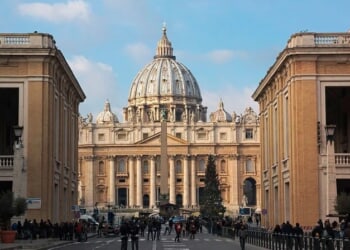
In his Angelus address March 1 in St. Peter’s Square, Pope Leo XIV expressed deep concern over the unfolding events in the Middle East and Iran during these tense hours.
He stressed that stability and peace cannot be built on mutual threats or on weapons that sow destruction, pain, and death but rather through rational, sincere, and responsible dialogue.
This story was first published by ACI MENA, the Arabic-language sister service of EWTN News. It has been translated and adapted by EWTN News English.