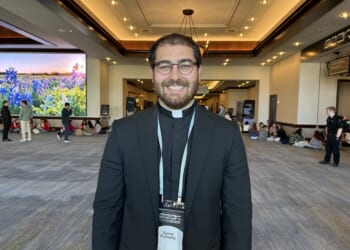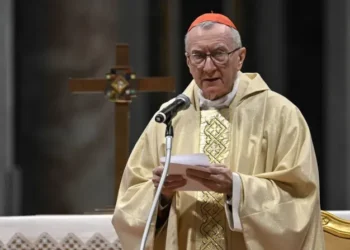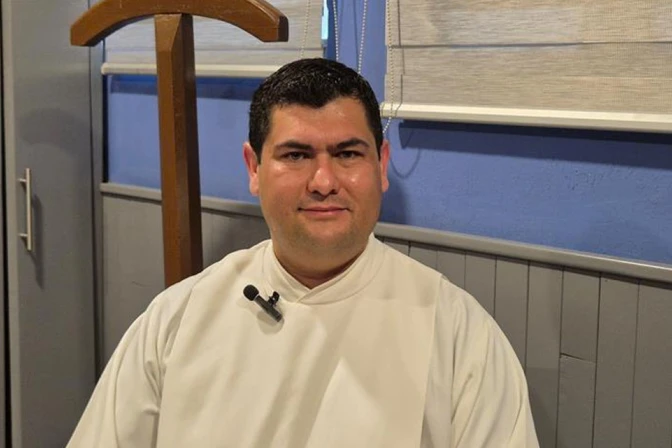
Mexican priest José Dolores Aguayo González, known as Father Lolo, has received criticism from the archbishop of Guadalajara, Cardinal Francisco Robles Ortega, about letters Aguayo sent to a U.S. court on behalf of two convicted drug traffickers.
The letters concerning Jessica Johanna and Rubén Oseguera, adult children of drug trafficker Nemesio Rubén Oseguera, known as “El Mencho,” were written at the request of the judge and the detainees’ family as part of the priest’s work providing spiritual ministry to people in prison.
The elder Oseguera was the founder and leader of the powerful Jalisco New Generation drug cartel who was killed in a shoot-out with the Mexican military on Feb. 22.
In an interview with ACI Prensa, the Spanish-language sister service of EWTN News, the priest defended his actions, stating that “the Church cannot turn its back on those who seek reconciliation with God, even if they are public figures.”
“Imagine if the Church slams the door on them, and I think the issue here is, if it had been any anonymous prisoner in Puente Grande [penitentiary], there wouldn’t have been a problem. The problem is that the Church tried to fulfill its mission with these individuals,” the priest stated.
Both letters, revealed last week by journalist Laura Sánchez Ley, were addressed to Judge Beryl A. Howell in Washington, D.C. The first, sent in March 2021, describes Jessica Johanna Oseguera as “a very kind person, an excellent mother, a very philanthropic woman.”
Aguayo explained that he met the cartel leader’s daughter because she actively participated in parish activities, years before she pleaded guilty in U.S. court to drug trafficking charges.
“When I wrote about this man’s daughter, the judge was the one who asked for my personal opinion of her, how although she had already pleaded guilty to certain crimes, had taken responsibility, what was my personal assessment [of her],” the priest told ACI Prensa.
He sent the second letter to the same judge in January 2025, this time speaking favorably of Rubén Oseguera, known as “El Menchito” (Little Mencho), who was extradited to the U.S. in 2020 and sentenced to life imprisonment for drug trafficking two months after the priest’s letter.
In that letter, Aguayo said that he was Rubén Oseguera’s “spiritual director” and that “he comes from a very devout Catholic family, has reflected a great deal on his future, and has read the holy Scriptures,” adding that “despite any mistakes he may have made, he is a man who has been touched by God’s mercy.”
The priest clarified that he did not know “El Menchito” personally but rather maintained correspondence through letters and phone conversations with family members during Oseguera’s imprisonment.
“His wife asked me to accompany them spiritually through letters … what did we talk about? Biblical themes, faith, personal growth, change — nothing out of the ordinary that could be discussed with a priest,” he recounted.
“Having gotten to know this young man through the letters … all I can say is that human beings make mistakes, they can change. I’m not saying he shouldn’t be punished by human justice, because we will also be punished by divine justice for our sins, but there is an opportunity to remake ourselves. In the Church, we believe in remaking ourselves; in conversion, and that is the great calling we have as priests: the sacrament of reconciliation,” he added.
Though visibly concerned about the public judgment of his actions, the priest said he has nothing to hide. He maintained that he has conducted his ministry in accordance with the precepts of the Church and that, to date, no authority in Mexico or the U.S. has contacted him regarding this matter.
The Archdiocese of Guadalajara on Feb. 28 issued a statement on the case, describing a lack of “prudence and good judgment on the part of this priest in addressing this matter … given the nature of this relationship.”
The archbishop said at a March 1 press conference that “the issue is much more complex and much broader than the issue of the imprudence or inexperience of a priest who wanted to act in good faith, but, as we say in slang, messed up.”
Robles added that Aguayo continues to fulfill his pastoral duties as a parish priest and that the Church is committed to providing spiritual support to everyone, including criminals and their families.
“For example, if a family member of someone who was killed or cut down [in a confrontation with law enforcement] and whose involvement in criminal activity has been proven, requests, for instance, a Mass, they cannot be refused. If they request to take the body to the church, they cannot be refused,” the cardinal stated.
This story was first published by ACI Prensa, the Spanish-language sister service of EWTN News. It has been translated and adapted by EWTN News English.