Phoebe Arslanagić-Little is Head of Social Policy at the think tank Onward.
Medical science’s ability to help people have children has been improving for a long time.
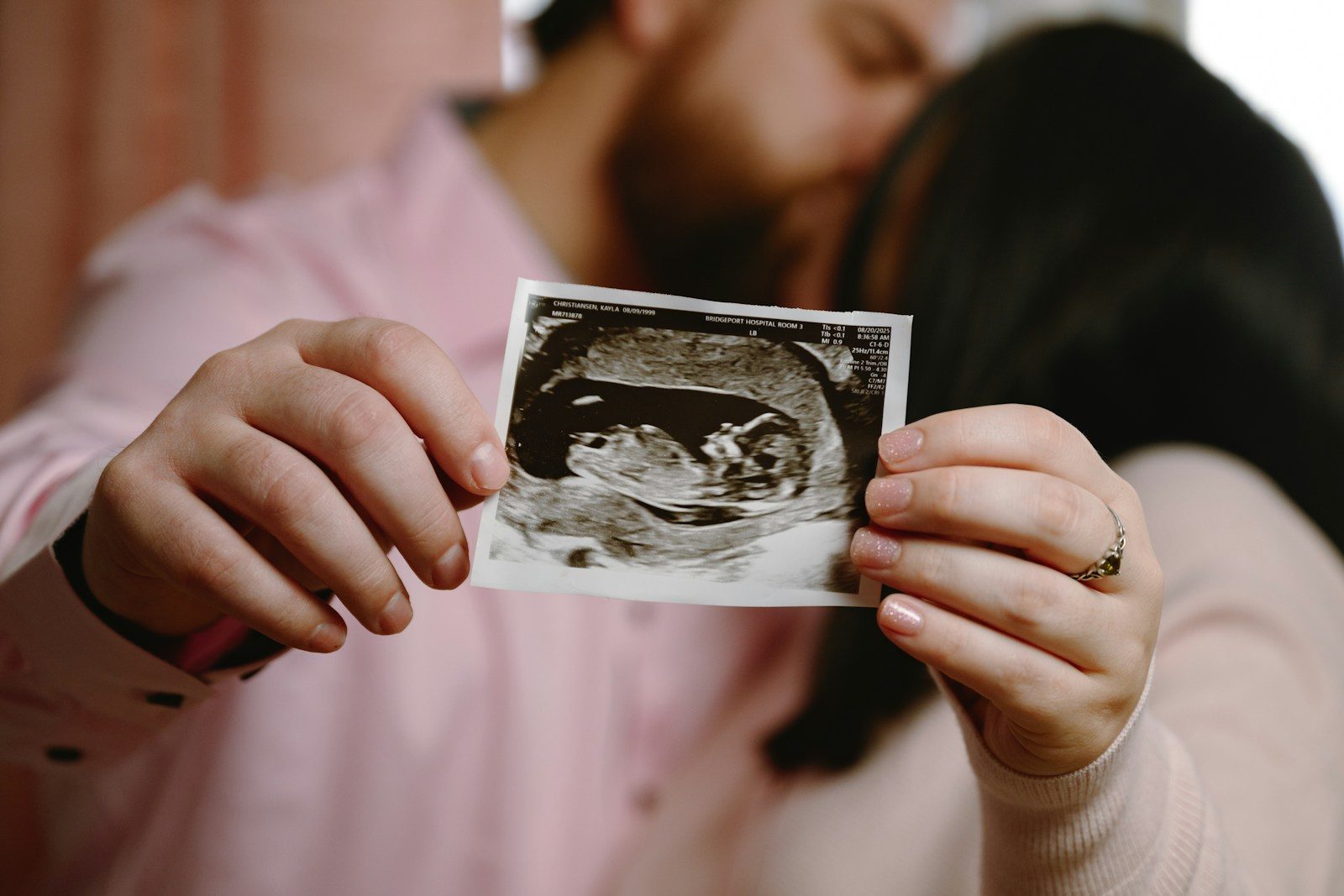
The IVF birth rate per embryo transferred in the UK hit 29 per cent in 2023 from just 7 per cent in 1991 and new innovations are being developed to significantly improve that number.
Treatments for women who suffer recurrent miscarriages have become more effective. The drug mix we use in epidurals has evolved so that labouring women who use one are more able to move around. We are better at saving the lives of premature babies. Last week we learnt that a woman called Grace Bell, born without a womb, gave birth to a baby son. This was only possible for Grace because she received a womb transplant from a dead donor.
All these developments, and very many others not named, are responsible for a great deal of new life, for families started and families made whole. But, especially on some parts of the British right, there is increasing disquiet about reproductive technology.
Undeniably there are serious ethical questions at hand.
Perhaps the clearest examples are those raised by commercial surrogacy. Not legal in the UK, British couples are nevertheless going abroad for the chance to pay a woman to carry a child for them. It is hard to think of a legal regime that can adequately protect everyone involved in a transaction of this kind, from the surrogate mother to the couple to the child, and I am not convinced that one exists.
But even in reaction to the story of Grace Bell there was strong criticism that the organ transplant that enabled her to have her child had taken place, including from former MP Miriam Cates and writer Jo Bartosch.
One argument made against the transplanted wombs is that, even though an organ taken from a consenting dead donor entails no risk of exploitation, we are inevitably on a slippery slope towards both pressure upon living women to give up their wombs and organised criminal exploitation.
Of course, it is a terrible truth that organ trafficking and harvesting is a real global phenomenon. But would any of us seriously give the existence of the illegal organ trade as a reason that we should not receive a heart, liver or kidney from a willing organ donor in the UK? Cates argues a transplanted womb is a special case distinct from typical organ donation because it is not necessary to save someone’s life – does that mean she opposes other organ donations that are not life saving, such as cornea transplants?
Significantly more commonly used reproductive technologies like IVF and egg donation have also attracted increased criticism in recent years. When the capped compensation that women who donate their eggs receive in the UK was raised from £750 to £985, an article from the founder of campaign group Surrogacy Concern claimed this was exploitative and suggested that women should instead receive no compensation, citing evidence that women might use their cash to go on holiday. These campaigners also often highlight news stories about the exploitation of women for their eggs in places like India, including forced egg donation. Such women are the victim of a great and serious wrong, but criminal practices in other countries offer a poor argument against above-board and highly regulated IVF practices in the UK.
Spurious scientific-sounding claims about the consequences of egg donation and IVF also circulate, from claims that children born via egg donation suffer from “genealogical bewilderment” (a term taken from adoption research and subsequently misapplied) and dramatic overstatements of the medical risks of donating eggs.
To be clear, there are many coherent reasons to be opposed to reproductive technologies, even if not everyone agrees with them. People who believe that life begins at conception understandably oppose IVF because it inevitably involves the discarding of some embryos. There are also those who urge would-be parents to take infertility on the chin as a fact of life, simply the way that God has made them and not something they should seek to change.
For my part, I do agree that we should be cautious about new procedures and the side effects they have on mother and baby. Yet we must not allow the opponents of reproductive technology to get away with labelling any and all developments in the field as “exploitative” of women and “dangerous” to children when there is no or poor evidence for doing so.
Around 15 per cent of couples have difficulty conceiving and many of them will require medical help in order to expand or start their families.
At Onward, where we are concerned that British people are having fewer children than they want to have, we want to see these couples receive help in ethical and regulated ways.
And we believe that we are getting better at doing so is a great blessing for the world.






![Donald Trump Slams Chicago Leaders After Train Attack Leaves Woman Critically Burned [WATCH]](https://www.right2024.com/wp-content/uploads/2025/11/Trump-Torches-Powell-at-Investment-Forum-Presses-Scott-Bessent-to-350x250.jpg)