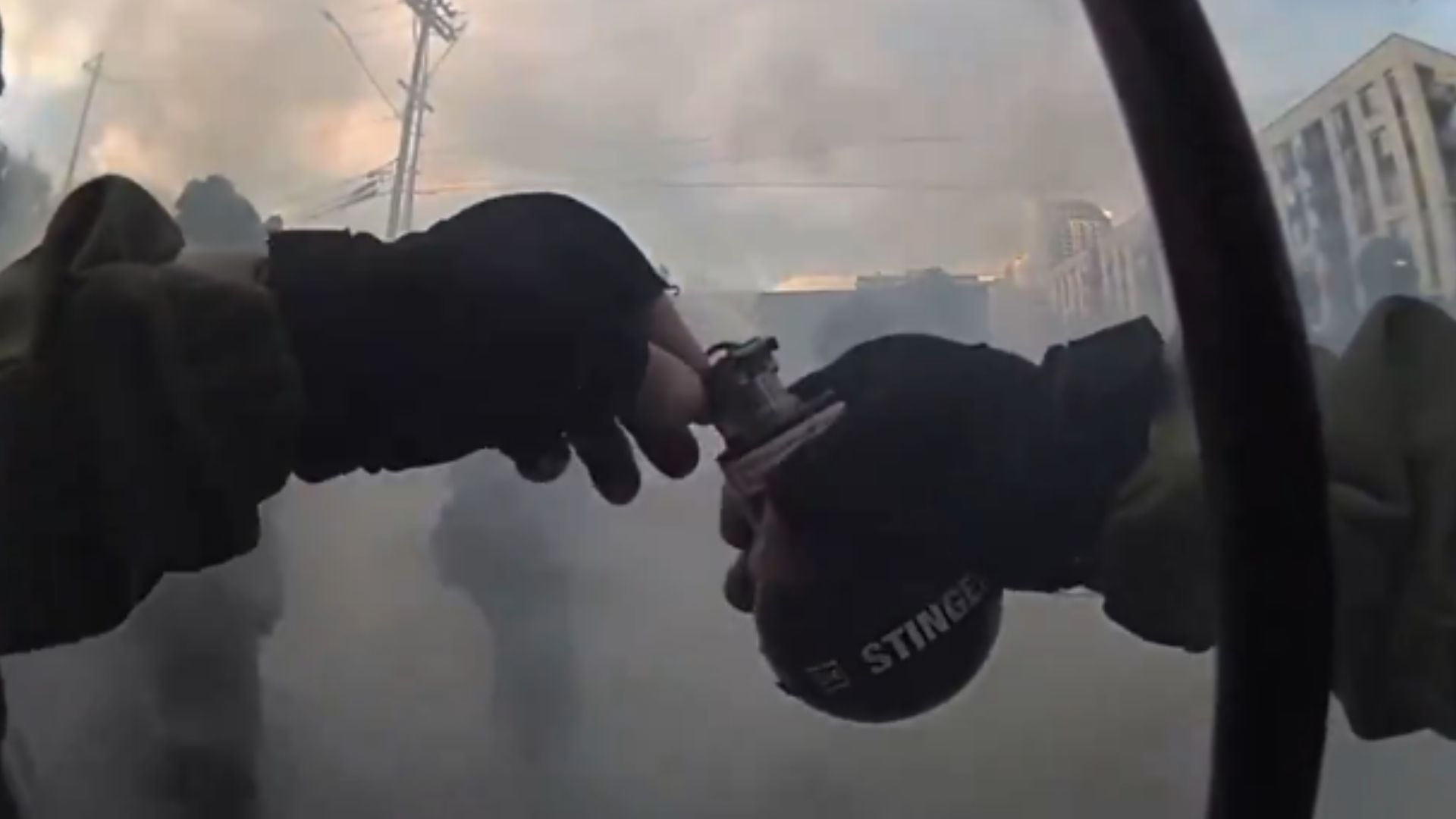
A three-day hearing in federal court in Portland revealed additional details about the Department of Homeland Security’s response to protests that took place outside an Immigration and Customs Enforcement facility.
The hearing focused on claims by protesters who said they were targeted by federal officers while demonstrating nonviolently, arguing that their constitutional rights were violated during the law enforcement response.
During the proceedings, attorneys for the Justice Department disputed those claims. Government lawyers questioned whether protesters were able to see the circumstances officers were responding to when they deployed force, including tear gas and other crowd control munitions.
Here’s What They’re Not Telling You About Your Retirement
The hearing included testimony about the tactics used by federal officers during confrontations with demonstrators outside the ICE building.
According to testimony presented in court, officers deployed tear gas canisters and other munitions both in front of and into crowds gathered near the facility.
Ronald Kerlikowske, who testified during the hearing Tuesday, described how the deployment of the canisters affected the crowd.
This Could Be the Most Important Video Gun Owners Watch All Year
By tossing tear gas canisters and other munitions both in front of and into the crowd, officers effectively trapped many protesters between clouds of tear gas, Kerlikowske testified.
“If you’re going to use that force then you want them to leave,” Kerlikowske said.
But instead the canisters were lobbed “over the heads of the people,” far beyond those immediately on the driveway of the ICE building, trespassing on federal property.
Kerlikowske told the court the response suggested problems with training and tactics.
He said the response was indicative of poor training “in an environment they’re not familiar with” and using “tactics far outside the standards and practices” of U.S. law enforcement.
Justice Department attorneys challenged parts of Kerlikowske’s testimony during questioning.
John Bailey, counsel to the assistant attorney general at the Justice Department, referenced Kerlikowske’s previous public commentary about President Donald Trump.
Bailey pointed to writings and television appearances Kerlikowske had made that were critical of Trump and questioned his positions in light of those remarks.
During the exchange, Bailey also raised a Border Patrol use-of-force manual from the period when Kerlikowske served as commissioner of U.S. Customs and Border Protection.
The manual included use-of-force policies that Bailey suggested were similar to the tactics being debated in the case.
“You’re trying to pin me down,” Kerlikowske said during questioning.
Kerlikowske responded by explaining the context in which the CBP manual was written.
The document addressed policies related to border enforcement operations, he said.
According to Kerlikowske, Border Patrol agents often carried firearms and used deadly force at higher rates because of the nature of their assignments.
“They don’t do public order policing,” Kerlikowske said.
He added that the manual’s policies were developed to give agents alternatives to deadly force when confronting individuals crossing the border.
“All of this was designed so agents had something other than a firearm to use,” he said, explaining that the policies were intended to deter people from illegally entering the country.
The hearing also included testimony from officers with the Federal Protective Service, who were assigned to guard the Portland ICE building.
Some of those officers testified that they were uncertain about the details of their own use-of-force policies.
According to testimony presented in court, the officers also said they had not faced disciplinary action or correction related to their conduct while assigned to protect the facility.
The Department of Homeland Security has defended the actions of its personnel during the protests.
In a statement provided to OPB earlier in the week, a DHS spokesperson said the agency’s officers were authorized to respond to threats and violence directed at federal personnel.
“DHS is authorized to do what is appropriate and necessary in each situation to diffuse violence against our officers in the most appropriate manner possible,” the spokesperson said.
The hearing was overseen by U.S. District Judge Michael Simon, who is considering whether to grant a preliminary injunction related to the case.
Closing arguments in the proceedings began Wednesday after several days of testimony.
If Simon grants the preliminary injunction, the ruling is expected to be appealed.


![Donald Trump Slams Chicago Leaders After Train Attack Leaves Woman Critically Burned [WATCH]](https://www.right2024.com/wp-content/uploads/2025/11/Trump-Torches-Powell-at-Investment-Forum-Presses-Scott-Bessent-to-350x250.jpg)