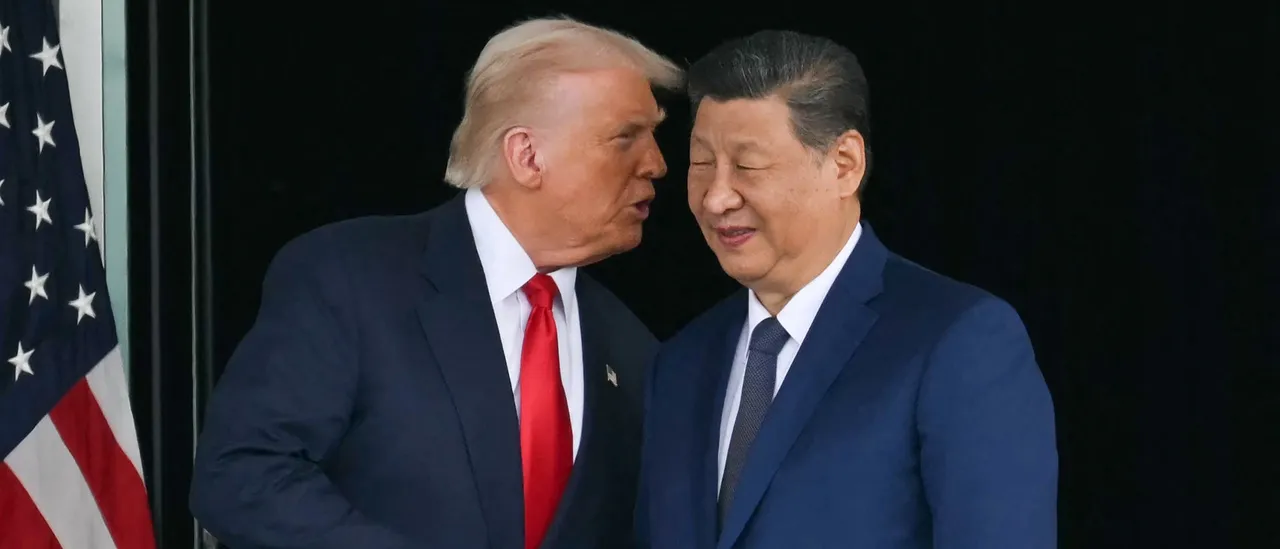
This content was produced via a partnership with KCPAC. The views and opinions expressed in this commentary are those of the authors and do not reflect the official position of the Daily Caller.
A Cautious Diplomacy
The attacks on Iran raise important questions for the scope of President Donald Trump’s steps ahead of his forthcoming visit to China, scheduled from March 31 to April 2 this year. What is the diplomatic landscape as his visit approaches and, in the light of the Middle East conflict, are there now some important constraints on the conversation?
In response to the U.S. and Israeli military actions against Iran, China is moving toward a cautious diplomacy that emphasizes cooperation with Iran while drawing a line due to its stance toward the U.S. (RELATED: Support For The Attack On Iran: A Surprise Move By Iranians Living In Japan)
In a telephone conversation with Iranian Foreign Minister Seyed Abbas Araghchi, Chinese Politburo member and Foreign Minister Wang Yi stated that China supports “sovereignty, security, territorial integrity, and national dignity” but did not mention any specific steps such as military assistance.
The Asahi Shimbun newspaper reported that while China has stepped up diplomacy towards Iran in an effort to calm the situation. However, China’s statements toward the U.S. have been noticeably vague.
For example, the line drawn in China’s diplomatic lexicon is the coexistence of language about alliances and partnerships with restraint so that China does not undermine relations with the United States.
Telephone Lines
In his phone call with Araghchi, Wang said China called on the United States and Israel to immediately cease military action.
On the same day, Wang also held successive phone calls with French Foreign Minister Jean Noel Barrot and Omani Foreign Minister Sayyid Badr Bin Hamad Al Busaidi. These calls connected him with the so-called “mediation circuit” that exists in Europe and the Gulf in a possible attempt to pave the way towards a diplomatic ceasefire.
Public Statements from China
Meanwhile, China’s on-the-ground response is becoming more urgent. Mao Ning, spokesperson for the Chinese Ministry of Foreign Affairs explained on March 2 that “over 3,000 Chinese nationals have evacuated from Iran” and said one Chinese national has died in Tehran as a result of the military clashes. (RELATED: Japan’s Response To The Iran Attacks)
Furthermore, Mao stated that China did not receive prior notice of the U.S. military action and was focused on the protection of its citizens.
The Developing Political Agenda
The question that arises is what these Chinese moves mean for Washington. The Mainichi Shimbun newspaper noted that China is rather subdued in its rhetoric toward the United States. This suggests that China prioritizes stability in its relations with the United States.
One factor behind this is the schedule for Trump’s visit to China. According to the latest reports, Trump is scheduled to visit China from March 31 to April 2. The summit is expected to address several difficult issues, including tariffs, investment and Taiwan. For China, the more it toughens its support of Iran, the more friction it may create in the U.S.-China negotiations. Conversely, appearing too cautious could invite distrust from Iran. China is walking a tightrope.
For Washington, there are three focal points for the summit agenda.
First, if China limits its support for Iran to symbolic diplomacy and refrains from military and intelligence involvement, the Cold War-style solidification of the axis of conflict envisioned by the United States will be unlikely to progress in the near future.
Second, if China were to successfully connect with Oman and France and take a mediation route, it could create multilateral pressure for a ceasefire and containment. This approach would also create room for Beijing to expand its influence.
Third, whether Beijing’s consideration toward the United States will continue ahead of the U.S.-China summit will depend on the extent to which the situation in Iran escalates, the scale of Chinese evacuation and the temperature of domestic public opinion.
Choices for China
As China demonstrates its solidarity with Iran, it appears to be leaning toward limited engagement that avoids a head-on conflict with the United States. If it supports Iran too heavily against the United States, it will damage the negotiating opportunities with the Trump administration during their visit to China. (RELATED: Questioning Military Strategy For Northeast Asia)
Conversely, if it keeps too much distance, it will lose influence with forces in the Middle East that hope to form a counterweight to the United States.
The lack of clarity could be seen as the flip side of the fact that Beijing’s strategy is not hardline but is being dictated by compromise ahead of the all-important Trump visit.




![Donald Trump Slams Chicago Leaders After Train Attack Leaves Woman Critically Burned [WATCH]](https://www.right2024.com/wp-content/uploads/2025/11/Trump-Torches-Powell-at-Investment-Forum-Presses-Scott-Bessent-to-350x250.jpg)

![James Carville Admits Democrats Had No Shutdown Endgame, Mishandled Strategy [WATCH]](https://www.right2024.com/wp-content/uploads/2025/11/1763070634_James-Carville-Admits-Democrats-Had-No-Shutdown-Endgame-Mishandled-Strategy-350x250.jpg)