Alexander Bowen is a trainee economist based in Belgium, specialising in public policy assessment, and a policy fellow at a British think tank.
Britain’s foreign policy has been defined, or at least surmised, by famous phrases; Palmerston’s classic lines, the first rendered briefly that “Britain has no eternal allies, only eternal interests”, the second “Civis Romanus sum” (used to justify blockading Greece). Go on further and there are Churchill’s “three majestic circles” – that Britain must sit between Europe, America, and its Empire, to find its place in the post-war world.
Further still, to 2001 and to today, and you find a foreign policy defined by Blair’s Conference Speech that “The Kaleidoscope has been shaken”, that Britain must “re-order this world around us”, and that “the starving, the wretched, the dispossessed, the ignorant, those living in want and squalor from the deserts of Northern Africa to the slums of Gaza, to the mountain ranges of Afghanistan: they too are our cause”. Twenty five years on we are living in that speech’s foreign policy, but not in that speech’s world even if shadows remain in our collective cave.
In this spirit then I would like to offer here a new phrase, not one that defines our foreign policy, but one that ought to. “Nie mój cyrk, nie moje małpy” – not my circus, not my monkeys. It’s a charming Polish idiom meaning, bluntly, not my problem.
Now this is not a call for reviving Splendid Isolation nor going down some Swiss or Irish path, but it is asking people to acknowledge what was once a basic reality. That the purpose of a state is to serve the interests of its citizens and decisions ought to be taken through that framework. Is an intervention in our national interest? Does it benefit Britain and its people?
Yet what we appear to have been left with is a foreign policy that regardless of who is in charge fails to ask that basic question – a left whose only question is whether something has been approved by the UN, a standard to which two and a half countries hold themselves to, and a right, exemplified best by Richard Tice, who simply asks how high must we jump when the Americans call.
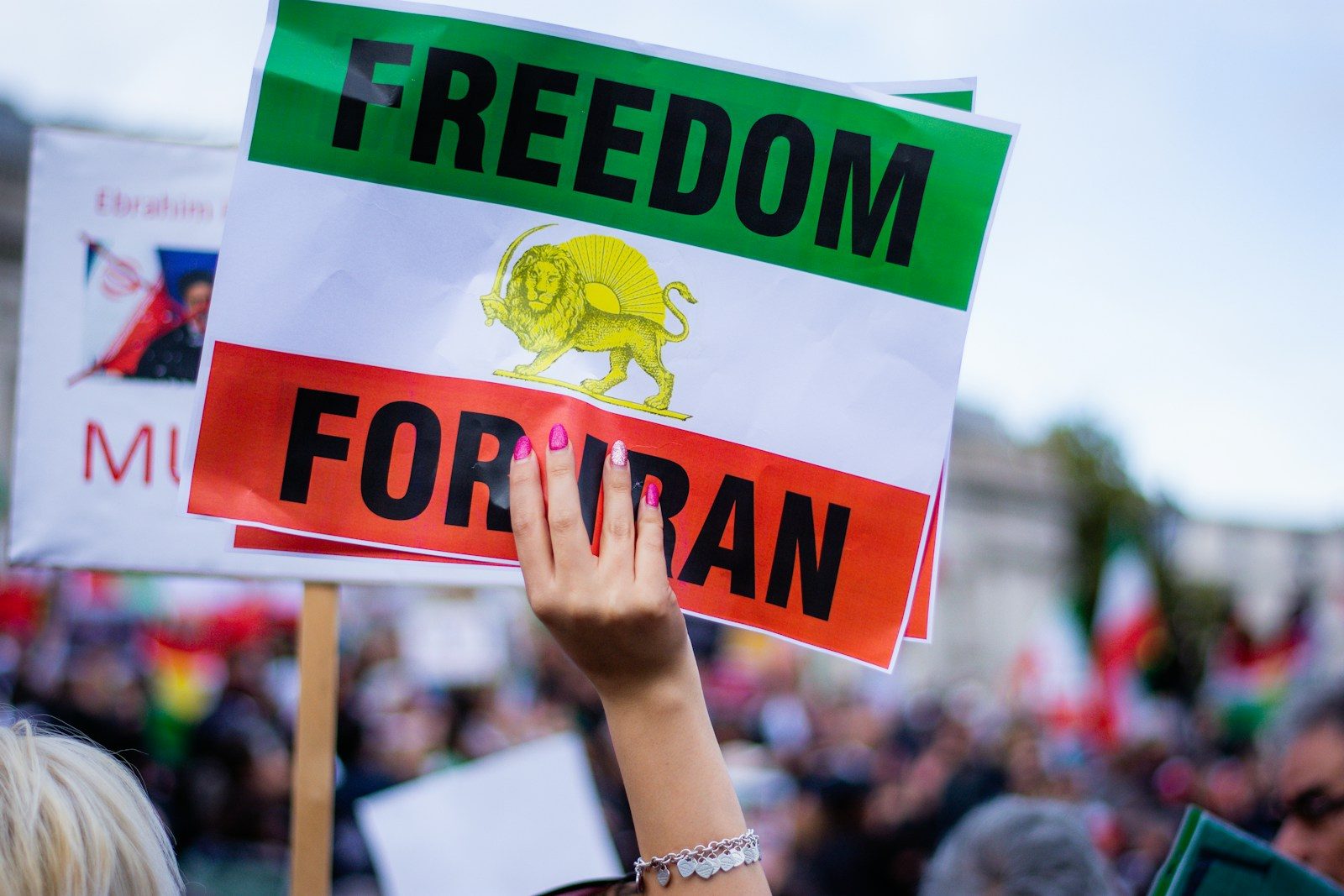
Iran is bluntly case in point.
The Telegraph has, correctly, characterised the regime as evil and a global sponsor of terror, arguing that Britain must bomb yet it has been unable to articulate any actually substantive reason for participation only that Britain would be left as a “footnote as history unfolds around us”. What we are left with then is this: that Britain must spend its money, of which we have too little, and put military personnel, of which we have few, in harm’s way so that in, 15 or 20 years’ time, “Britain sent 2 fighter jets to the Middle East” gets to be in brackets in the body of the text.
The quid-pro-quo argument advanced by some at least offers a genuine attempt to argue that participation is in the national interest – that failure to help the Americans now means they might fail to help us with the Falklands, or some other hypothesised conflict where Britain’s national interest is actually at stake, yet it falls apart at the most basic level of reality. We already had a war over the Falklands, and one that happened when both British and American leaders and national interests have never been closer, in which the Americans did substantively zero to assist. Are we really to believe then that Trump today, having choked off Ukraine, or some fictional ‘decolonising’ Democrat will ride to our rescue because in 2026 Britain shot down seven drones?
Much of the right has correctly criticised soft power – that as wonderful as Downton Abbey is, a nation projects its strength through its ships not its TV Butlers – but it has failed to appreciate that symbolic hard power is just soft power with a squint and the deployments being demanded are very much symbols alone. This is not to say there is no place for symbols, far from it, but symbols for symbols sake is ultimately the kind of logic that gets you Bolivia ratifying the Treaty of Versailles or landlocked Paraguay declaring war on Nazi Germany and it looks, particularly as the symbols border on the irrelevant, increasingly ridiculous.
We must ask ourselves then what constitutes our circus and who are our monkeys? Europe? Certainly, we do share a continent and a destiny. The North Atlantic? Certainly, it is the Ocean upon which our existence depends. The South Atlantic? More or less, some 10,000 Brits do live there on islands they first settled and on land still administered by Britain. Dubai? Afghanistan? Israel? Ethiopia? I am yet to be convinced.
Do we share their values? I doubt it very much. Is our security on an island 4,000 miles away really dependent on theirs? I doubt it very much. Are our domestic challenges on illegal migration or energy aided by bombing a country with a hundred million people and the fourth largest oil reserves? I doubt it very much. We have seen perfectly well what believing that fighter jets are the solution for prices at the pump looks like, and it looks like believing the Mongols are the solution to climate change. It is inane.
All I ask then is this – that before we start shooting, that the people demanding it concretely and rationally explain how it benefits Britain and what our value add is. No vagaries about protest suppression or jailing journalists for, as terrible as both are, Iran is not our circus.



![Donald Trump Slams Chicago Leaders After Train Attack Leaves Woman Critically Burned [WATCH]](https://www.right2024.com/wp-content/uploads/2025/11/Trump-Torches-Powell-at-Investment-Forum-Presses-Scott-Bessent-to-350x250.jpg)