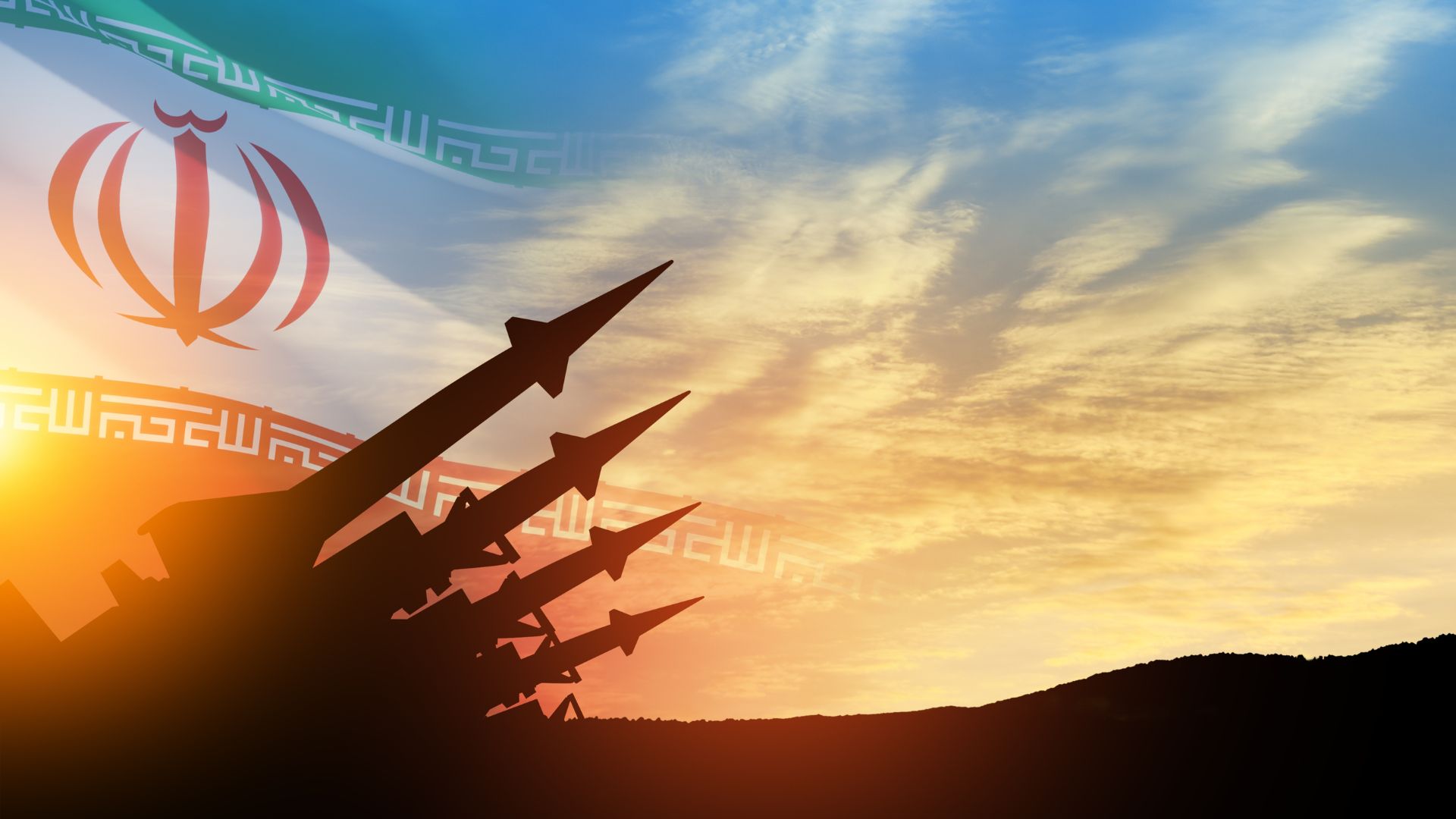
United States Ambassador to the United Nations Mike Waltz discussed recent U.S. military operations targeting Iran during an interview with Fox News host Brian Kilmeade, addressing the scale of Iran’s missile threat, the damage inflicted on Iranian forces, and the broader geopolitical consequences of the conflict.
Kilmeade began the discussion by saying he had just spoken with President Donald Trump and relayed what the president told him about the situation in the Middle East.
“I just spoke to the president united states 20 minutes ago about the Gulf states and their involvement,” Kilmeade said.
Here’s What They’re Not Telling You About Your Retirement
He described the threat Iran posed to several nations in the region.
“Iran had 1000s of missiles pointed at all these Middle Eastern countries for the last four months,” Kilmeade said.
According to Kilmeade, the missiles were aimed at multiple countries in the Gulf region.
“They had 1200 missiles pointed at these countries,” he said.
This Could Be the Most Important Video Gun Owners Watch All Year
Kilmeade said several countries had been concerned about the situation.
“All these nations were afraid of Iran,” he said.
Kilmeade added that the president told him Iran’s military capabilities had been significantly reduced.
“We have knocked the hell out of them like no other nation could,” Kilmeade said.
He then asked Waltz for his reaction.
“Just wanted you to respond to that.”
Waltz said the strikes were carried out to prevent Iran from strengthening its military and eventually developing nuclear weapons.
“Well, this is why the President one of the reasons, I think he did why he did this,” Waltz said.
He said the Iranian government had continued developing drones and ballistic missiles.
“Now, imagine we are seeing how the Iranian regime is behaving,” Waltz said.
He warned that delaying action could have allowed Iran to build an even larger arsenal.
“At the rate that Iran was producing these drones and ballistic missiles had 10s, if not hundreds of 1000s years from now,” Waltz said.
He also referred to concerns raised by Secretary of State Marco Rubio.
“That’s the shield that Secretary Rubio has been talking about,” Waltz said.
According to Waltz, such capabilities could have allowed Iran to pursue nuclear weapons under that protection.
“Behind which they would then develop a full blown nuclear program,” Waltz said.
He said U.S. officials believed Iran was not negotiating honestly in previous talks.
“They were not negotiating in good faith,” Waltz said.
Waltz said the administration believed Iran was currently at its weakest point.
“The reason President Trump went now is because they’re at their weakest point,” he said.
He also said the decision was made to prevent future generations from facing a stronger adversary.
“He’s not the type of President to kick the can and let future generations have to deal with a much stronger nuclear armed Iran,” Waltz said.
Kilmeade also asked about oil markets and the importance of keeping shipping lanes open in the Strait of Hormuz.
“I also asked the President about the rise in oil prices, $100 a barrel,” Kilmeade said.
He then repeated the president’s message about commercial shipping in the region.
“These ships got to go through the Strait of Hormuz and show some guts,” Kilmeade said.
Kilmeade said Trump had also described the condition of Iran’s naval forces.
“They have no navy,” he said.
“We sunk all their ships and all but 20% of their launchers,” Kilmeade added.
He asked Waltz for his response.
“What is your reaction?”
Waltz said the damage to Iran’s military infrastructure had been extensive.
“We’ve destroyed their air force,” Waltz said.
“Destroyed their air defenses,” he continued.
He said most of Iran’s missile launch systems had also been eliminated.
“Destroyed 80, 90% of their launchers and missile capability,” Waltz said.
He also described the destruction of Iran’s naval forces.
“And sank their entire navy,” Waltz said.
According to Waltz, the threat to commercial shipping had been largely eliminated.
“We have eliminated the threat for these both merchant ships,” Waltz said.
He urged commercial vessels to begin moving through the region again.
“Commerce needs to start moving,” he said.
Waltz said additional measures had been put in place to reassure shipping companies.
“The Development Finance Corporation… announced that we’ll put insurance in place,” Waltz said.
He also said some shipping activity had already resumed.
“I understand from talking to Secretary Wright… that one… super tanker has moved,” Waltz said.
“We’re asking the rest to follow suit,” he added.
Waltz said the administration believed action was necessary to protect global energy supplies.
“One more reason why we had to do it now,” he said.
He warned that waiting could have allowed Iran to threaten global markets.
“To not just hold the region hostage, but the world’s energy supplies,” Waltz said.
He also pointed to the long history of tensions between the United States and Iran.
“They’ve been doing this for 47 years,” Waltz said.
“They started this war 47 years ago,” he added.
Waltz said the administration believes the current actions are intended to end that conflict.
“Thank God President Trump is doing what’s necessary to end it,” he said.
Kilmeade also asked about Russia’s role in the conflict and Ukraine’s involvement in drone technology.
“Russia is helping Iran with targets against us,” Kilmeade said.
“At the same time, Ukraine is helping us with drone technology,” he added.
“What does that tell you about that conflict and whose side who’s on?”
Waltz said the conflict has already disrupted Iran’s role as a supplier of weapons.
“Russia has now lost its largest manufacturer and supplier of drones,” Waltz said.
He said those drones had been widely used in conflicts.
“The Shaheed drones that have been so devastating,” he said.
Waltz added that other groups aligned with Iran would also be affected.
“So have the Houthis Hezbollah Hamas and everyone else,” Waltz said.
He said Russia had also lost a source of ballistic missiles.
“Russia has also lost a supplier of ballistic missiles,” Waltz said.
According to Waltz, that relationship between the countries must end.
“So that symbiotic relationship has to break,” he said.
He also said U.S. officials had delivered a warning.
“Special envoy, Witkoff, has delivered a very tough message,” Waltz said.
Waltz concluded by saying the alliance between several U.S. adversaries must be dismantled.
“At the end of the day, this kind of Axis of Evil is going to be broken,” Waltz said.
“Iran is no longer going to be a threat,” he added.
“And no longer going to be a supplier to China and Russia.”
Kilmeade closed the segment by complimenting Waltz for his handling of a separate exchange with Iran’s foreign minister.
“And Ambassador I just had a chance to watch you go at it with the Iranian foreign minister,” Kilmeade said.
“You made America really proud,” he added.
“And you kept your temper, which I wouldn’t have been able to do.”
WATCH:


![Donald Trump Slams Chicago Leaders After Train Attack Leaves Woman Critically Burned [WATCH]](https://www.right2024.com/wp-content/uploads/2025/11/Trump-Torches-Powell-at-Investment-Forum-Presses-Scott-Bessent-to-350x250.jpg)