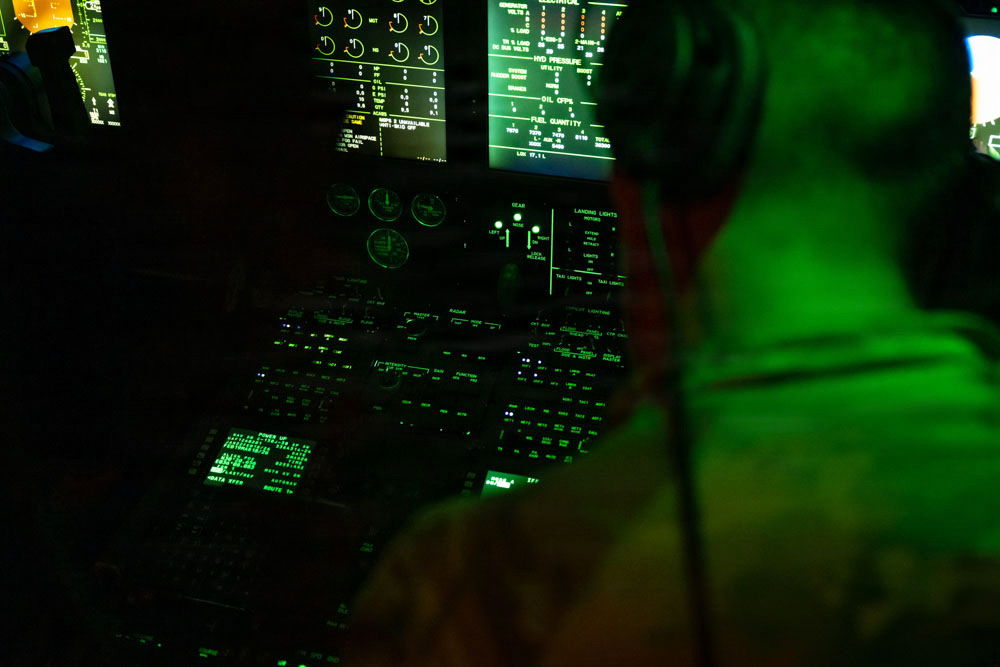
Other than tactical events, the first week of Operation Epic Fury has some potential revelations that will likely be overlooked by casual observers of the conflict. These are the sinking of an Iranian warship in international waters by an American submarine and the enormous use of precision weapons and drones by the United States. Both have implications for our country in deterring and conducting a war with China. There is no doubt in my mind that the Chinese are noting this, and American citizens should as well. (RELATED: Broadly Speaking, the Iran War Is About China)
Many international observers were horrified that the Americans would sink a hostile naval combatant outside the recognized naval war zone around the Persian Gulf. This is probably the best move that the U.S. administration has made in the entire war because it signifies that Americans are willing to wage war worldwide rather than arbitrarily limiting themselves to a single tactical area as we did in Vietnam. This signals to China that a future conflict with the United States over a local issue such as Taiwan will not be limited to the South China Sea (SCS), but could impact its interests worldwide. (RELATED: The Clash of Civilizations: 30 Years On)
We can be self-sufficient if we have to; they cannot handle such a situation and ensure regime survival.
China would no doubt desire to limit a conflict over Taiwan or with one of its neighbors over control of what it believes to be its right to territory considered by the rest of the world to be international waters. If the United States began sinking or seizing its shipping worldwide, and the conflict threatened to last for months or years, it would be disastrous for its import/export-driven economy. Such an unlimited pan-oceanic war would be painful to us, but it would be a debacle for China. We can be self-sufficient if we have to; they cannot handle such a situation and ensure regime survival. I have said in this journal before that the threat of total naval war is the one thing that could be the ultimate deterrent to China. (RELATED: Military Incompetence Has a Price Tag)
The second part of this piece explains why China would probably be comfortable waging a war limited to the SCS. The bad news of the war so far for us is that we have burned through enormous stocks of our precious precision weapons, to include missile and drones. Secretary Hegseth recently admitted that we may not have enough anti-missile systems to resupply our regional allies if the war becomes protracted. These are hard to replace and difficult to resupply, given the thousands of miles between the United States and any Pacific war zone. After a week of attacks on her military capability, Iran is still able to launch missiles and drones at U.S. bases and allies in the region, and Iran’s capabilities are minuscule compared with those of the Chinese. That should be a matter of concern to us.
China has more ships than the U.S. Navy, and most of them are concentrated in the SCS. They are largely inferior to ours, so we think, as are their drones and missiles. Then again, we assumed that of Japanese planes and ships prior to World War II. But they can produce more of everything at this point than the American military-industrial complex. We could sink the entire Chinese Navy, and their land-based reconnaissance-strike complex would still be capable of fighting. I am not saying that we could not win a fight in the SCS, but — like academics — it would be a desperate battle for the lowest possible stakes. We would be foolish to allow them to wage a limited regional war or even think they could.
Before World War I, European powers had a tendency to write off the American Civil War and the Boer War as skirmishes not worthy of learning anything significant. Our civil war was generally seen as a brawl between undisciplined country bumpkins, and the British experience in the Boer War was viewed as a fight between a great power and a second-rate opponent that the great power did not fight very well. The impact of rifled weapons, barbed wire, automatic weapons, and indirect artillery was largely overlooked or downplayed until the disastrous carnage of 1914-18 proved otherwise. The Russo–Ukraine War and Epic Fury will have lessons that we should note. I’ll guarantee that the Chinese are taking notes.
We would be mistaken in writing off the current unpleasantness with Iran as a case of giving the neighborhood bully a well-deserved thrashing. There is a bigger bully on the next block, and he may have a switchblade and a gun.
READ MORE from Gary Anderson:
What Next After the Bombing Stops?
What to Watch for in Operation Epic Fury
American Muslims Must Acknowledge the Supremacy of the Constitution Over Sharia Law





![Donald Trump Slams Chicago Leaders After Train Attack Leaves Woman Critically Burned [WATCH]](https://www.right2024.com/wp-content/uploads/2025/11/Trump-Torches-Powell-at-Investment-Forum-Presses-Scott-Bessent-to-350x250.jpg)

![James Carville Admits Democrats Had No Shutdown Endgame, Mishandled Strategy [WATCH]](https://www.right2024.com/wp-content/uploads/2025/11/1763070634_James-Carville-Admits-Democrats-Had-No-Shutdown-Endgame-Mishandled-Strategy-350x250.jpg)